

Wearing your graduation regalia isn't just about putting on a fancy outfit. It’s a tradition, a right of passage connecting you to generations of scholars. To do it right, you'll want to make sure the cap sits flat on your head, the gown closes smoothly, and your tassel starts on the right side.
Each piece, from the academic hood to the honor cords, follows specific rules that signify your incredible achievement and create a look of formal unity on your big day.
Understanding Your Graduation Regalia

Graduation day is a huge milestone, the finish line after years of hard work. The academic regalia you wear is so much more than a uniform; it's a powerful symbol steeped in history and achievement. Knowing how to wear it correctly ensures you look polished and honor the traditions you are now officially a part of.
Every component, from the foundational gown to the decorative cords, has a specific purpose and placement. Getting these small details right contributes to a respectful ceremony and allows you to focus on your moment with total confidence.
The Core Components of Academic Dress
Your graduation outfit is made up of several key pieces that all work together. For most, this includes the classic cap and gown, but many graduates will also wear hoods, stoles, or cords that tell a more detailed story of their journey.
Here’s a quick breakdown of what you'll be working with:
- The Gown: This is the main garment, and its style—especially the sleeves—often indicates your degree level. You can find graduation gowns for every academic level.
- The Cap (Mortarboard): The iconic flat-topped hat worn by most graduates. Getting it to sit right is key. Find the perfect graduation cap for your ceremony.
- The Tassel: This little detail signifies your status, and its placement changes during the ceremony to mark your transition from candidate to graduate. Choose from a wide variety of graduation tassels.
- The Hood (Graduate Degrees): Worn by master's and doctoral candidates, the hood’s vibrant colors represent your university and specific field of study.
- Stoles, Cords, and Medals: These are your badges of honor, signifying special achievements, memberships in honor societies, or cultural heritage. We offer a full range of graduation stoles and cords.
To help you get started, we've put together a quick reference table summarizing how to position each core piece of your graduation attire.
Quick Guide to Wearing Your Regalia
| Regalia Piece | How to Wear It | Pre-Ceremony Placement | Post-Ceremony Placement |
|---|---|---|---|
| Gown | Zipped up, with seams aligned and hanging comfortably. | Zipped fully. | Remains zipped. |
| Cap/Mortarboard | Flat on the head, parallel to the ground. | The point should face forward. | No change. |
| Tassel | Attached to the button on top of the cap. | Draped over the right side. | Moved to the left side. |
| Hood | Draped over the shoulders, hanging down the back. | Colors of your university and discipline should be visible. | No change. |
This table covers the essentials, but nailing the fit of your gown is the first step to looking your best. For more detailed guidance, check out our guide on the proper length of a graduation gown.
A Tradition Rooted in History
This whole practice of wearing academic dress is far from a modern invention. The tradition of graduation caps and gowns actually dates all the way back to the 12th and 13th centuries, when the first universities were forming in Europe.
By 1321, both Oxford and Cambridge had established strict rules requiring students and faculty to wear long gowns to promote a sense of unity and equality. After the American Civil War, this attire shifted from daily academic wear to something reserved only for formal ceremonies, becoming the symbol of achievement we recognize today.
Your regalia connects you to a long lineage of scholars. Wearing it correctly is a sign of respect for this academic heritage, your institution, and your own significant accomplishments.
This guide will walk you through every step of wearing your regalia, from the simplest gown to layering complex accessories, ensuring you look and feel ready for your big day.
Wearing Your Cap and Gown Flawlessly
Your cap and gown are the heart of your graduation look—the foundation for everything else. Getting these two pieces right is the first step to feeling polished and confident when your big moment arrives. And believe it or not, it all starts before you even put them on.
Your gown will probably show up folded and full of creases from shipping. Taking just a few minutes to get it looking sharp will make a massive difference. A wrinkled gown can really throw off an otherwise perfect look, so it's a detail you don't want to skip.
Preparing Your Gown for a Crisp Look
The absolute best way to banish wrinkles is with a steamer. Just run it gently over the fabric, keeping it moving so you don’t blast one spot with too much heat. No steamer? No problem. Hang the gown in your bathroom while you take a hot shower. The steam will help the creases relax and fall right out.
If you absolutely have to use an iron, please be careful. Use the lowest possible heat setting—think silk or synthetics—and always place a thin towel between the iron and the gown. This little buffer prevents you from scorching the delicate fabric. Never, ever put a hot iron directly on your gown.
When you're ready to get dressed, just step into it and pull up the zipper, making sure it’s straight and not bunched up. The sleeves should hang freely. For a bachelor's gown, they're traditionally pointed. A master's gown has unique oblong sleeves with an opening at the wrist, while a doctoral gown is much more ornate, often featuring velvet panels and sleeve chevrons.
Positioning Your Mortarboard Cap Correctly
The mortarboard is iconic, but let's be honest, it can feel a little awkward at first. The trick is figuring out the front and getting it positioned just right. Most caps have a slightly tapered front and a deeper, elasticized back that helps it stay put.
The goal is to wear the cap so the flat, square top is level and parallel to the ground. You don't want it tilted back on your head like a casual hat. It should sit comfortably, with the front point of the square centered neatly on your forehead.
Pro Tip: Don't let a wobbly cap ruin your photos or your walk across the stage. A few bobby pins that match your hair color are your best friend. Use them to secure the headband of the cap to your hair for some serious stability. It's a simple trick that works wonders and is practically invisible.
For a deeper dive into making your cap fit perfectly, you might be interested in our dedicated guide on how to wear your graduation cap.
The Tassel: The Tradition and The Turn
That tassel is more than just a decoration; it’s a huge symbol of your academic journey. The universal rule for wearing it is simple but incredibly important.
- Before Your Degree Is Conferred: The tassel hangs on the right side of your cap.
- After Your Degree Is Conferred: You'll be instructed to move the tassel over to the left side.
This small gesture, often called "the turning of the tassel," is the moment you officially transition from a degree candidate to a graduate. It’s a tiny movement that carries a ton of meaning.
This moment is often followed by another famous tradition—the cap toss. The celebratory cap toss originated way back in 1912 at the United States Naval Academy, where graduates threw their midshipmen caps in the air to symbolize their new status as commissioned officers. The gesture perfectly captured the joy of graduation and has since become a staple at ceremonies worldwide.
Getting to Know Your Academic Hood and Doctoral Tam
Once you hit the graduate level, your regalia gets a serious upgrade. It becomes more symbolic, telling a story about your specific academic journey. The two key pieces you’ll encounter are the academic hood and, for doctoral graduates, the optional tam. These aren't just fancy accessories; they’re a visual language representing your specialized knowledge and the university that shaped you.
The academic hood is the most descriptive part of your entire outfit. It’s designed with a specific code that instantly communicates your degree level, your field of study, and your alma mater to anyone who knows what to look for. The two parts that do all the talking are the velvet trim and the satin lining.
Cracking the Color Code of Your Academic Hood
The color of the velvet trim running along the outer edge of your hood is a direct signal of your field of study. This tradition makes it easy to spot different disciplines in a crowd of graduates. For example, the dark blue velvet of a Doctor of Philosophy (Ph.D.) is instantly recognizable, as is the light blue for Education or the golden yellow for Science.
The satin lining, which you see when the hood is draped correctly, proudly displays the official colors of the university granting your degree. Together, the velvet and satin create a unique emblem of your academic story.
This whole color-coding system isn't new. It was established with incredible foresight back in April 1887, when the University of Pennsylvania created a system to standardize the colors for hoods and caps based on faculty disciplines. Arts and Letters were given white, Science got golden yellow, and Philosophy (Ph.D.) was assigned dark blue. The system also set border widths: 2-inch velvet for bachelor's degrees, 3-inch for master's, and a prominent 5-inch for doctorates. This became the blueprint for nearly every North American university.
To give you a better idea of this system, here’s a quick reference guide to some of the most common academic hood colors you'll see on graduation day.
Academic Hood Color and Trim Guide
This table breaks down the standard velvet trim colors for various fields of study, as established by the Intercollegiate System.
| Field of Study | Velvet Color | Degree Level |
|---|---|---|
| Arts, Letters, Humanities | White | Master of Arts (M.A.) |
| Science | Golden Yellow | Master of Science (M.S.) |
| Education | Light Blue | Master of Education (M.Ed.) |
| Business, Accounting | Drab | Master of Business Admin (MBA) |
| Law | Purple | Juris Doctor (J.D.) |
| Medicine | Green | Doctor of Medicine (M.D.) |
| Fine Arts | Brown | Master of Fine Arts (M.F.A.) |
| Philosophy | Dark Blue | Doctor of Philosophy (Ph.D.) |
Understanding these colors turns the sea of graduates into a fascinating collection of individual stories of expertise.
How to Wear Your Academic Hood Correctly
Putting on an academic hood can feel a little awkward the first time, but it’s a simple process once you get the hang of it. It’s designed to be worn over your gown, draped around your neck so it hangs down your back.
Your hood will likely arrive folded inside out. The very first thing you need to do is flip the velvet trim to the outside so it frames the opening.
- Drape it over your head. With the velvet side up, place the hood over your head so the V-shaped part rests on your chest.
- Secure it in the front. Find the cord or loop at the front of the hood and fasten it to a shirt button or an internal stay inside your gown. This is crucial—it keeps the hood from sliding off your shoulders.
- Adjust it in the back. Let the rest of the hood drape down your back. You should find a small button and cord on the back lining. Fasten them together to flip the satin lining outward, revealing your university’s colors. This is the final, most important touch.
The most common mistake people make is forgetting to turn out the satin lining. A properly worn hood should show off a brilliant splash of your school's colors, framed by the velvet of your discipline.
For a complete visual walkthrough, our detailed article on how to wear the academic hood breaks it down even further.
To make sure everything looks perfect on the big day, this quick visual guide covers the essentials for your core regalia.
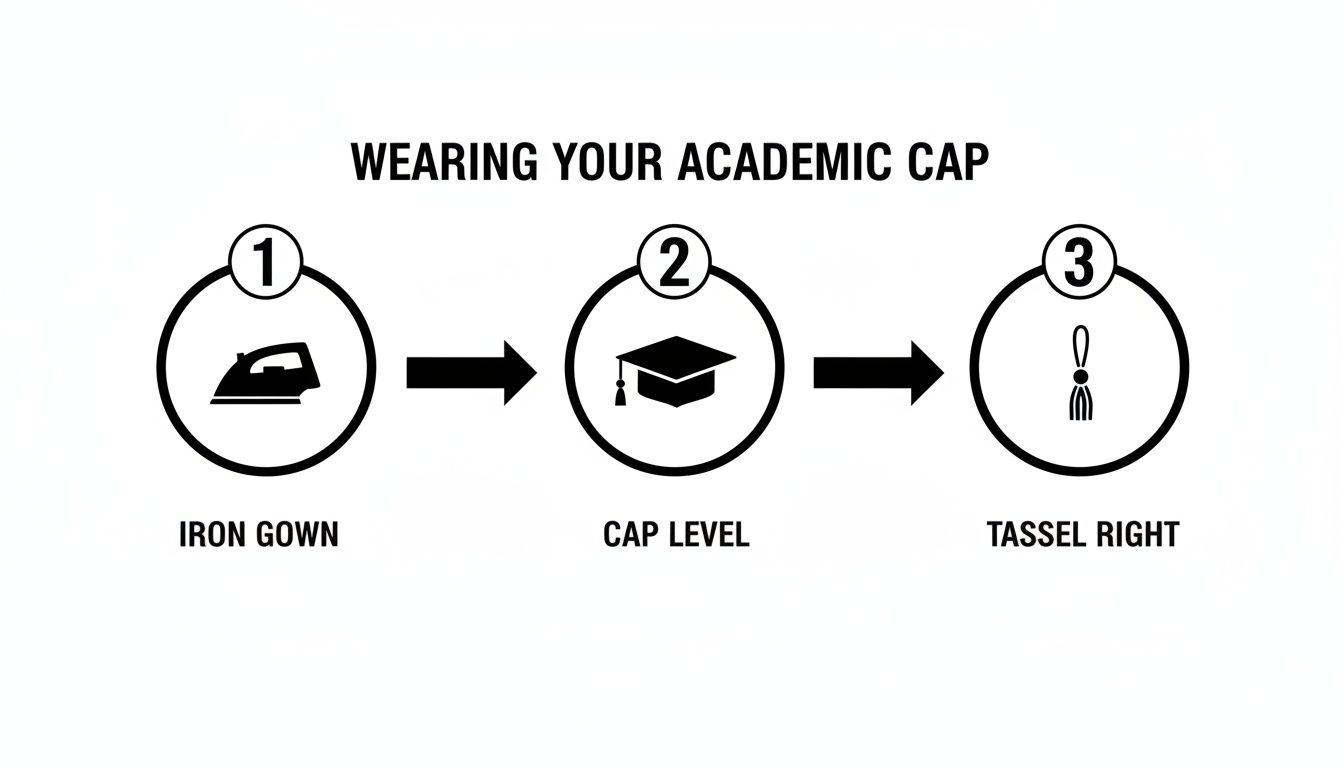
As you can see, a polished final look starts with a wrinkle-free gown and a level cap before you even think about adding more advanced pieces like the hood.
The Distinctive Look of Doctoral Tams
For those earning a terminal degree, the regalia is the most elaborate of all. Along with a more ornate gown featuring velvet chevrons on the sleeves and a larger hood, doctoral candidates often get to swap the standard mortarboard for a tam.
A doctoral tam is a soft, multi-sided cap, usually made of velvet, that offers a more comfortable and distinguished look. Tams typically come in four, six, or eight-sided versions and often have a permanent tassel attached. Wearing one is an unmistakable sign that you’ve reached the highest level of academic achievement.
How to Properly Layer Cords, Stoles, and Medals
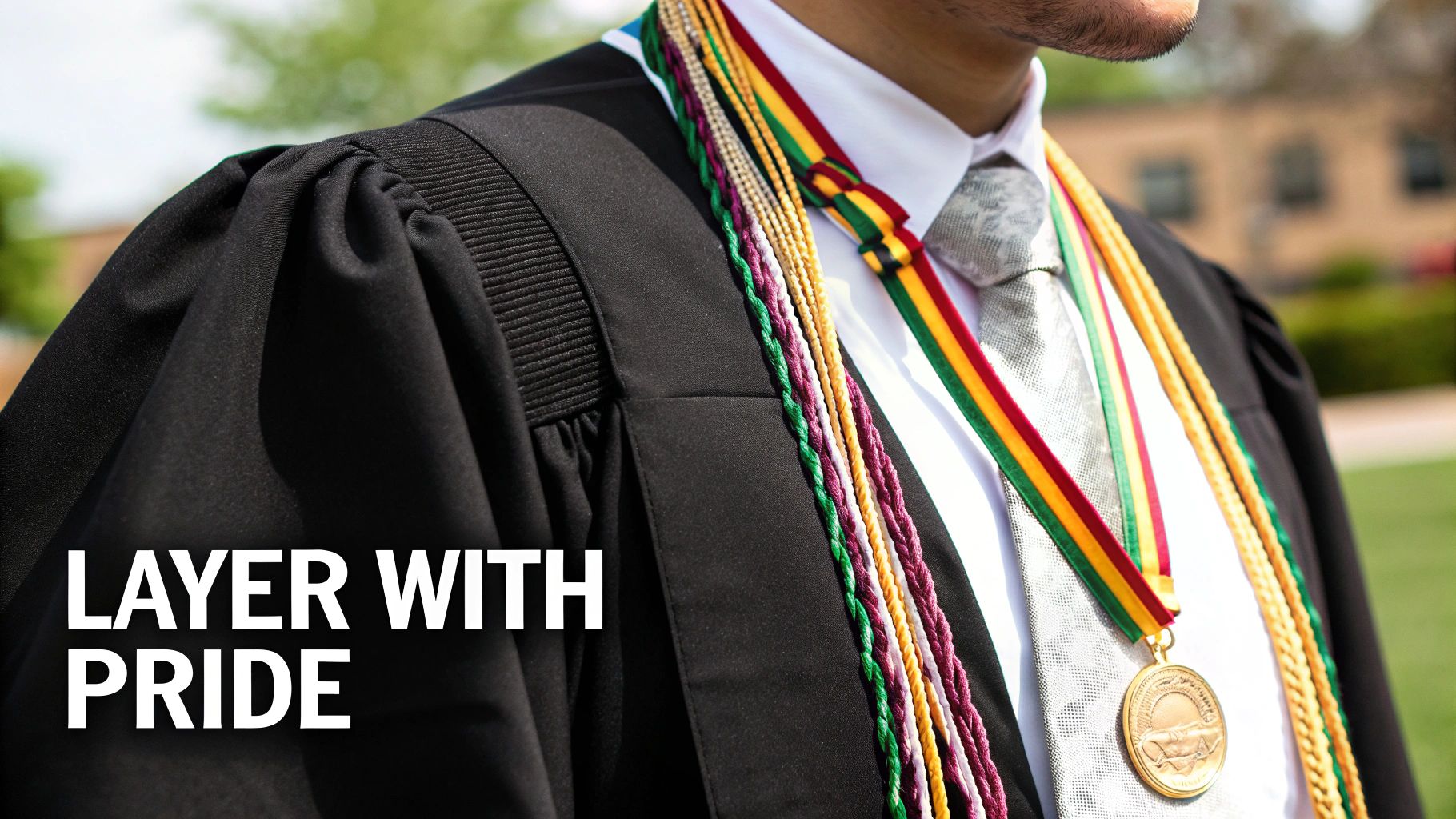
Once you move past the core regalia of the cap, gown, and hood, you get to the good stuff—the accessories that tell the unique story of your academic journey. Honor cords, stoles, and medals are your chance to showcase special achievements, leadership roles, or cultural pride.
Knowing how to wear them correctly is key. The goal is to create a clean, symmetrical look that honors every single accomplishment without looking cluttered. Each piece should be visible, allowing you to display your hard-earned honors with confidence.
Arranging Your Honor Cords
Honor cords are those thin, twisted ropes with tassels at the end. They're awarded for everything from academic excellence and honor society membership to participation in specific student groups. They come in a whole rainbow of colors, and each one has its own specific meaning.
For example, gold honor cords almost always signify high honors like summa cum laude, while other colors might represent your major or a club you belonged to.
To wear them, just drape the cords around the back of your neck so they hang evenly down the front of your gown. The center knot or loop should sit right at the nape of your neck.
If you have more than one, group them together first before placing them around your neck. A great little trick is to use a small, discreet safety pin to secure them at the back, hidden under your gown's collar or your academic hood. This keeps them from shifting or getting tangled during the ceremony.
Positioning Graduation Stoles and Sashes
Stoles, also known as sashes, are the wide strips of cloth worn over your shoulders to highlight a significant achievement or affiliation. This could be anything from a stole of gratitude you plan to give to a mentor, a stole for your academic department, or a cultural sash like a Kente cloth that celebrates your heritage.
A stole should lay flat against your chest, draping over your shoulders and down the front of your gown. The ends need to hang at an equal length, usually ending somewhere around your waist.
Pro Tip: When wearing both a stole and an academic hood, the hood always goes on first. Your stole should then be layered neatly on top of the hood, making sure it doesn't bunch up underneath or hide the hood's velvet trim. You want both pieces to be clearly visible.
For a deeper dive into what all the different colors symbolize, you can check out our detailed honor cord color guide and meanings.
Placing Medals and Medallions
Medals and medallions are usually reserved for outstanding individual achievements, like being named class valedictorian or winning a prestigious university award. Much like an Olympic medal, they are worn around the neck with a ribbon. We offer a variety of graduation medals to recognize such accomplishments.
The ribbon should be placed under your gown's collar or, if you're wearing an academic hood, underneath the hood itself. This makes the medal the innermost accessory, closest to your body. It should rest flat against your chest, centered just below the V-neck of your gown or hood.
The Correct Layering Order: A Quick Summary
Getting the order right ensures every piece of your regalia is displayed properly. Think of it like getting dressed—you layer from the inside out.
- Academic Hood: This is your base layer, worn directly over the gown.
- Medal: Place the medal's ribbon under the hood so the medallion hangs centered on your chest.
- Stoles/Sashes: Layer any stoles you have over the hood. If you have two, you can cross them at the back of your neck so they lay flat in the front.
- Honor Cords: Finally, drape your honor cords over everything else, making sure they hang evenly on both sides.
Follow this order, and you'll have a look that is both respectful of tradition and a perfect reflection of all your personal accomplishments.
Your Pre-Ceremony Checklist to Avoid Common Mistakes
The morning of your graduation ceremony can feel like a total whirlwind. Between the excitement, the family photos, and just trying to get out the door, it’s shockingly easy to forget the little things that can cause a ton of last-minute stress.
A little bit of prep work goes a very long way. Think about it: you’ve spent years getting ready for this moment, so spending 15 minutes to get your outfit in order is the final, easy step. This checklist will help you sidestep the most common headaches graduates run into, from wrinkled gowns to misplaced tassels.
The Night-Before Regalia Check
Please, don't wait until the morning of the ceremony. Lay out every single piece of your regalia the night before to make sure it’s all there. This one simple act can prevent a full-blown panic when you’re trying to get ready.
Your inventory should include:
- Gown: Is it wrinkle-free? If you haven't steamed it yet, now’s the time. Hanging it in a steamy bathroom also does the trick.
- Cap (Mortarboard or Tam): Check that the tassel is securely attached.
- Tassel: Make sure it’s the right color for your degree level or school.
- Hood (for Master's/Doctoral Degrees): It’s a good idea to practice putting it on once so you remember how it’s supposed to drape.
- Cords, Stoles, and Medals: Untangle them and lay them out flat.
Once you’ve confirmed everything is present and looking sharp, place your entire outfit in a protective garment bag. This keeps it all clean, organized, and ready to go.
Assembling Your Graduation Day Emergency Kit
Things happen. But with a small emergency kit, you can solve just about any wardrobe malfunction in seconds. It’s a tiny bit of planning that delivers a huge amount of peace of mind.
Having a few essential items on hand can be the difference between a minor hiccup and a major distraction. Your focus should be on your achievement, not on a rogue tassel or a cap that won't stay put.
Toss these items into a small bag to bring with you:
- Bobby Pins: These are absolutely crucial for securing your cap, especially if you have long or slick hair. Use pins that match your hair color for a discreet hold.
- Safety Pins: Perfect for taming a shifting stole, keeping a few honor cords neatly together, or fixing a stubborn hood that won't stay attached to your gown’s zipper.
- Fashion Tape: This double-sided tape is a lifesaver for keeping a V-neck shirt or dress from gaping open under your gown.
Avoiding the Most Common Regalia Mistakes
Now for the big ones—the most frequent errors we see graduates make. Knowing what they are is half the battle. For a broader look at ensuring any special occasion runs smoothly, this event planning success blueprint has some great insights.
- The Backward Cap: This is hands-down the most common mistake. Your mortarboard has a front and a back. The front usually has a slightly tapered point, while the back is deeper and often has an elastic band. The point goes on your forehead.
- The Inside-Out Hood: Your academic hood is designed to display two main colors—the velvet trim for your field of study and the satin lining for your university's colors. It will likely arrive folded, so make sure you turn it so the velvet trim is showing around the opening, then flip the back portion to reveal the satin colors.
- The Wrinkled Gown: A creased gown sticks out in photos for all the wrong reasons. Steaming it is your best bet, but hanging it in a steamy bathroom for 20-30 minutes works wonders. Never apply a hot iron directly to the fabric.
- The Tilted Cap: Your mortarboard should sit flat on your head, parallel to the ground. Resist the urge to tilt it back like a hat. A level cap is a sign of respect for academic tradition.
By running through this quick checklist, you’ll knock out any potential stressors before they happen. You'll step into your ceremony feeling composed, confident, and ready to celebrate your incredible accomplishment.
Your Top Graduation Regalia Questions, Answered
Even with a step-by-step guide, a few questions always pop up as the big day gets closer. Let's tackle the most common ones graduates have about their academic attire.
Getting these little details sorted out ahead of time means you can focus on what really matters—celebrating your incredible achievement without any last-minute wardrobe stress.
What Should I Wear Under My Graduation Gown?
Choosing the right outfit to wear under your gown is all about balancing comfort and style. You'll be doing a lot of standing and walking, so comfort is king, but you also want to look sharp in photos before and after the ceremony.
We always recommend business casual attire as the perfect middle ground. Think of it this way—your collar, the bottom of your dress or pants, and your shoes are the only things that will be visible.
- For those wearing a dress or skirt: Go for a hemline that’s shorter than your gown. This creates a clean, streamlined look and stops any distracting fabric from peeking out at the bottom.
- For those wearing pants: Dark dress slacks or chinos are an excellent choice. They look professional and won't show through the gown's fabric. Steer clear of bulky clothing like heavy sweaters, as they can make the gown look lumpy and ill-fitting.
- Footwear is key: Comfortable dress shoes are an absolute must. Wedges, block heels, or stylish flats are far better choices than stilettos, which can sink into the grass or get caught on stage steps.
Remember, the two most visible parts of your outfit will be your shirt collar and your shoes. Pick a collared shirt that complements your look and shoes you can stand in for hours without regretting it.
How Do I Keep My Graduation Cap From Falling Off?
This is easily the biggest concern for graduates, and for good reason—a wobbly cap is a major distraction. Thankfully, the fix is simple and incredibly effective. The best method, by far, is to use bobby pins that match your hair color.
First, make sure the cap is on correctly. It should sit flat on your head, parallel to the ground, with the pointy front centered on your forehead. Once it's in the right spot, slide bobby pins through your hair and over the cap’s headband to anchor it securely. Using four—one on each side, one in front, and one in back—creates a rock-solid hold.
If your hairstyle makes pins tricky or you just want extra security, a discreet elastic chin strap or a headband worn underneath the cap can add excellent stability without being noticeable.
Can I Decorate My Graduation Cap?
Decorating your cap has become a wonderful tradition for expressing personality, gratitude, or future plans. But whether you can actually do it depends entirely on your school's rules.
Before you break out the glitter and glue, you must check your university's policy on regalia. Some schools are very strict and forbid any alterations, while others actively encourage graduates to get creative. If you get the green light, keep these tips in mind:
- Keep it lightweight. Use materials like cardstock, paint, or light embellishments. Heavy objects will make the cap unbalanced and more likely to fall off.
- Focus on the top surface. Confine your masterpiece to the flat, square top of the mortarboard. The headband and tassel should be left alone to maintain the official look of the regalia.
How Do I Properly Wear Multiple Cords or Stoles?
It’s an honor to have earned multiple awards, and you should display all of them proudly. The key is to layer them in a way that looks distinguished and organized, not cluttered.
When wearing multiple honor cords, group them together first. Then, drape the whole bundle around your neck so the cords hang as evenly as possible down the front of your gown. To keep them from shifting, you can use a small safety pin to secure them together at the back of your neck, hidden under your gown's collar or your hood.
For stoles, if you have more than one, layer them neatly so they lay flat. If you’re also wearing an academic hood, the rule is simple: the hood always goes on first. Your stole or stoles are then layered right on top, making sure they don't bunch up or hide the hood's colors. The goal is always a balanced, symmetrical look that honors every single achievement.
With these questions answered, you’re ready to assemble your regalia with total confidence. For all your graduation needs, from complete graduation regalia packages to individual accessories like honor cords and custom stoles, Graduation Cap and Gown offers the largest online selection with a lowest-price guarantee. Find your perfect fit and celebrate your milestone in style by visiting https://www.graduationcapandgown.com today.