

Have you ever wondered why one graduate walks across the stage in a flat square cap while another wears a soft velvet cap that looks almost like a crown? The difference isn't just fashion. A tam graduation hat can signal an advanced degree, a faculty role, or an institution's own academic-dress tradition, but the right choice still depends on your school's rules.
Shopping becomes easier when you treat the tam as both a symbol and a wearable product. You need to confirm the degree level, side count, velvet color, size, tassel, hood pairing, and delivery timing before you place an order. The tradition reaches back to medieval European academic dress, yet the buying decision is very practical in 2026, especially when you're ordering online and trying to avoid an expensive mismatch.
What a Tam Graduation Hat Actually Is
A tam is the soft velvet cap you'll often see on doctoral graduates, faculty members, and some master's graduates. Unlike the undergraduate mortarboard, which has a stiff square board, a tam has a flexible crown that gathers into a rounded, fuller shape. Most academic tams use four, six, or eight sides, a top button, an inner band, and a tassel or bullion decoration.
The distinction is immediately visible. A mortarboard looks architectural, with straight edges and a flat top. A tam looks softer and more substantial, almost like a fabric crown that settles around the head. That extra volume helps explain why doctoral regalia often pairs a tam with a velvet-trimmed gown and hood, creating a more formal visual hierarchy.

A tradition older than commencement photos
The academic tam has deep medieval roots, rather than beginning as a modern graduation accessory. Historical accounts describe the academic cap as descending from the skull-cap worn by ecclesiastics, while European university traditions helped formalize distinctive academic dress during the medieval period. The related headwear tradition also developed through European clergy and academic dress reform.
By the 19th century, the doctoral hat form had become established in some major institutions. The history of tam-cap establishment notes that the University of Helsinki's Faculty of Philosophy used a doctoral hat model established during that century, while earlier medieval doctoral and master's graduates wore red hats before the Reformation.
Velvet adds another layer of meaning. It gives the cap a richer surface and a more formal presence than the plain fabric commonly used for mortarboards. Historically, velvet's association with expense and rank helped make it suitable for higher academic dress.
What the name means
The word tam is connected with the French tamis, meaning sieve, a reference to the soft, draping character of the fabric. You don't need to memorize the term to choose your cap, but understanding the name helps explain why the tam isn't designed to behave like a rigid board.
For shopping purposes, start with the degree and the school's written requirements. Master's candidates may be directed toward a four- or six-sided tam, doctoral candidates commonly use an eight-sided version, and some institutions permit different options for specialist graduates, faculty, or other academic participants.
Tam vs Mortarboard vs Beefeater Compared
Put the three styles side by side and the differences become much easier to recognize.
The mortarboard is the familiar stiff, flat square cap associated with bachelor's and many undergraduate ceremonies. A tam is a soft, multi-sided velvet cap used in doctoral and some master's regalia. A beefeater, also called a Tudor bonnet or doctor's bonnet, has a larger gathered crown with softer pleats and a fuller, droopier profile. Law and divinity faculties may favor this more substantial bonnet, although the institution's own dress code controls the final decision.
Construction matters as much as appearance. Tams use stiff fabric panels that meet at a top button. Those panels can create a four-, six-, or eight-sided outline. Beefeaters rely more on soft pleats, so their crown falls and gathers differently. A mortarboard has no comparable gathered crown at all.
| Feature | Mortarboard | Tam | Beefeater |
|---|---|---|---|
| Basic shape | Stiff, flat square board | Soft, gathered, multi-sided velvet cap | Large, softly pleated bonnet |
| Common use | Bachelor's and undergraduate regalia | Master's, doctoral, specialist, and faculty regalia where permitted | Selected law, divinity, and institutional traditions |
| Construction | Square board attached to a fitted skullcap | Four-, six-, or eight-sided panels joined at a button | Fuller crown formed with soft pleats |
| Visual impression | Structured and compact | Rounded, formal, and substantial | Broad, generous, and more traditional |
| Main buying question | Is a mortarboard required? | Which side count and velvet color are approved? | Does the faculty or school specifically require it? |
A useful PhD cap and gown guide can help you compare the tam with the rest of a doctoral outfit, but your university's instructions should always take priority.
Why the side count causes confusion
The number of sides is a visual design feature, but it doesn't operate as a universal global code. The U.S. academic dress tradition recognizes four-, six-, and eight-sided tams, and the eight-sided version is often preferred for doctoral graduates. Other guidance describes six- or eight-sided tams as standard for higher degrees, while product pages may list broader choices for master's candidates.
That's why you shouldn't infer your required style from a photograph alone. A six-sided tam may look correct in one institution and be unsuitable in another. Check the official commencement guide, email the regalia coordinator, or ask the retailer to confirm the style before ordering.
Styles, Side Counts, Materials, and Colors
The easiest way to choose a tam is to separate the decision into four parts: side count, material, color, and trim. Don't begin with the photograph you like most. Begin with the academic-dress rules attached to your ceremony.
Side count and construction
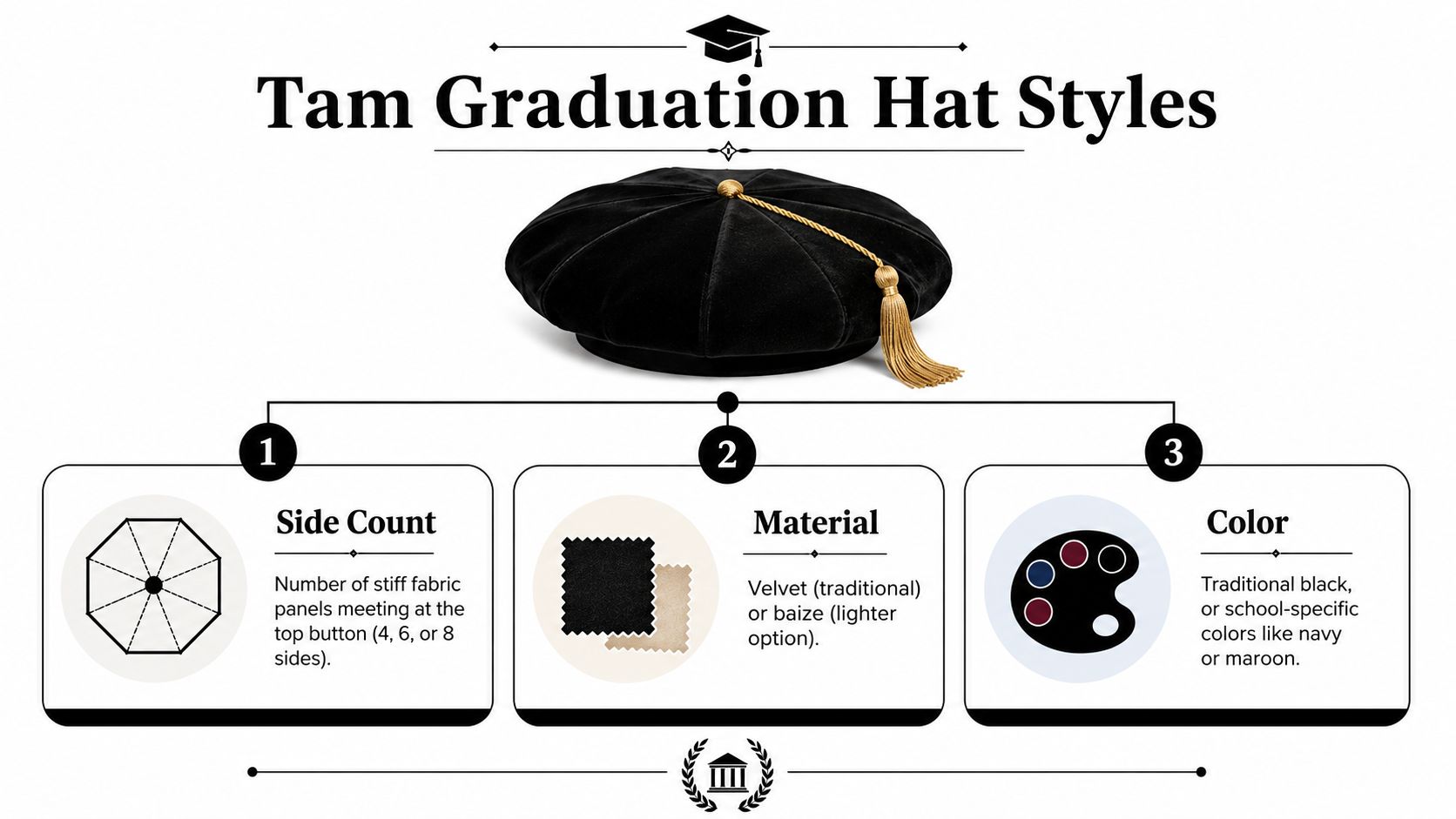
The side count describes the stiff fabric panels that meet at the top button.
- Four-sided tams have a simpler outline and may be accepted for some master's programs, faculty, or specialist traditions.
- Six-sided tams create a fuller profile and appear in master's and doctoral regalia systems.
- Eight-sided tams add the greatest visual mass and are often preferred for doctoral graduates.
The U.S. academic dress tradition specifically recognizes all four, six, and eight sides, while institution-level policy determines which graduates may wear each form. The doctoral tam collection is useful when you need to compare side counts, tassel types, and color options in one shopping context.
Material choices
Traditional tams are made with velvet or a velvet-like finish. A polyester-velvet blend can be a practical choice for a budget-conscious purchase, while genuine cotton velvet gives premium regalia a richer hand and deeper surface. Recycled polyester may appeal to buyers who want a different material priority.
You may also see baize described as a lighter option in some product specifications. Don't assume that a softer or lighter fabric is automatically approved. The school may specify velvet, a particular finish, or a complete regalia package.
Velvet color is an academic code
Color usually communicates the field of study or degree category, rather than serving as a personal preference. Major regalia systems commonly use dark blue or royal blue velvet for PhD hoods regardless of specialty, while other discipline colors include purple for law, light blue for education, orange for engineering, pink for music, and scarlet for theology. A related doctoral regalia color guide explains how velvet and hood colors work together.
Treat the tam, hood, gown, and tassel as one visual system. If the hood trim is school-specific but the tam is discipline-coded, ask which element takes priority. Piping, bullion trim, and tassel finish can also vary, so match the complete package rather than choosing the cap in isolation.
How to Choose the Right Size and Fit
A tam should feel secure without pressing hard against your head. Because the crown is soft, a slightly imperfect fit can change the way the cap gathers, tilts, or photographs. Measuring before ordering is more dependable than choosing a size based only on your usual hat preference.
Measure first
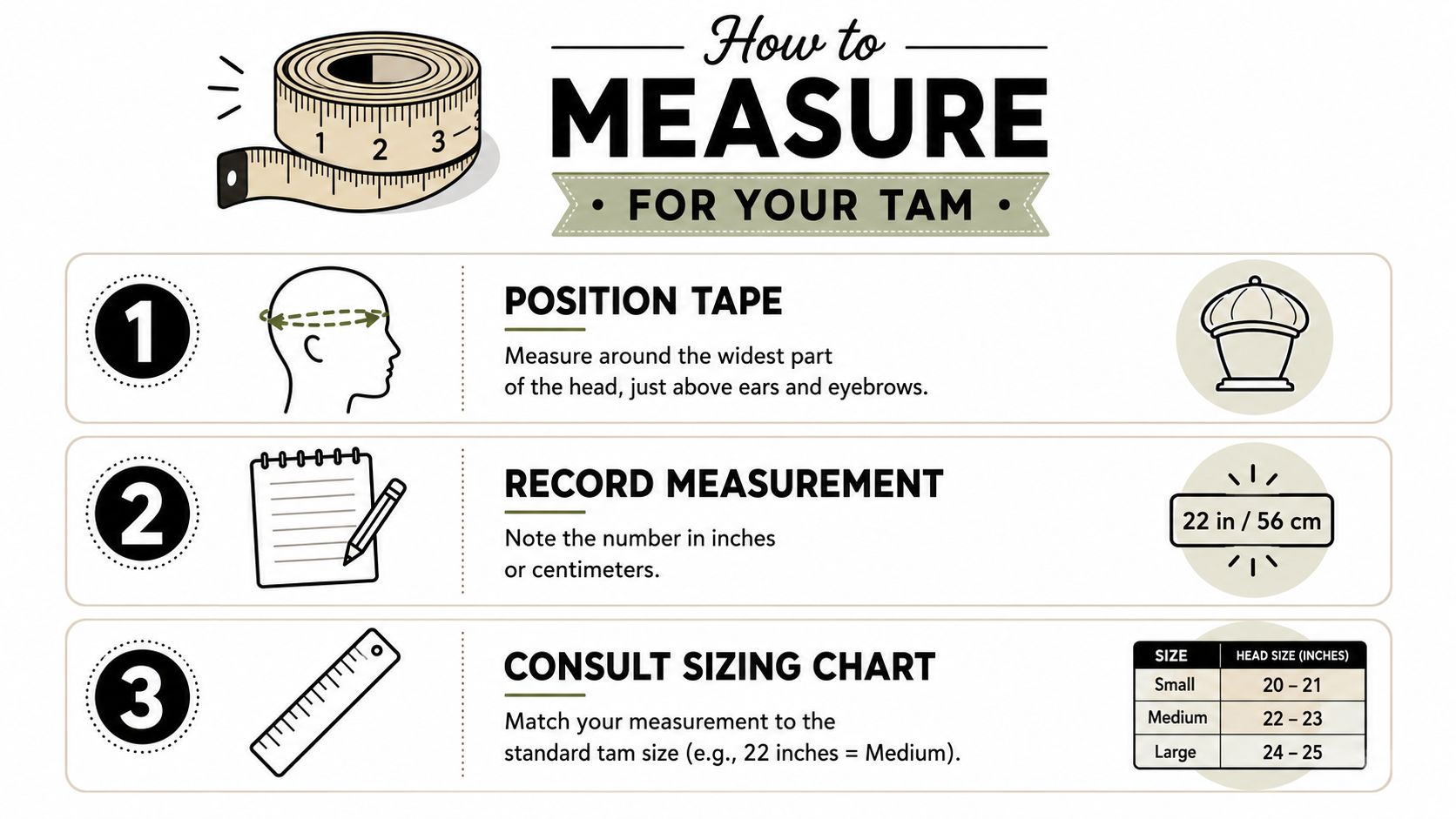
Use a soft tape measure and follow this routine:
- Position the tape. Wrap it around the widest part of your head, just above your ears and eyebrows. Keep the tape level and don't pull it tight.
- Record the measurement. Write the result in inches or centimeters. Measure again if the tape shifts behind your head.
- Match the sizing chart. Use the retailer's chart to convert the measurement into the available tam size.
Some online guides describe sizes from S through XL and give approximate ranges around 21 to 24 inches, but sizing information isn't standardized across every retailer. One provider may use hat-size ranges and a Velcro closure, while another may only advise a snug fit. Check the exact chart for the product you're buying, and ask before ordering if the chart is unclear.
Account for hair and headwear
Thick hair, braids, beaded styles, and a high-volume afro can change the amount of space you need under the band. Measure with the hairstyle you expect to wear, or allow room for the style without making the cap so loose that it slips. Bangs can push the front edge upward, while a headscarf or other covering may require a different size or an explicit approval from the ceremony coordinator.
Fit check: Try the tam with your hood and gown before commencement. The hood can change how the cap sits at the back of your head and shoulders.
Side count also affects appearance. Higher side counts generally create a wider, more regal crown, which many doctoral graduates prefer. That doesn't mean a wider crown is always correct, so confirm the institution's approved construction before using size or style as a substitute for policy.
For detailed garment measurements, compare your head measurement with the graduation cap and gown size chart. Once the tam arrives, adjust the inner band if available, secure it discreetly with bobby pins through the band rather than through the visible crown, and test your movement before ceremony day.
How to Wear and Style Your Tam with Regalia
Start with the hood, not the cap. Place the academic hood over your shoulders and arrange its velvet trim so it lies flat. Then set the tam on your head, keeping it level and centered rather than pushing it backward.
A university commencement guide describes a doctoral tam as commonly worn with one corner facing forward, a slight tilt to the right, and a gentle puff on top. That detail matters because the cap can look lopsided if the front point turns too far toward one side. Follow your school's instructions if they differ.

Tassel placement needs a policy check
The U.S. tradition generally places a standard tassel on the left unless a gold tassel is reserved for someone entitled to wear the doctoral gown. Some commencement ceremonies direct candidates to move a tassel from right to left when the degree is conferred, while doctoral regalia may use a permanently attached bullion tassel. Those rules aren't identical at every institution.
A tassel attached to the center button behaves differently from a tassel attached to a corner. Don't force it to mimic a mortarboard. If the tassel is permanently fixed, leave it where the manufacturer placed it unless your ceremony coordinator gives another instruction.
Keep styling restrained
Smooth the crown with your hands, hide pins under the inner band, and make sure the hood's velvet trim remains visible. Custom stoles can add identity and color, but position them so they don't cover the hood or compete with the discipline trim.
Graduates interested in a more intentional approach to headwear can also review this resource on cruelty-free tam hat styling, especially when thinking about materials and a polished finish. For the ceremony itself, the guide to wearing graduation regalia offers another practical reference.
Do: keep the tam secure, level, and compatible with the hood. Don't: crush the crown, bury the hood trim, or assume a photograph from another university represents your own dress code.
Ordering, Customization, and Care Tips
Order by matching the written requirements, not by guessing from color names. “Blue” might mean navy, royal blue, light blue, or a school-specific shade, while “doctoral tam” may still leave the side count and tassel unresolved. Ask the regalia provider whether the tam should match the hood velvet, the gown, the school color, or the discipline color.
Customization can involve velvet trim, tassel finish, piping, bullion, and a coordinating stole. Some retailers let shoppers select from preset color charts, while others support logo or institutional customization. Departments and honor societies may also place bulk orders with embroidery options, but lead times and minimum quantities vary, so request those terms before approving artwork.
| Velvet Color | Typical Degree or Discipline |
|---|---|
| Black | Common for many master's and doctoral regalia systems |
| Dark blue or royal blue | Often used for PhD regalia regardless of specialty |
| Purple | Law in some standardized systems |
| Light blue | Education in some standardized systems |
| Orange | Engineering in some standardized systems |
| Pink | Music in some standardized systems |
| Scarlet | Theology in some standardized systems |
| School-specific or specialty colors | Determined by the institution or faculty |
Care for the crown
Velvet needs gentle handling. Spot-clean a mark with a damp cloth rather than saturating the fabric, and reshape the crown over a clean rounded form such as a tennis ball while it dries or rests. Store the tam in a breathable garment bag instead of plastic, which can trap moisture and flatten the material.
Avoid folding the crown sharply into a drawer. Keep the top button, tassel, and inner band free from pressure, particularly if you're preserving the tam for faculty use or another academic event.
Rent or purchase
Rental can make sense when you'll wear regalia rarely and your institution provides a coordinated package. Purchase becomes more practical when you want a specific side count, need a custom color, expect to participate in future academic ceremonies, or want to keep the tam as a milestone item.
For buyers comparing lower-cost options, this guide to finding discount graduation headwear may help you evaluate basic styles. Before checkout, confirm velvet color, side count, size, hood pairing, customization, return terms, and delivery deadline.
Common Questions Shoppers Ask Before Buying
Does every graduate wear a tam?
No. Mortarboards remain common for bachelor's graduates, while tams are typically used for doctoral and some master's regalia. Some specialist graduates, faculty members, or bachelor's graduates may be permitted to wear a tam under local traditions, so a first-generation master's student should confirm the official ceremony policy rather than rely on a general rule.
How do I confirm the color?
Look for your university's commencement regalia guide or contact the department that manages graduation. Ask whether the color identifies your degree level, discipline, school, or hood trim. Dark blue or royal blue may represent PhD regalia in one system, while colors such as purple, light blue, orange, pink, or scarlet may identify specific disciplines in another.
Can I reuse a tam?
Often, you may reuse a tam if the future ceremony accepts the same side count, color, material, and tassel. A parent buying for two graduating siblings shouldn't assume one cap will work for both, because head measurements, degree levels, and institutional color rules can differ.
What should I budget, and when should I order?
Prices vary by material, customization, side count, and whether you're buying a tam alone or a complete regalia package. Instead of relying on a generic price range, compare the exact product specifications and shipping terms. Order early enough to inspect the fit and request an exchange, especially if the tam includes custom embroidery or a school-specific color.
Questions about tams are normal, even for experienced graduates. A quick call to the regalia provider can resolve an uncertain side count, color, or fit before the order becomes urgent.
Final Thoughts on Choosing the Right Tam
Choose your degree level and approved velvet color first. Then confirm the side count, material, tassel, size, and hood pairing. That order prevents the most common mistake, buying a beautiful tam that doesn't match the ceremony's academic-dress rules.
A tam graduation hat is both a symbol and a garment. It should reflect your achievement, but it also needs to stay comfortable, sit securely over your hairstyle, and look correctly positioned in every photograph. Measure your head, find your school's official color guidance, and allow enough time for delivery, inspection, and an exchange if necessary.
The right tam won't replace the work behind your degree. It will complete the visual language of the day and give you one more reason to stand tall when your name is called.
Graduation Cap and Gown offers doctoral and master's tams, faculty tams, hoods, tassels, gowns, and coordinating accessories, with options to match school colors and order individual pieces or complete regalia. Visit Graduation Cap and Gown to compare tam styles, check sizing guidance, and prepare your ceremony order with confidence.