

You've just joined the faculty, and your first commencement is approaching. The ceremony schedule is clear, but one question remains: what should your faculty cap and gown look like, and how do you make sure it fits, follows university rules, and arrives on time?
Faculty regalia can feel complicated because every piece carries information. The gown identifies degree level, the hood connects your discipline with the institution that granted your degree, and the cap or tam completes the formal silhouette. Once you understand that visual language, choosing academic dress becomes much less intimidating.
Introduction to Faculty Regalia and Why It Matters
A first faculty procession can be surprisingly emotional. You're standing with colleagues, watching graduates enter a new stage of life, while trying to keep your hood straight and your cap from shifting. The clothing may feel unfamiliar, but it serves a clear purpose. Faculty academic regalia shows academic achievement, institutional belonging, and respect for the graduates you're there to honor.
Academic dress has deep roots. Its traditions can be traced to the medieval university system of the 12th and 13th centuries, including customs associated with Oxford and Cambridge. Some colleges required long gowns by the 14th century, and Oxford and Cambridge were prescribing specific academic dress by the 15th century. In the United States, the history of academic regalia explains how the Intercollegiate Code standardized academic costume in 1895, replacing separate school-by-school systems with a shared framework.

The result is more than ceremonial clothing. Think of regalia as a professional uniform with academic badges. The black gown creates the common foundation, while the hood, velvet trim, and headwear tell viewers about your degree and academic field.
Practical rule: Your university's ceremony policy comes first, even when tradition gives you several possible choices.
This guide follows the same order you'll use in real life. First, identify the three core pieces. Then compare degree levels, decode colors, select a size, weigh renting against buying, and prepare your set for ceremony day. For product options, faculty can review the academic regalia for faculty guide and use its information alongside their institution's requirements.
Understanding the Core Pieces of Faculty Academic Regalia
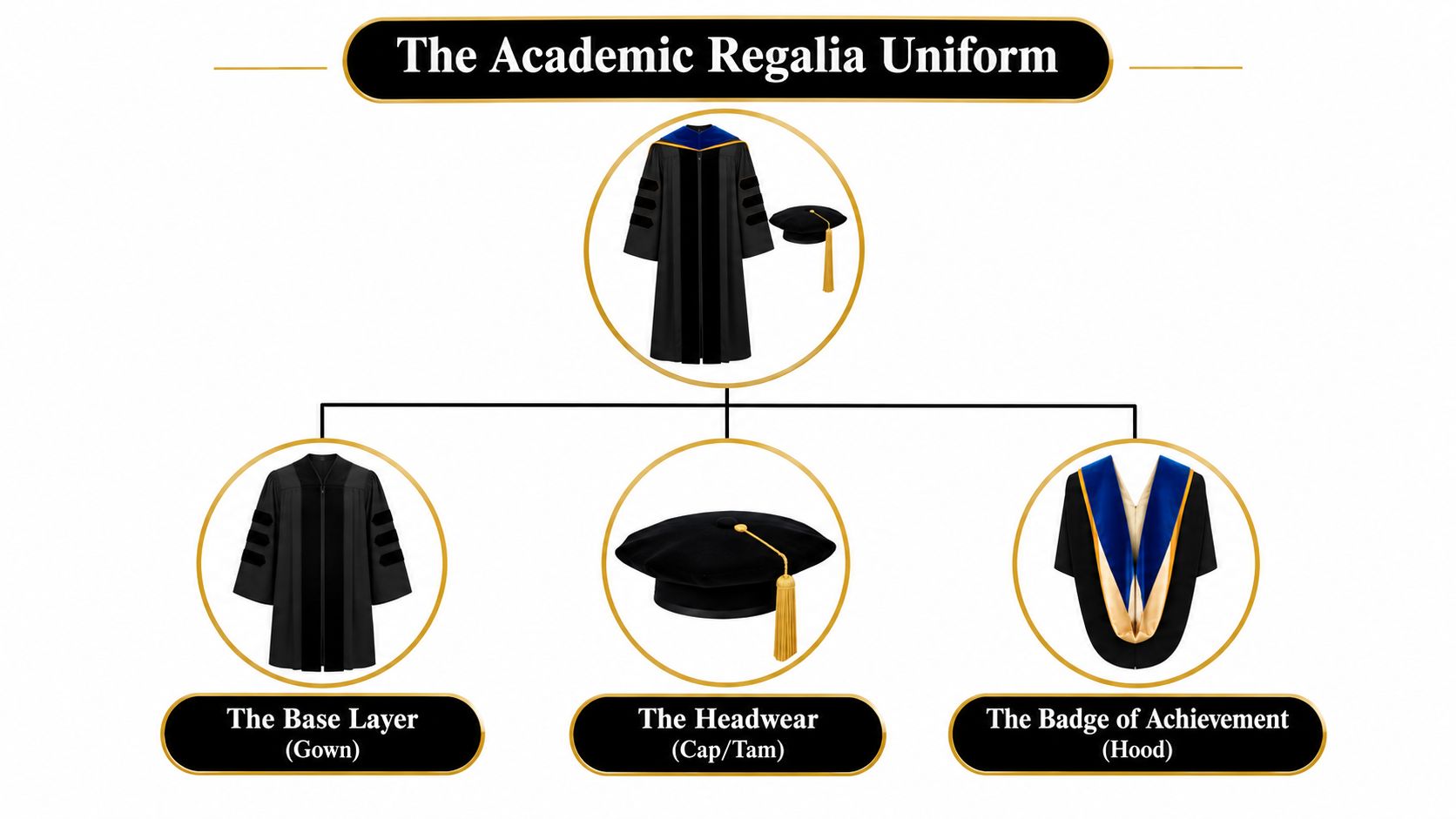
Faculty regalia works like a uniform with a set of credentials built into it. The gown is the base layer, the cap or tam is the headwear, and the hood acts like a large academic badge. Each piece has a separate job, so ordering a complete set means more than selecting a black robe and a cap.
The gown creates the formal foundation
The gown covers your clothing and establishes the overall degree-level silhouette. Bachelor's and master's gowns are generally simpler, while doctoral gowns have more visible trim and more elaborate sleeve construction. A faculty gown should hang cleanly from the shoulders, leave room for movement, and maintain a formal line during a long procession or ceremony.
The gown also needs to work with the hood. A hood rests over the shoulders and upper back, so a properly sized gown prevents the hood from bunching or sliding. That's why a faculty set should be chosen as a coordinated package whenever possible, rather than assembled from unrelated pieces.
The cap or tam completes the profile
Bachelor's and master's academic dress commonly uses a mortarboard, the familiar flat, square cap. Doctoral faculty regalia commonly uses a soft doctoral tam, often made with a fuller, more flexible shape. Your institution may specify one style, so check the faculty dress instructions before ordering.
The cap should sit securely without creating pressure. A tam shouldn't be pulled so far forward that it hides your face, and a mortarboard should remain level as you walk, greet graduates, or participate in photographs.
The hood carries the most detailed information
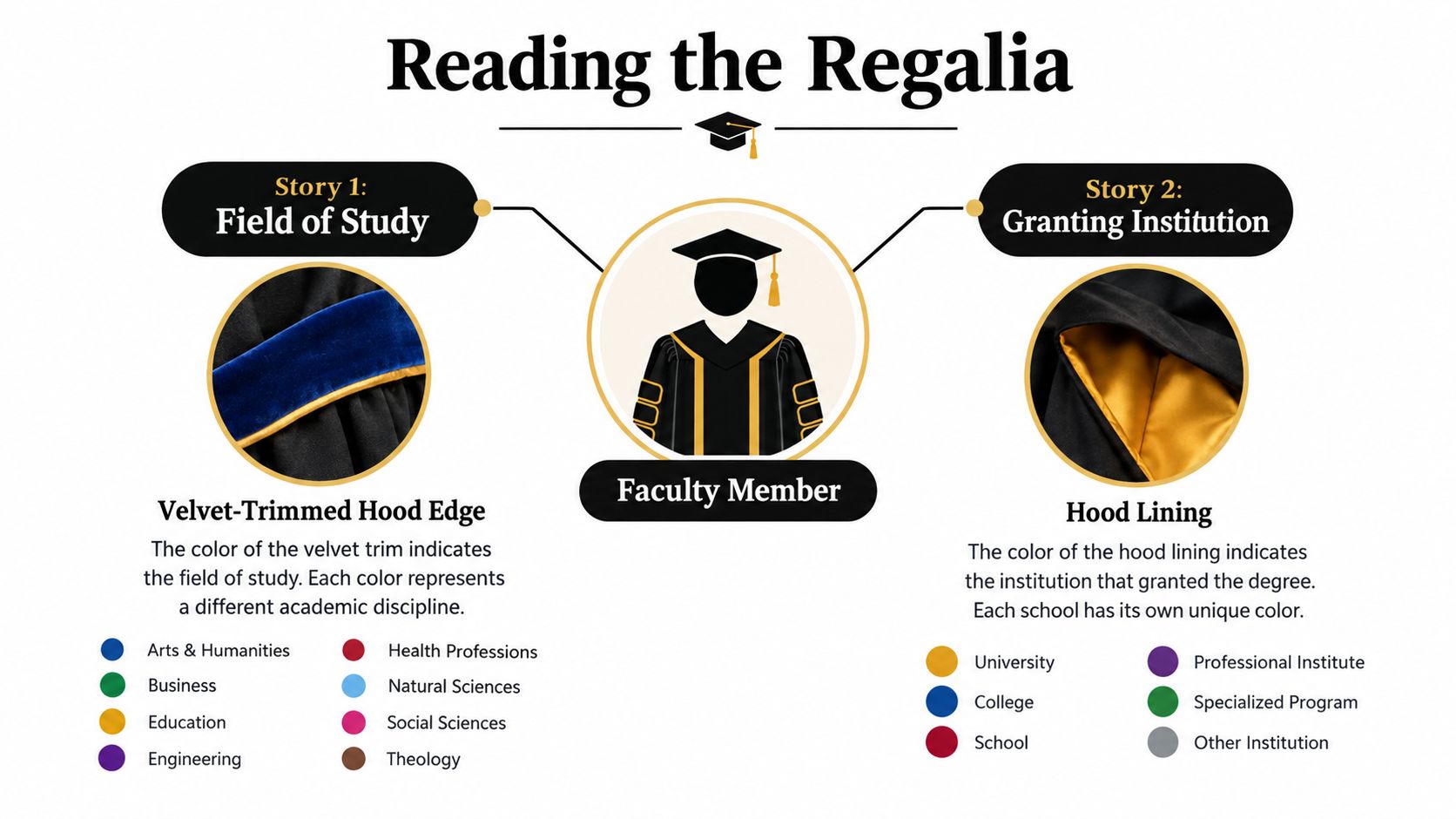
The hood communicates two connected parts of your academic story. Its velvet trim identifies the academic field, while its lining represents the university that granted the degree. Because the hood is worn over the gown, its colors remain visible even in a large procession.
Faculty and student regalia may look similar from a distance, but faculty sets often offer different construction, fabric choices, and doctoral details. If you're still learning the vocabulary, the guide to types of graduation gowns offers a useful visual reference.
A complete set usually includes the gown, the correct headwear, and the appropriate hood. Some faculty members also need accessories, such as a garment bag for storage or a diploma cover for related academic events. Those additions shouldn't replace the required core pieces, and they should never conflict with university policy.
How Bachelor Master and Doctoral Regalia Differ
Degree level is easiest to read through the gown's shape, sleeve design, velvet treatment, and hood proportions. Faculty members are generally expected to wear regalia corresponding to their highest earned degree, but your institution's written policy controls if it gives a different instruction.
The bachelor's gown has the simplest appearance. The master's gown introduces a more distinctive sleeve shape, while doctoral regalia uses velvet panels and sleeve bars as clear classification signals. These details help viewers understand academic level without needing to read a name card.
Degree Level Regalia Differences at a Glance
| Feature | Bachelor | Master | Doctoral |
|---|---|---|---|
| Gown silhouette | Simple academic gown with a straightforward cut | More distinctive gown with oblong sleeves | Fuller gown with formal velvet detailing |
| Sleeve design | Relatively simple sleeves | Oblong sleeves, commonly open at the wrist | Full, bell-shaped sleeves with velvet bars |
| Front trim | Minimal | Minimal compared with doctoral dress | A five-inch velvet panel down the front |
| Sleeve trim | No doctoral bars | No doctoral bars | Three velvet bars on each sleeve |
| Hood length | 3 feet, with 2-inch velvet binding | 3.5 feet, with 3-inch velvet binding | 4 feet, with 5-inch velvet binding |
| Headwear | Usually mortarboard | Usually mortarboard | Often a doctoral tam, subject to institutional rules |
The doctoral gown's velvet trim is both decorative and functional. U.S. doctoral gowns are described as having a five-inch velvet front panel and three velvet bars on each sleeve, and the velvet color can indicate the academic field. That combination makes doctoral construction more complex than a basic cap-and-gown set. The doctoral regalia guidance from the University of Nebraska at Omaha explains these distinguishing features.
Read your degree level before choosing accessories
A common mistake is to select a headpiece based on preference alone. A doctoral tam may feel more comfortable, but some institutions require a mortarboard for all participants. Likewise, a faculty member with a doctorate shouldn't automatically choose master's regalia because the gown looks lighter or easier to pack.
Check three details before you place an order:
- Highest degree: Use the degree that your institution recognizes for faculty regalia.
- Gown construction: Confirm the sleeve and velvet features match that degree.
- Hood dimensions: Match the hood length and velvet binding to the degree level.
The goal isn't to look more elaborate than other faculty members. It's to wear a silhouette that accurately reflects your academic standing and follows the ceremony's expectations.
Decoding Colors Trims and Hood Meanings
Academic regalia uses color as a visual language. The hood usually tells two stories at once. Velvet trim points to the field of study, while the satin lining points to the degree-granting institution. That distinction matters for faculty because the relevant university is usually the one that awarded your highest degree, not necessarily the campus where you currently teach.
The trim identifies the field
The colored velvet edge is the easiest part to notice from the audience. Examples include dark blue for Philosophy and golden yellow for Science. Other fields use their own designated colors, so don't choose a shade because it matches your department's branding or your favorite school color.
Your degree title matters more than your current teaching assignment. A faculty member who teaches in an interdisciplinary department may still need trim associated with the field of the degree that established their academic qualification.
Small differences in fabric and shade can change the appearance of the hood. For a useful discussion of textile trim and color choices, consult the Lewis and Sheron Textiles trim advice, then verify the final selection against your institution or a university-color lookup tool.
The lining identifies the institution
The inside of the hood displays the official colors of the university that granted the degree. This lining can include a recognizable pattern, often arranged in a chevron or another institutional design. It's the part of the hood that connects you to your academic lineage.
That means your current employer's colors may not belong inside your hood. If you earned your doctorate at one university and now teach at another, the hood normally represents the degree-granting institution unless your ceremony policy says otherwise. The guide to graduation colors and hoods can help you organize those choices before you order.
Follow ceremony policy over personal decoration
Regalia rules can be strict. One university policy requires appropriate gown, cap, and hood when regalia is required, directs faculty to wear the regalia for the highest degree attained, prohibits personal décor, and allows only one hood and one cap at a time. That means decorative pins, extra hoods, and personalized additions may be inappropriate even if they have sentimental value.
Ask the commencement office whether cords, stoles, medals, or other accessories are permitted. If the answer isn't clear, leave optional decorations at home. Clean, accurate regalia always presents a stronger professional appearance than a crowded set of conflicting symbols.
Choosing the Right Size Fabric and Fit for Faculty Regalia
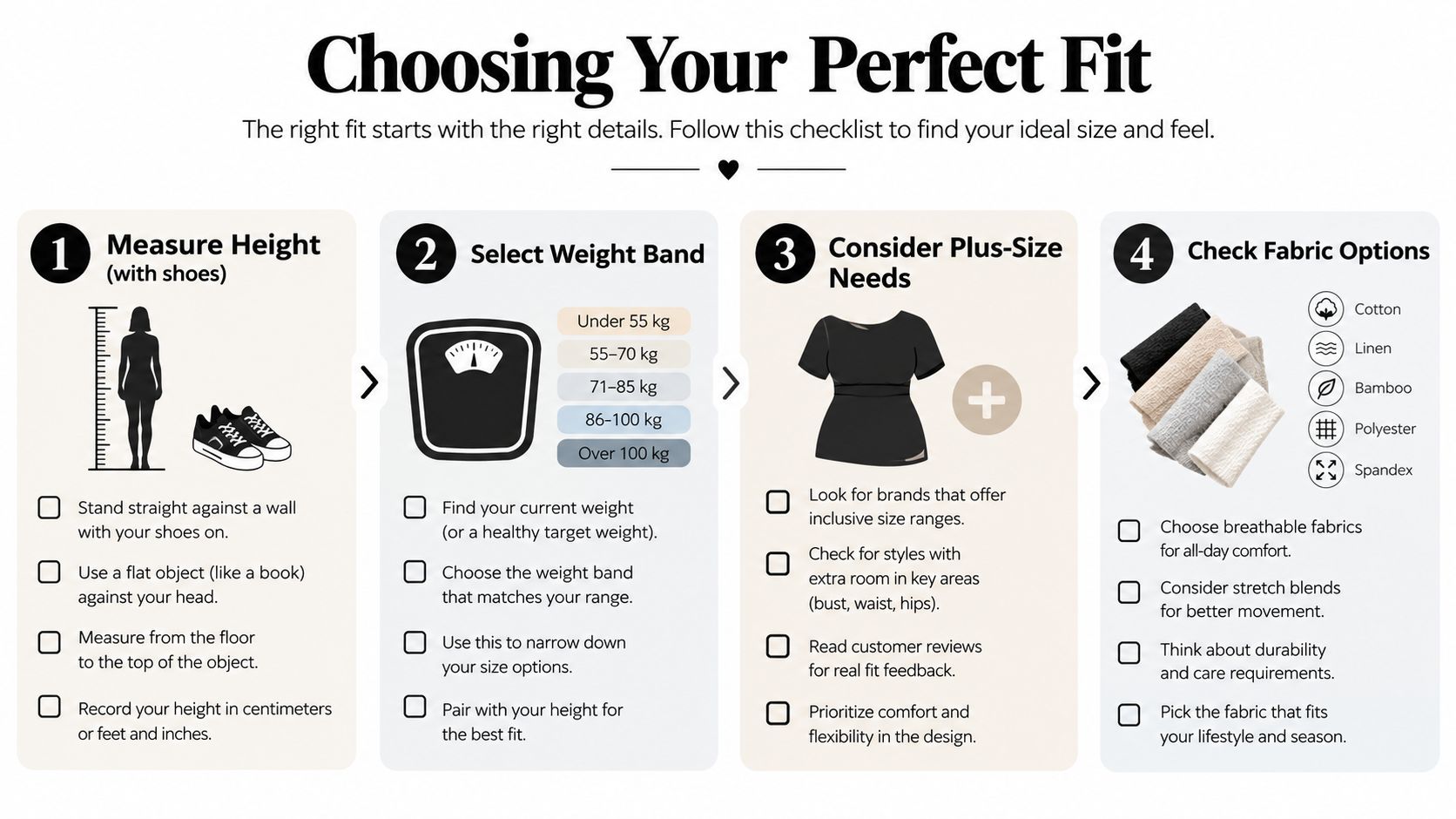
Faculty gowns aren't usually sized like jackets or trousers. A major sizing chart maps gown sizes to height ranges and weight bands, and asks buyers to provide height with shoes and weight. The reason is simple: the garment must accommodate both your vertical drape and your torso volume.
Start with the measurements that affect the gown
Measure your height while wearing the shoes you expect to use at commencement. Footwear changes the gown's final length, and a small difference can affect whether the hem sits neatly above the floor or hangs too close to it.
Next, use your current weight to select the appropriate band. Don't substitute suit size, shirt size, or a guessed body measurement. Faculty gowns are designed around the way fabric falls over the whole body, not around the dimensions of a single everyday garment.
The same sizing reference includes options spanning roughly 4'6" to 6'11", with plus-size variants. That range shows why height alone isn't enough for a reliable selection. Review the specific chart for the product you're considering, since construction and fabric can affect the fit.
Check the headwear separately
The cap is often treated differently from the gown. One major faculty sizing chart describes the cap as typically one-size-fits-all with elastic and lists standard cap dimensions of 9 x 9 inches. Even when the cap uses elastic, you should confirm how it sits before ceremony day.
Try it with your hairstyle and any glasses you'll wear during the ceremony. A mortarboard should sit level, while a tam should rest securely without slipping backward. If your university specifies a particular doctoral tam or mortarboard, follow that direction rather than choosing based only on comfort.
Choose fabric for the ceremony environment
Fabric affects weight, breathability, sheen, and drape. A lighter material may feel more comfortable in a warm venue, while a more structured fabric can create a formal silhouette. Consider the ceremony location, expected temperature, travel distance, and whether you'll wear the set repeatedly.
Before ordering, use the available size and fabric information to answer these questions:
- Height: Did you measure with your ceremony shoes?
- Weight band: Did you use the current chart rather than a clothing-size guess?
- Room to move: Can you raise your arms and walk comfortably?
- Hemline: Does the gown fall safely above the floor?
- Hood position: Will the hood sit flat over your shoulders?
- Fabric: Does the material suit the venue and likely weather?
A polished fit should look intentional without restricting movement. If you're between options, ask the supplier or commencement office before submitting a custom order.
Renting Versus Buying Faculty Regalia and What It Really Costs
Renting solves a short-term problem. Buying solves a recurring one. The right choice depends on how often you attend ceremonies, whether your department offers support, and who will manage the garment after the event.
For an occasional participant, rental is often practical. You avoid finding storage space and don't need to maintain a complete set between ceremonies. Renting also makes sense when your institution requires a specific style that you won't use elsewhere.
Ownership becomes more attractive when you expect repeated commencements. You can keep the fit consistent, avoid repeating the selection process, and have the required pieces ready for convocations or hooding events. The decision should be based on the total cost across multiple ceremonies, not only the initial purchase price. A cap-and-gown cost guide can help you frame that comparison without assuming every faculty member has the same needs.
Ask about institutional support before paying
University policy can affect the actual cost to you. One institutional policy requires advance approval, treats purchased regalia as a taxable benefit, and assigns ongoing care and storage to the faculty member. In that situation, the purchase may create accounting and maintenance responsibilities that a rental does not.
Another faculty-regalia policy states that the college administration will purchase gown, hood, and cap for faculty without academic attire. It also allows approved faculty to buy regalia on an amortization basis, with the regalia becoming the faculty member's property after two years of subsequent amortized service.
Those policies show why a private purchase shouldn't be your first step. Contact your department chair, finance office, or commencement coordinator and ask:
- Is institutional funding available?
- Do you need written approval before ordering?
- Will the purchase be treated as a taxable benefit?
- Who owns the set after purchase or amortization?
- Who handles storage, cleaning, and replacement?
Compare the full ownership picture
Buying may provide better long-term control, but it also means you're responsible for the hood, gown, cap or tam, storage, cleaning, and future repairs. A complete package may reduce the risk of forgetting one required piece, while individual items can help replace a damaged hood or update a missing cap.
Renting may be the better fit when participation is rare. Buying may be sensible for faculty who march regularly and want dependable access to a consistent set. Either way, document the policy decision before the ceremony, especially if institutional funds or payroll treatment are involved.
Wearing Etiquette Care and Your Quick Ordering Checklist
Ceremony-day problems usually come from small oversights, not from a lack of respect for tradition. A hood can twist, a gown can arrive wrinkled, or a pickup deadline can pass while you're traveling between campuses. A short preparation routine prevents most of those problems.
Put on the pieces in the right order
Dress in your ceremony clothing first, then put on the gown. Secure the front closure without pulling the fabric tightly across your body. Place the hood so the velvet trim is visible and the lining falls correctly, then use the hood's cord or fastening system to keep it from sliding.
Finish with the cap or tam. Check the mirror from the front and side. The hood should lie smoothly over the shoulders, the gown should hang evenly, and the headwear should sit securely without blocking your face.
University rules may limit accessories. One policy prohibits personal décor and permits only one hood and one cap, so don't add pins, extra hoods, or decorative items unless the commencement office has approved them.
Prepare the garment before you travel
Avoid putting regalia directly into a tightly compressed suitcase. Use a garment bag when possible, and hang the gown as soon as it arrives. Gentle steaming can relax wrinkles, but keep the steamer far enough away to avoid pressing moisture or heat directly into trim, lining, or velvet.
For travel, fold the gown loosely around softer clothing rather than crushing it beneath shoes or heavy items. Keep the hood protected from sharp creases, since its shape and lining are highly visible in photographs. Follow the care instructions supplied with the garment, especially if the set includes different fabrics.
Build a deadline contingency plan
University procedures vary. Some ceremonies use campus pickup windows, while others require delivery to a specific location. Late access may be possible only under narrow conditions, and a late registrant might receive a hood in campus colors rather than the degree-conferring school's colors. Another campus may provide precise pickup windows and campus-specific delivery instructions.
Don't assume a late order will produce the same result as an on-time order. Confirm the deadline, pickup location, delivery address, and late-order policy before you pay.
Use this final ordering checklist
- Verify your degree: Confirm the highest degree you're expected to represent.
- Confirm colors: Match field trim and degree-granting institution lining.
- Measure carefully: Record height with shoes and current weight.
- Select the headwear: Choose the required mortarboard or doctoral tam.
- Choose a package: Compare a complete faculty set with individual replacement pieces.
- Review fabric: Consider weight, drape, climate, and future use.
- Check policy: Ask about approval, funding, tax treatment, ownership, and accessories.
- Confirm fulfillment: Record the order deadline, shipping details, pickup window, and late contingency.
A few minutes of preparation can protect the appearance, accuracy, and practicality of your faculty cap and gown. You'll arrive ready to focus on the graduates instead of adjusting your attire.
Graduation Cap and Gown offers faculty-oriented doctoral gowns, classic doctoral cap-and-gown sets, academic hoods, tams, mortarboards, garment bags, and individual regalia pieces for different degree levels. Visit Graduation Cap and Gown to compare complete packages and separate components, check sizing and color options, and prepare your ceremony attire with your university's requirements in hand.