

Your graduation gown is so much more than an outfit for the day. It’s a symbol, a wearable testament to years of hard work, late nights, and dedication. The main types of graduation gowns are easy to tell apart once you know what to look for: Bachelor’s gowns have pointed sleeves, Master’s gowns feature oblong sleeves, and Doctoral gowns include velvet stripes on the sleeves and down the front.
Each style tells a story about where you are in your academic journey.
What Is Academic Dress?
Academic dress is the formal clothing worn for graduation and other ceremonial university occasions. In practice, people often use academic dress, academic regalia, and graduation gown almost interchangeably to mean the full set of ceremonial attire: gown, cap, hood, and sometimes stoles or cords. Academic regalia signals degree level, institution, and sometimes field of study or honors.
The tradition reaches back to medieval European universities, where scholars wore long gowns and hoods for both formality and warmth in unheated buildings, a history still reflected in modern regalia today, as noted by Lamar University’s regalia overview. In the United States, the system most graduates recognize now was later organized through the Intercollegiate Code.
Naming also varies by region. In many Spanish-speaking contexts, people use toga for the gown and birrete for the cap; in Indonesia, you may see jubah wisuda; and in the UK, academic gown is common everyday usage. The terms differ, but they usually point to the same ceremonial idea: clothing that marks degree level, institution, and honors.
This tradition was formally organized in the United States in the late 19th century. Harvard Magazine notes that the Intercollegiate Bureau of Academic Costume established a formal code in 1897, and most American universities had adopted or followed the system by 1902. That framework set out the three main types of graduation gowns still recognized today.
The Hierarchy of Achievement
Each gown's design signifies another step up the academic ladder. As you move from a bachelor's degree to a master's and finally a doctorate, the regalia becomes more ornate. The accessories you wear, like hoods and stoles, add even more meaning, often pointing to your specific field of study or personal honors.

To make sure you’re wearing everything correctly on the big day, it’s worth reviewing our guide on how to wear graduation regalia properly.
This visual hierarchy makes it easy to spot the different academic levels in a crowd.
As you can see, the complexity and decoration of the gown grow with each degree earned, creating a clear visual representation of a graduate’s journey.
To help you quickly tell these gowns apart, we’ve put together a simple table that breaks down the key features of each.
Graduation Gown Types at a Glance
| Gown Type | Typical Sleeve Style | Key Features | Common Wearers |
|---|---|---|---|
| Bachelor's | Pointed, closed sleeves | Simple, unadorned black gown; the basic design. | Undergraduate students receiving a Bachelor of Arts (B.A.) or Bachelor of Science (B.S.). |
| Master's | Oblong sleeves with a wrist opening and arc cut | More elaborate than a bachelor's gown, but less so than a doctoral one. | Graduate students receiving a Master of Arts (M.A.), Master of Science (M.S.), or MBA. |
| Doctoral | Full, bell-shaped sleeves | Features three velvet chevrons (bars) on each sleeve and matching velvet panels down the front. The most ornate gown type. | Graduates earning a Ph.D., Ed.D., M.D., or other terminal degrees. |
This table makes it easy to see how the design evolves, but the differences really come down to a few key areas:
- Sleeve Style: This is the clearest visual cue. Pointed, oblong, or bell-shaped sleeves instantly tell you the degree level.
- Trim and Embellishments: The rich velvet panels and chevrons are reserved exclusively for doctoral gowns, setting them apart.
- Accessories: Hoods and tams become more prominent with advanced degrees, adding brilliant pops of color and prestige.
As we move into the specific gown styles, you’ll see how each piece contributes to a tradition that is both personal and historically significant.
How We Researched This Guide to Academic Regalia
This overview draws on reference sources about the history and coding of academic dress in the United States, including Lamar University’s regalia overview, Harvard Magazine’s explanation of the Intercollegiate Code, and the National Center for Education Statistics for context on how widely graduation apparel is used.
It also reflects practical ordering considerations that affect real ceremonies, such as sleeve shape, hood use, and school color requirements. Because Graduation Cap and Gown serves both individuals and schools as a third-party vendor and does not keep specific regalia information on file, customers should confirm their institution’s requirements before ordering.
The topic is broad because commencement itself is broad. Academic dress is relevant not only to universities but also to high schools and other institutions that hold formal graduation ceremonies.
High School and Bachelor's Gown Styles
For so many of us, the path through formal education is marked by two huge milestones: high school graduation and earning a bachelor's degree. Each of these moments is celebrated with a specific type of gown that, while it may look simple, is packed with meaning. These gowns represent the first major steps into a much larger world of accomplishment.
The high school gown is the classic symbol of closing one of life's first great chapters. It’s typically designed with an elegant simplicity in mind—think a straightforward cut, a clean zipper front, and an unadorned look. This timeless design keeps the focus exactly where it should be: on the students and their shared success.
Often produced in official school colors, these gowns come in both shiny and matte finishes. The shiny finish catches the light beautifully during the ceremony and in photos, while the matte finish offers a more modern, subdued look.
The Classic High School Gown
A defining quality of the high school gown is its uniformity. It creates a powerful visual of an entire graduating class moving forward together, united by years of shared experience. The design is intentionally basic, setting the stage for the more elaborate academic regalia graduates might wear down the road.
- Simple Cut: A basic yoke and full, flowing body give it a comfortable and traditional fit.
- Fabric Choices: Graduates can often pick between a classic shiny fabric or a more contemporary matte finish.
- School Spirit: Gowns are almost always made in official school colors, reinforcing that sense of community and pride.
This gown is a blank slate, representing the endless possibilities that lie ahead for every single graduate.
The Bachelor's Gown: A Symbol of Higher Learning
Making the leap to higher education brings a subtle but important change in academic dress. The bachelor's gown, while still clean and unadorned, introduces one key feature that sets it apart from its high school counterpart: the sleeves. This gown is your official entry into the long-standing traditions of university regalia.
The defining characteristic of the bachelor’s gown is its long, pointed sleeves. This specific design is a nod to academic tradition, representing the first, foundational level of higher education and signaling a graduate's entry into their scholarly field.
Unlike the more elaborate gowns you'll see for advanced degrees, the bachelor’s gown has no velvet trim or other embellishments. Its simplicity is symbolic; it signifies the beginning of a specialized intellectual journey. To explore one example, you can visit our deluxe black bachelor's gown.
This gown is a testament to the tough, rigorous work and dedication it takes to earn a university degree. It represents a solid foundation upon which future academic or professional achievements can be built.
Master's and Doctoral Gown Styles
When you move into postgraduate studies, the graduation gown you wear levels up, too. The robes for master’s and doctoral graduates become more elaborate, a clear signal of the deeper dedication required to earn these degrees. They're more than just garments; they're a visual story of your scholarly achievement, with specific design details that set them far apart from the simpler styles of undergrads.
The master's gown introduces one unique feature: the oblong sleeve. Unlike the pointed sleeves you see on a bachelor's gown, this style is longer and has a distinctive arc-shaped slit near the wrist where your arm comes through. It’s a design that represents a greater mastery of your field, showing you've moved well beyond foundational knowledge.
You can explore our complete Master's regalia sets to see exactly how these elements create such a distinguished look.
Master's Graduation Gown
The master’s gown is the middle tier of the traditional three-level system, and its sleeve is what makes it instantly recognizable. Instead of the bachelor’s pointed sleeve or the doctoral bell sleeve, a master’s gown uses an oblong sleeve with an opening at the wrist and a rear crescent-shaped cut that hangs downward. That shape gives the robe a more formal, draped look on stage and in photos.
What master’s graduates wear over the gown matters just as much as the robe itself. In American academic regalia, the hood is usually the key identifier for the degree and field. According to Harvard Magazine, the velvet trim color indicates the academic discipline under the Intercollegiate system, while the lining shows the institution’s colors. That is why two graduates in similar black gowns can still look quite different.
As a third-party vendor, we do not keep any school’s specific regalia information on file, so we tell customers to confirm hood and color requirements with their institution before ordering. Schools can change colors from year to year, and some programs follow their own rules.
The result is a look that feels more ceremonial than a bachelor’s gown without the heavy velvet detailing of a doctoral robe. If you are comparing graduation gown styles side by side, the master’s sleeve-and-hood combination is usually the fastest way to identify this degree level.
The Doctoral Gown: The Pinnacle of Academic Dress
Reserved for those who have reached the highest level of scholarship, the doctoral gown is the most distinguished of all academic robes. Its design is instantly recognizable and speaks volumes about the immense accomplishment of the person wearing it.
This tradition of different robes for different degrees is rooted in history. Formal rules for specific gown types go back over 700 years. One of the earliest known mandates comes from a 1321 statute at the University of Coimbra, which required distinct gowns for all 'Doctors, Licentiates, and Bachelors'. You can discover more about the long history of academic regalia on Wikipedia.
The doctoral gown stands apart with several premium features:
- Velvet Panels: It has rich, plush velvet panels running down the front, creating a striking contrast against the gown's main fabric.
- Velvet Chevrons: Each full, bell-shaped sleeve is decorated with three horizontal velvet bars, known as chevrons.
- Color Symbolism: The velvet’s color often corresponds to the specific field of study, adding another layer of meaning. For example, light blue typically represents education, while dark blue signifies philosophy (Ph.D.).
This combination of full sleeves and velvet trim makes the doctoral gown the most distinguished form of academic attire, clearly identifying its wearer as having achieved a terminal degree in their discipline.
For those reaching this academic peak, investing in high-quality regalia is a must. We offer doctoral gowns, doctoral packages, PhD doctoral hoods, faculty doctoral tams, and beefeaters, including a Deluxe Doctoral Graduation Gown - Academic Regalia priced at $129.95, with volume pricing as low as $103.96.
To learn more about this esteemed attire, check out our guide on everything you need to know about your PhD cap and gown. This advanced regalia is a proud and fitting tribute to years of rigorous research and intellectual dedication.
Completing Your Look with Hoods, Stoles, and Cords
Your graduation gown is the foundation, but the accessories you wear on top are what tell the story of your academic journey. Think of your gown as the canvas. Your hood, stoles, and cords are the vibrant colors that bring your personal achievements to life, transforming a simple uniform into a testament to your hard work.
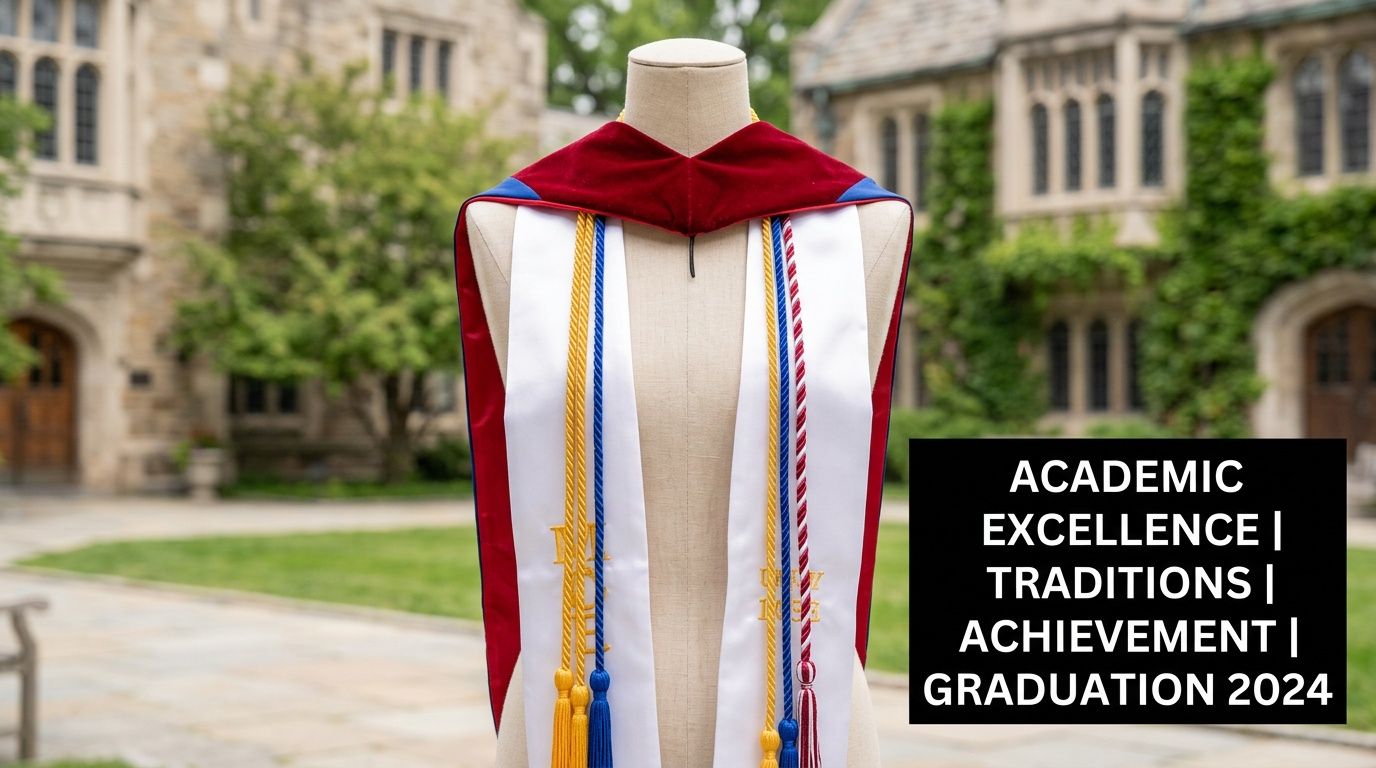
Of all these pieces, the academic graduation hood is the most traditional and symbolic, typically reserved for master's and doctoral graduates. Its design uses visual cues to communicate your degree, field of study, and alma mater all in one glance.
The Academic Hood: A Symbol of Discipline
Draped over your shoulders and down your back, the academic hood is a tapestry of meaning. Its satin lining shows off your university’s official colors, while the velvet trim announces your specific field of study. This color-coding system, developed over centuries, is a visual language for a graduate's area of expertise.
For instance, golden yellow is for the sciences, light blue is for education, and green is for medicine. This formal system was organized in the U.S. in the late 19th century and remains one of the most meaningful pieces of academic dress, a direct link to centuries of scholarly tradition. If you need help finding the right one, you can explore our full collection of academic graduation hoods.
You can also use our custom stole builder to create a personalized stole for your ceremony.
Stoles and Cords: Personalizing Your Story
While hoods are steeped in formal tradition, stoles and cords are where your personal story really gets to shine. These accessories are a fantastic way to celebrate the communities, achievements, and heritage that shaped your educational path.
Graduation stoles act as a wearable banner of pride, allowing graduates to showcase their unique identity, cultural background, or membership in special groups. They add a deeply personal and visually striking element to the standard academic gown.
You can celebrate your roots with one of our vibrant Kente or Serape stoles or honor your family’s journey with a First Generation stole. Each stole carries its own unique symbolism, which you can learn more about in our guide to graduation stole meaning.
Finally, honor cords are the finishing touch. These thin, braided ropes are worn around the neck to signify specific academic honors. Different colors or combinations can represent:
- Academic Honors: Like cum laude (one cord), magna cum laude (two cords), or summa cum laude (three cords).
- Honor Society Membership: Groups like Phi Beta Kappa have their own distinct cord colors.
- Participation in Specific Programs: Recognizing involvement in student government, athletics, or other key university organizations.
Together, these accessories complete your regalia, ensuring the way you look on graduation day is a full and accurate reflection of your incredible accomplishments.
How to Choose Your Perfect Graduation Gown
Picking out your academic regalia is one of the last, most exciting steps before your big day. The key decisions are straightforward: size, school rules, fabric, and whether ownership makes sense for you after the ceremony. Getting these details right will have you looking sharp and feeling confident when you walk across that stage.
The single most important factor for a good fit is your height. Graduation gowns are designed to hang a certain way—usually falling somewhere mid-calf—and that all depends on how tall you are from head to toe.
Getting the Sizing and School Details Right
For a clean fit, measure your height while wearing the same shoes you plan to have on for the ceremony. Even a change in shoe height can affect where the hem falls in photos.
- Find Your Fit: Once you have that measurement, head over to our size, color, and fabric guides to match your height to the correct gown size.
- Match Your School: Every university and high school has its own specific rules for gown color and style. We recommend contacting your school directly to ask what colors they are currently using for graduation apparel, since schools can change them from year to year.
Nailing these two steps helps ensure your regalia will look right and align with your school's requirements.
Choosing Your Gown Fabric Matte vs Shiny Finish
The fabric of your gown makes a huge difference in how you look, especially in photos. We offer two popular finishes, each with its own vibe. Your choice between matte and shiny often comes down to personal taste and the look you want to achieve in your graduation pictures.
A matte fabric gives you a modern, glare-free appearance that looks great from any angle. A shiny fabric, on the other hand, delivers that classic, celebratory sheen you see in traditional graduation photos.
This table breaks down the key differences to help you decide.
| Feature | Matte Finish | Shiny Finish |
|---|---|---|
| Appearance | Modern, sophisticated, and flat. | Traditional, festive, and reflective. |
| Photography | Absorbs light, preventing glare from camera flashes and stage lights. | Reflects light, which can create bright highlights and a classic sheen. |
| Best For | Graduates who prefer a contemporary, understated, and glare-free look. | Graduates who want a classic, celebratory look that really pops. |
Ultimately, there’s no wrong answer here. Think about whether you prefer a smooth, even look under all lighting conditions or a more traditional and bright finish.
Why Buying Your Gown Is the Smart Choice
Buying your own gown gives you a fresh garment to keep as a memento and removes the pressure of returns after the ceremony. Renting can make sense for one-time use, but ownership gives you more flexibility for photos, storage, and future keepsake use.
How to Care for Your Gown Before and After the Ceremony
Your graduation gown is a huge symbol of your achievement, and making sure it looks its best is a key part of the big day. A little attention before and after the ceremony will ensure you look sharp when you finally walk across that stage.
The second your gown arrives, get it out of the packaging. Don't panic if you see wrinkles and creases from shipping—that's completely normal. Just hang it up right away to let the fabric relax. This simple first step can make a huge difference and lets the most stubborn wrinkles fall out on their own.
Getting Your Gown Ready for the Ceremony
For any creases that just won't quit, a gentle steaming is your best friend. Most gowns respond really well to the steam from a hot shower; just hang yours in the bathroom for about 15-20 minutes. If you have a handheld steamer, keep it moving and hold it at least a few inches from the fabric to avoid any damage.
Whatever you do, never iron your gown directly. The intense heat can easily burn or even melt the material.
Getting your gown to the ceremony is just as important as prepping it. A garment bag is a practical way to help keep it wrinkle-free on the way and protect it from spills or snags.
When you're ready to head out, a graduation garment bag can help protect all types of graduation gowns and keep them cleaner in transit.
Storing Your Gown as a Keepsake
After all the celebrating is done, your gown becomes a timeless memento. Before you pack it away, it's a good idea to have it professionally dry-cleaned. This removes any dirt or oils that could cause the fabric to yellow over time.
Once it's clean, fold it carefully and store it in a breathable garment bag or storage box. Steer clear of plastic bags, as they can trap moisture and lead to mildew.
Proper storage turns your gown into a cherished keepsake you can hold onto for years, perfectly preserving the memory of your academic success.
Frequently Asked Questions
What size graduation gown should I order?
Graduation gowns are usually sized by height, not by your everyday clothing size. Measure from head to toe in the shoes you plan to wear, then compare that number to the size chart for the specific gown.
Can I customize my graduation regalia?
Some parts of regalia follow school or degree rules, but accessories often allow more personal expression. Stoles are the most common place to add text, flags, or logos that reflect heritage, organizations, or achievements. If you are ordering cords or color-specific items, check with your school first because honor cord and apparel colors can vary by institution.
Should I buy or rent my graduation gown?
Buying makes the most sense when you want a keepsake, want to avoid return deadlines, or need regalia for photos beyond the ceremony itself. Renting can work for one-time use, but it gives you less flexibility and no long-term memento.
Is a graduation gown called a toga?
Usually, no. In English, a graduation gown is not the same thing as the Roman toga, which was a draped garment from ancient Rome rather than an academic robe. The word toga still appears in some Spanish-language contexts as a normal term for graduation attire, which is why the naming overlap persists even though the garments are historically different.
Why are graduation robes so expensive?
The price often reflects the materials and details involved. Basic gowns can be simpler, while higher-degree regalia may use more fabric, doctoral velvet trim, and school-specific color requirements for hoods or other pieces.
Ready to find the perfect regalia for your milestone? At Graduation Cap and Gown, we offer a wide selection of gowns, hoods, stoles, cords, tassels, and accessories for every academic level. Shop at https://www.graduationcapandgown.com.