

A flag graduation stole is a sash worn over an academic gown displaying a country's flag to represent national origin, heritage, or study-abroad experience. It has become one of the most meaningful ways graduates personalize their ceremony attire.
You may be standing in front of your cap and gown right now, wondering how to make a traditional outfit reflect the journey behind it. Perhaps your family came from another country, you studied abroad, or you want to honor the place that shaped your identity. A flag stole can add that personal meaning without changing the formal character of academic regalia.
The important choice isn't only which flag looks attractive. You also need to consider what the flag represents, whether the design is accurate, how your school handles extra regalia, and whether the stole will sit clearly in photographs. A thoughtful decision helps you celebrate your story while showing respect for the people and culture connected to that symbol.
What Is a Flag Graduation Stole
A flag graduation stole is a decorative sash worn across the shoulders and over the front of an academic gown. Its fabric displays a national flag, allowing the graduate to communicate a connection to a particular country during commencement. That connection may come from national origin, family heritage, study-abroad experience, international study, or a personal bond with a country.
For example, a graduate whose parents immigrated from Norway might wear a Norway flag stole as a visible tribute to family history. Another graduate might choose a flag connected to a year studying overseas. Someone else may wear one to recognize the community that supported them throughout school. The meaning belongs to the wearer, but the design gives other people a way to understand part of that story.
A stole also adds color and shape to an otherwise standardized outfit. The gown, cap, and hood communicate academic achievement and degree tradition. The flag sash adds a more personal layer, turning formal regalia into something connected to family, place, and belonging. For a broader explanation of what graduation stoles can represent, see this guide to graduation stole meaning.
A tradition older than the modern ceremony
Flag stoles belong to a much older academic-regalia tradition. Academic dress dates back almost 1,000 years, to medieval European universities in the 12th and 13th centuries, when scholars wore long gowns and hoods modeled partly on clergy clothing for warmth and status. The modern framework was later standardized in 1895 through the Intercollegiate Code for Academic Costume, which formalized colors and designs still used today. (The Sash Company explains the history of graduation stoles and sashes)
That history explains why a flag stole can feel both traditional and personal. It doesn't replace the academic gown. Instead, it works within the established language of commencement clothing while adding a symbol that reflects the graduate's life.
A useful way to think about it: the gown marks the academic milestone, while the flag stole helps tell the story of how you arrived there.
Choosing meaning over decoration
A flag stole works best when the symbol has a clear relationship to your experience. Ask yourself whether you're honoring your birthplace, your family, a community, or a formative educational experience. If you can explain the choice in one sincere sentence, the stole will likely feel intentional rather than decorative.
The design should also remain visible. A flag with a small emblem or detailed crest needs enough front-facing space to stay recognizable. That practical consideration matters because a beautiful symbol loses meaning if it folds, twists, or disappears under the gown.
Understanding the Cultural Significance of Flag Stoles
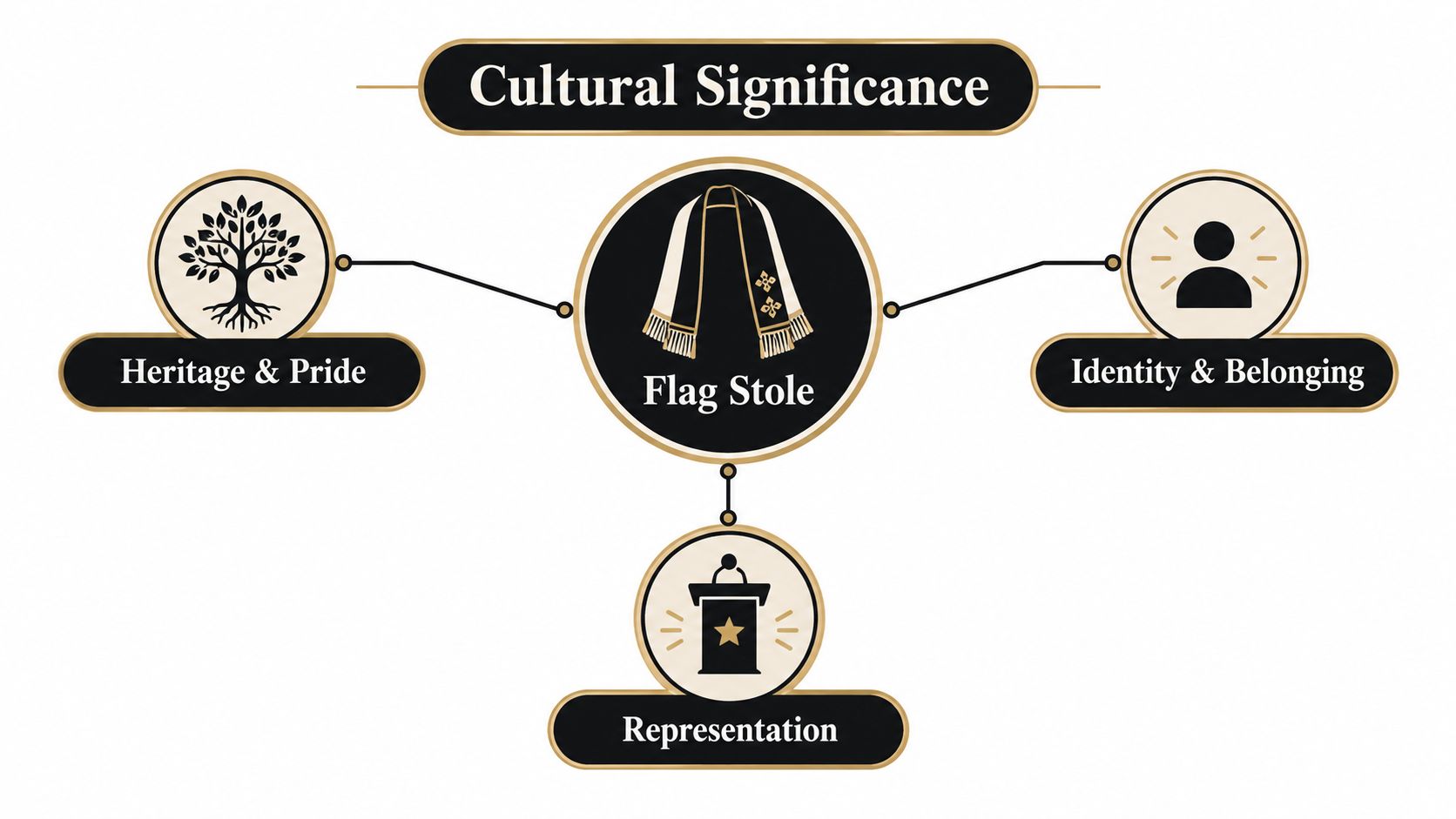
A graduate may step onto the stage carrying more than school pride. The flag on a stole can represent a birthplace, a family story, a period of study, or a community that helped shape their education. Before ordering one, ask whether the symbol reflects a real connection and whether it represents that connection accurately.
Flag stoles commonly express national origin, study-abroad experience, or a student's connection to a particular country, as explained in Gradshop's guide to graduation stole meaning. Because the symbol speaks for you in a public setting, check its colors, emblem, orientation, and construction. A small design error can communicate a different identity or message than you intended.
Start with your relationship to the symbol
Use these questions to test whether the choice feels honest and respectful:
- Family heritage: Is the flag connected to your parents, grandparents, relatives, or the community that raised you?
- Personal experience: Did you live, study, work, or form an important relationship in that country?
- Shared identity: Does it represent a diaspora, regional, Caribbean, international, or identity community you belong to?
- Accuracy: Does the design identify the specific country or region you mean to honor?
You do not need to prove your identity to other graduates. These questions help separate meaningful representation from a design chosen only for appearance. If you can explain the choice in one sincere sentence, the stole will usually feel intentional.
When one flag isn't the whole story
Countries and regions can have several identity symbols. A national flag may exist alongside a regional flag, an Indigenous symbol, a diaspora emblem, or another design that better reflects the graduate's experience. Choosing one does not erase the others, but each symbol can communicate something different.
The available range of country, international, Caribbean, and identity-specific stoles includes double-sided designs and options for any flag, reflecting identity expression that extends beyond simple patriotism. Explore international graduation stoles and country-flag designs before deciding which format fits your story.
A double-sided stole can keep artwork visible from different angles, but inspect how the emblem appears on each side. Mirrored or reversed details may change how a flag is read. If a national flag feels too narrow for your background, a heritage stole with patterns, text, or multiple symbols may communicate it more accurately. You can also explore the meaning behind Kente stoles when that textile better represents your cultural history.
How to Wear Your Flag Graduation Stole Correctly
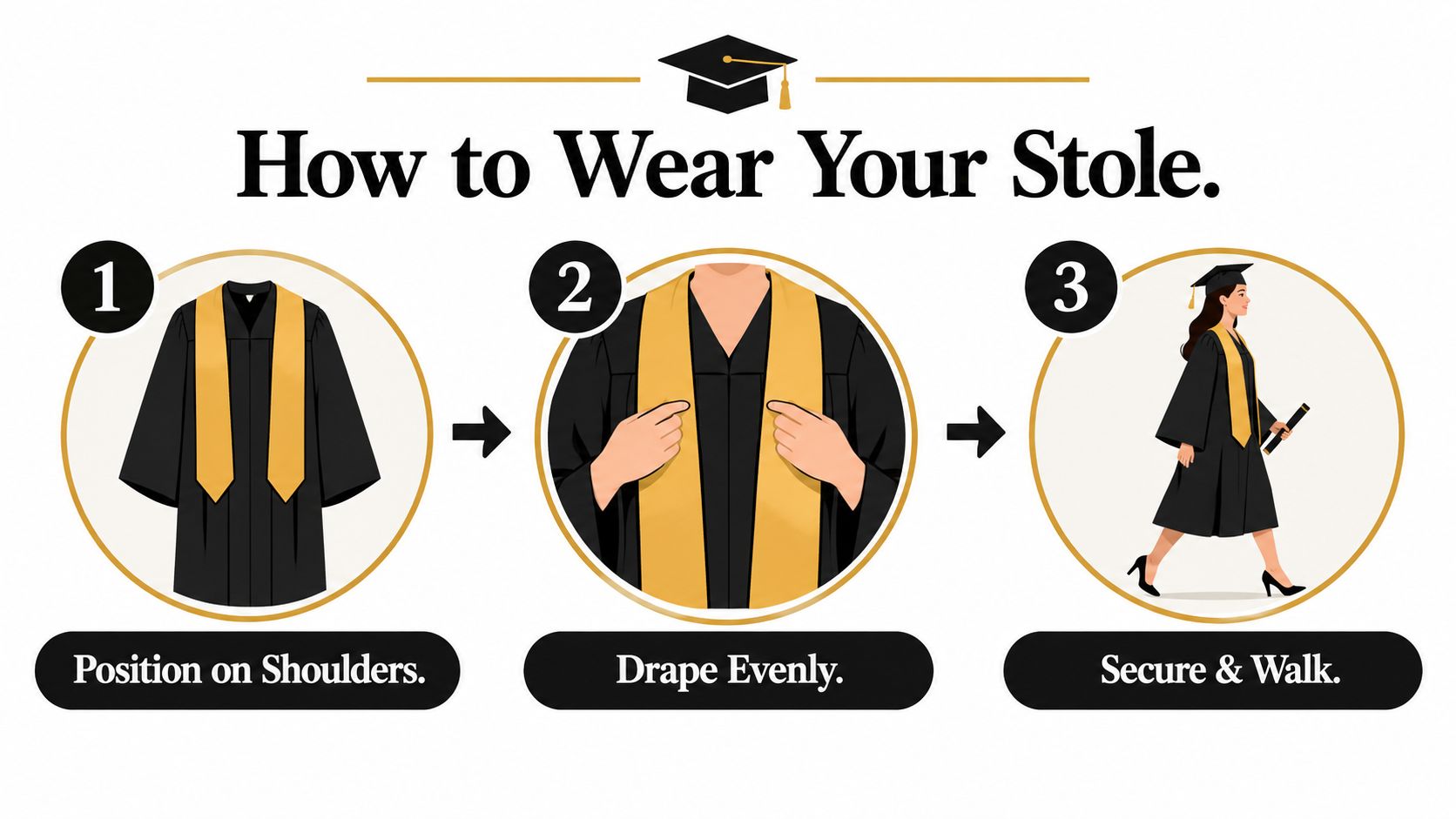
A flag stole should rest evenly over both shoulders, with the front panels hanging down the gown in a balanced position. The center of the stole sits behind your neck, while the two decorated ends face forward. This simple arrangement keeps the flag visible and prevents one side from twisting during the procession.
Start by putting on the gown and fastening it as directed by your school or rental provider. Place the stole over the gown rather than underneath it. Adjust the back portion so it doesn't bunch beneath the collar, then check that both front ends fall at a similar height.
Position the stole before the ceremony
A mirror check can prevent most problems. Look for these details:
- Center the neckline: The stole should sit comfortably behind your neck without pressing against the hood.
- Flatten the panels: Smooth each side so the flag artwork faces forward instead of folding inward.
- Balance the ends: Make sure one panel isn't noticeably longer than the other.
- Check the gown front: Confirm that the stole doesn't cover required academic markings or hang so low that the design disappears.
- Secure loose movement: If your school permits it, use a discreet fastening method that won't damage the fabric or gown.
Don't pin through an embroidered emblem or printed flag area. If you need extra stability, ask the ceremony coordinator whether a small, hidden attachment is allowed.
Work with the rest of your regalia
Honor cords, medals, hoods, and tams all compete for space around the shoulders and chest. The stole should lie flat rather than forcing other pieces outward. A hood usually needs to remain in its intended position, so keep the stole from crowding its collar.
Your guide to wearing graduation regalia can help you review the complete outfit before the event. Take photographs from the front and side, because a stole that looks centered in a mirror may shift when you walk.
During the procession, avoid repeatedly adjusting the sash. Before receiving your diploma or posing for photographs, make one quick check that the flag is facing forward and the panels haven't twisted. A polished appearance comes from preparation, not constant movement on stage.
Materials, Customization, and Design Options
A flag stole can look polished on stage or confusing in photographs, depending on how its material, proportions, and symbols work together. Choose each element with the flag's meaning in mind, especially if the country has several national, regional, Indigenous, or community symbols.
Satin and polyester are common choices for flag stoles. Their smooth surfaces reproduce printed colors clearly, resist wrinkling, and dry quickly after handling or transport. Satin gives the design a noticeable sheen under stage lighting. Polyester offers practical resilience for packing, travel, and outdoor photographs. Both still need careful storage and handling. (Read the flag graduation stole specifications from CollegeWear)
Let the flag artwork guide the dimensions
Panel proportions affect whether a flag remains recognizable. One listed specification uses a 40-inch overall length, two 4.5-inch panels, and 100% satin construction, while broader academic-stole formats commonly fall in the 68–74-inch range. The shorter format can keep artwork centered on the upper gown, while a longer stole may allow more room for decoration but place the flag below the visible gown front.
Detailed emblems need particular care. If a coat of arms, crest, or small symbol is squeezed into a narrow panel, its meaning may disappear. Check the panel width and the finished length before ordering, rather than choosing only by the product name.
Customization should support the symbol
Customization may include a border, text, emblem, or second design. Keep the flag's main fields and symbols unobstructed. A name, degree, or school reference should sit in a supporting area, not across a meaningful part of the flag.
Representation also requires context. Wearing a flag connected to your family, citizenship, heritage, or community can communicate belonging, but a design should not imply an identity you do not hold. Countries with multiple identity symbols may require a careful choice between a national flag, a regional flag, or a community emblem. If you are unsure, ask a family member, cultural organization, or ceremony coordinator before finalizing the artwork.
Double-sided construction can make the stole visible from more viewpoints, while also increasing the chance of reversed lettering or incorrectly oriented emblems. Request a proof and check every symbol's direction before production. A custom graduation stole guide can help you compare personalization choices with school-color, cultural, or organization-focused designs.

Graduation Cap and Gown offers custom stoles alongside individual regalia pieces, allowing you to compare construction and design options before ordering.
Design rule: Keep the flag readable first. Treat names, trim, and extra symbols as supporting details.
Sizing Guide and Care Instructions
A stole can have the right design and still look wrong if its dimensions don't suit the gown. Market specifications commonly place academic stoles at about 4.5–5 inches wide, with adult lengths commonly near 72–78 inches. That width provides room for a flag image, border trim, or embroidery without crowding the neckline. (Review the custom graduation V-stole sizing specifications)
Flag stoles often use shorter formats because the artwork needs to remain centered and visible on the upper gown. Before ordering, verify both the total length and the width of each panel. Insufficient width can compress symbols, while excessive length can place the flag below the gown lapels and reduce its visibility in photographs.
Measure before you choose
Don't rely only on a general size label. Put on the gown, stand naturally, and measure from the back of your neck to the point where you want the stole to end. Check the result against the seller's measurement chart, especially if you're ordering a custom length.
If you're shopping online and need a more complete fit check, use these body measurement techniques for online shopping. A careful measurement helps you compare the stole with your height, gown length, hood, and other regalia.
Protect the fabric and printed design
Satin and polyester are relatively hydrophobic, so they generally handle ceremony-day moisture and light staining better than absorbent natural fibers. That makes them practical for outdoor commencements and long queues, but it doesn't make them stain-proof or immune to heat.
Use these care habits:
- Handle gently: Keep food, makeup, and rough surfaces away from the printed panels.
- Remove wrinkles carefully: Hang the stole before the ceremony. If steaming is appropriate for the care label, use low heat and keep the device away from direct contact.
- Clean conservatively: Follow the manufacturer's instructions. Avoid harsh treatments that could affect printed colors or trim.
- Dry naturally: Let the stole air-dry completely instead of storing it while damp.
- Store flat or hanging: Use a clean garment bag or smooth hanger, and avoid tight folds across an emblem.
Take a final photograph after dressing. It confirms the proportions and gives you a reference for arranging the stole the same way on ceremony day.
Where and How to Order Your Flag Graduation Stole
A smooth order begins with your school's rules. Some institutions permit only official academic stoles or cords, while others allow optional stoles but require the cap and gown as the formal regalia. (Review one university's commencement regalia policy) Check the current commencement page or ask the ceremony coordinator before paying for a custom piece.
Once permission is clear, make the design represent your story accurately. Match the exact flag or identity symbol to your background. For a country with regional, diaspora, or multiple cultural symbols, confirm whether a national flag, regional design, or another representation fits your connection. Ask the seller for a proof if colors, emblems, or orientation could be misunderstood. Then verify the panel width, length, fabric, and front-facing direction before checkout.

Build an order checklist
Before checkout, verify:
- School compatibility: Confirm that the stole is permitted over your gown.
- Flag accuracy: Review colors, emblems, direction, and whether a double-sided design changes the presentation.
- Gown pairing: Compare the stole with your gown color, hood, cords, and medals.
- Delivery plan: Allow time for production, shipping, fitting, and any corrections.
- Group needs: Ask about coordinated orders if a department, cultural organization, or student group needs matching pieces.
- Accessibility: Contact the ceremony team about seating, dressing assistance, or other accommodations that affect how you wear regalia.
Family members can coordinate without copying the graduate's regalia. These graduation shirt ideas for family may help create a consistent celebration look.
Plan for photographs and the full day
Order early enough to inspect the print, try the stole with your full outfit, and check that the design stays visible while you sit and walk. For a group order, send the approved design to every participant so everyone understands its orientation and intended presentation.
Retailer policies differ for delivery, guarantees, customization, and bulk orders, so read the current terms before purchasing. Graduation Cap and Gown offers a Find Your University feature for school-color matching, along with individual regalia and accessories such as flag and international stoles. Availability and policies can change, so confirm details directly with the retailer.
Graduation Cap and Gown offers flag, international, cultural, and custom graduation stoles alongside caps, gowns, hoods, cords, and other academic accessories. Visit Graduation Cap and Gown to compare designs, review sizing and color guidance, and select a stole that represents your story clearly on commencement day.