

Getting the graduation gown length perfect is the secret to a polished, dignified look on your big day. As a rule of thumb, the hem of your academic regalia should fall somewhere between your knee and your ankle.
For high school graduates and those earning a bachelor's degree, the standard graduation gown length for bachelor's degree is mid-calf. But as you move up the academic ladder, the gowns get longer. For master's and doctoral degrees, the gown traditionally drops closer to the ankle, a subtle visual cue that signifies a higher level of academic achievement.
Understanding Standard Gown Lengths
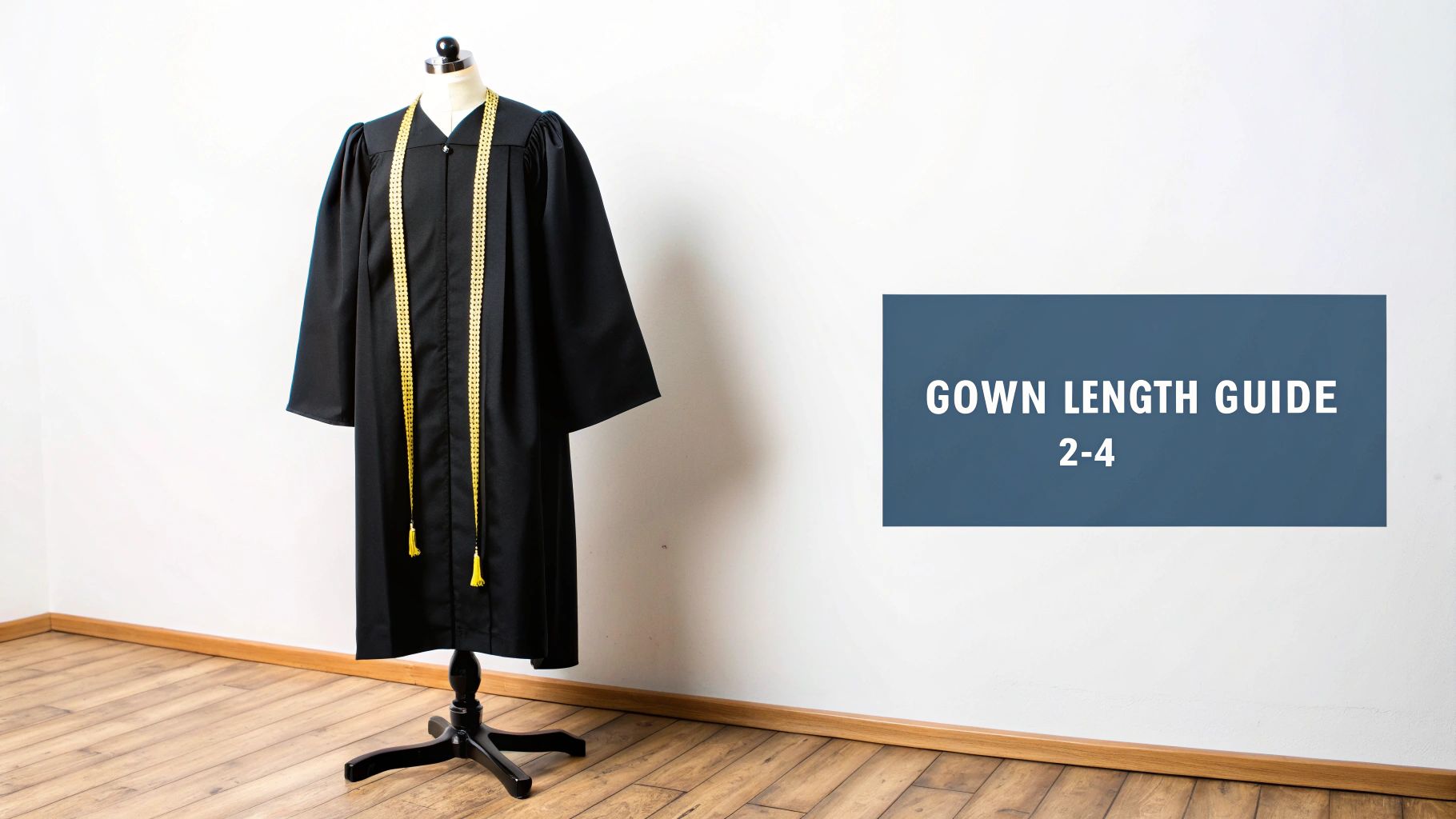
The tradition of different gown lengths isn't just about style—it's a visual language that instantly communicates academic accomplishment. Think of it like a uniform that tells a story. A shorter, mid-calf gown represents the foundational journey of a high school or undergraduate student.
In contrast, the longer, more formal gown worn by postgraduate students signifies the deep dedication and advanced scholarship required to earn a master's or doctorate. This distinction ensures every graduate's hard work is properly recognized during the ceremony, creating a look that is uniform, respectful, and steeped in tradition. It all starts with the right hemline.
Why Correct Length Is Crucial
An ill-fitting gown can really throw off the formal vibe of the day. If it’s too short, it can look casual or like you grabbed the wrong size. But if it's too long, it becomes a serious tripping hazard—the last thing you want to worry about when you’re walking across the stage to get your diploma.
The perfect graduation gown length strikes a balance between tradition, comfort, and safety. It should be long enough to look formal but short enough to allow for easy movement, ensuring you can navigate stairs and stages with confidence.
Achieving this balance is actually pretty simple once you have your measurements. Our product pages, like the one for our popular Bachelor's Gowns, feature detailed sizing charts that take all the guesswork out of the process. You just match your height to the perfect gown size, and you're all set.
Quick Guide to Gown Lengths by Degree
To make things even easier, here’s a quick breakdown of what to expect for different academic levels. This table gives you a clear snapshot of the recommended gown length and common style characteristics for each major milestone, ensuring you know how long a graduation gown should be for your specific degree.
Standard Graduation Gown Length by Academic Level
This table provides a quick overview of the recommended gown length and common style characteristics for different academic milestones.
| Academic Level | Recommended Gown Length | Common Sleeve Style | Example Product Link |
|---|---|---|---|
| High School | Mid-Calf | Traditional Pointed Sleeves | High School Gowns |
| Bachelor's Degree | Mid-Calf | Pointed Sleeves | Bachelor's Packages |
| Master's Degree | Below Mid-Calf | Oblong, "Cuffed" Sleeves | Master's Regalia |
| Doctoral Degree | Ankle-Length | Full, Bell-Shaped Sleeves | Doctoral Packages |
As you can see, the length and even the sleeve style evolve as you advance in your academic career, with each change adding to the story of your achievement.
A Step-by-Step Guide to Measuring for Your Gown
Getting the right measurements is the single most important step in finding a graduation gown that fits perfectly. Think of it as the foundation for your entire graduation day look; if the base is off, everything else will feel a little wonky. The good news is that the process is simple and ensures your gown drapes correctly, giving you that classic, polished appearance.
The main measurement you need is your total height, from the top of your head straight down to the floor. To get the most accurate number, it’s best to grab a friend or family member to help you out. Stand straight with your back against a wall, look forward, and have them mark the wall right at the top of your head. Then, just use a flexible measuring tape to measure from that mark down to the floor.
Don't Forget Your Shoes
Here's a crucial detail that people often forget: your footwear. You absolutely have to take your height measurement while wearing the exact shoes you plan to wear for the ceremony. Even a small one-inch heel can throw off the final graduation gown length, causing the hem to sit higher than you want.
- For Heels: If you're wearing heels, measure with them on. This is the only way to make sure the gown doesn't end up looking too short.
- For Flats: If you're going with flats, measuring in them guarantees the gown won’t be too long and become a tripping hazard on stage.
This small bit of attention to detail is what separates a good fit from a great one. The goal is a hemline that hangs gracefully somewhere between your knee and ankle, and shoe height is a huge part of that equation.
Measuring for a Comfortable Fit
While your height determines the gown's length, your chest measurement is key to making sure it fits comfortably across your shoulders and body. A gown that’s too tight can pull and look unflattering, but one that’s too loose can come off as sloppy.
- Grab a flexible measuring tape. A stiff ruler just won't work for this.
- Wrap the tape around your chest. You’ll want to position it around the fullest part of your chest and back, keeping the tape level with the floor.
- Make sure it’s snug, but not tight. You should be able to breathe easily without the tape digging into you.
This measurement is especially important for finding the right fit in our plus-size gown options, which are designed with extra room for a comfortable and flattering look. These sizing standards are part of a long academic tradition. You see similar standards globally; for instance, Cambridge University requires undergraduate gowns to hang above the knees, while BA gowns must fall just beyond them. This kind of precision ensures uniformity and symbolizes achievement across every milestone, from high school to a PhD.
Retailers like Graduation Cap and Gown provide size guides that match these traditional lengths, with options from mid-calf bachelor's gowns to full doctoral sets, helping students get that polished look backed by over 10,000+ reviews. It's all part of the long history of academic regalia and its meaningful standards.
Once you follow these simple steps, you'll have the exact measurements you need to pick out the perfect gown. For a complete guide on how to match your numbers to the right size, be sure to check out our Graduation Cap and Gown Size Chart.
Decoding Gown Styles from Preschool to PhD
Academic gowns are so much more than ceremonial robes; they’re a visual language that tells the story of a graduate's journey. That story begins with the youngest students, where the graduation gown length is all about practicality and comfort, setting the stage for the more formal traditions that will come later.
For preschool and kindergarten ceremonies, gowns are intentionally shorter, usually falling just below the knee. This playful length gives little ones maximum mobility, since they’re way more focused on celebrating than on maintaining perfect decorum. These gowns are designed to create joyful, lasting memories without getting in the way.
This simple diagram breaks down the key measurements you’ll need for a perfect fit, starting with the most important one: your height.
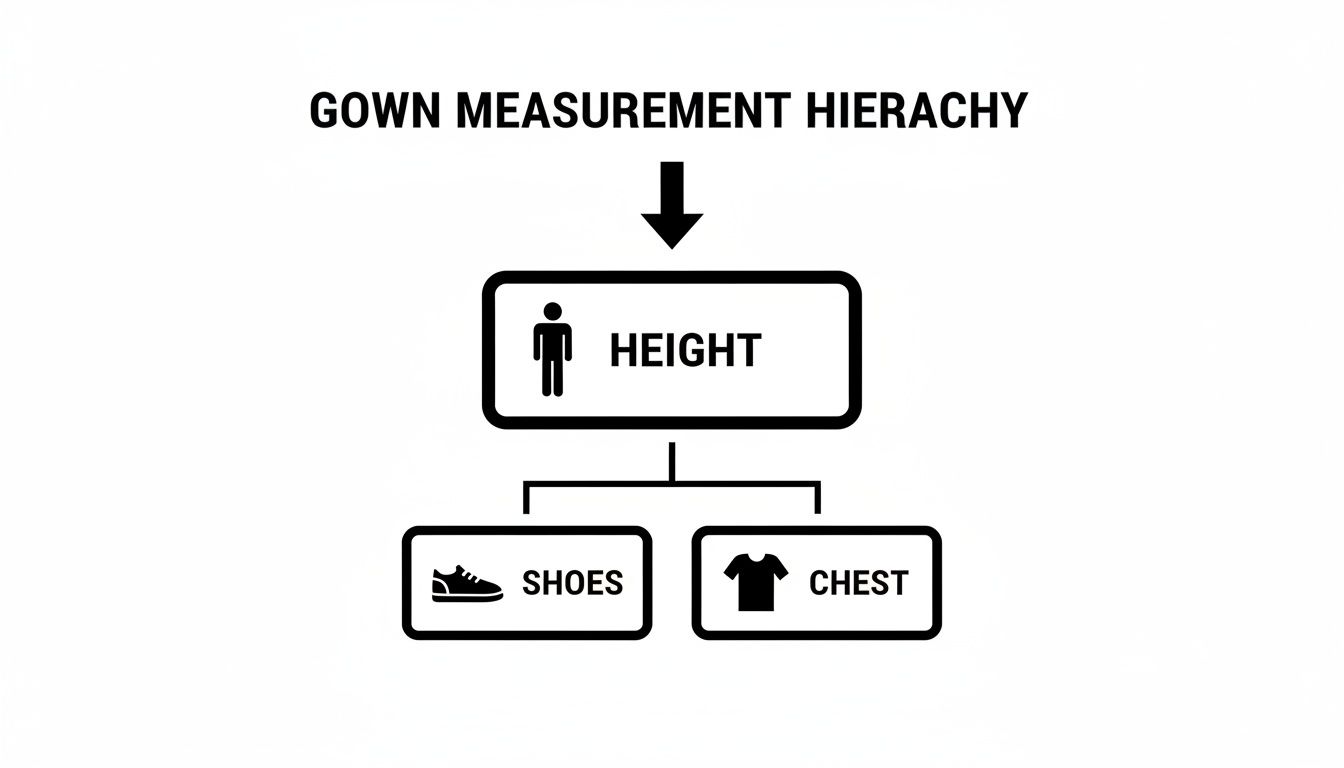
As you can see, while height is the main factor, considering your shoes and chest size is what ensures the gown drapes perfectly and fits comfortably through the shoulders.
High School and Bachelor's Gowns
As students move up, the regalia becomes more structured and traditional. The classic high school gown sets the standard that most of us are familiar with: a hemline that falls squarely at mid-calf. This length strikes the perfect balance between formality and comfort, creating a dignified, uniform look for the graduating class.
This tradition carries right into higher education with the bachelor's gown, which shares the same mid-calf length. The easiest way to spot a bachelor's gown is by its simple, unadorned design and its distinctive pointed sleeves, which hang straight and clean. This uncluttered silhouette represents the foundational achievement of an undergraduate degree.
The consistent length from high school to a bachelor's degree signifies the completion of a foundational stage of education. The real stylistic divergence begins at the postgraduate level, where gowns become longer and more ornate.
Master's and Doctoral Gowns: The Pinnacle of Academia
The jump to a master's degree is marked by a noticeable change in both the gown's length and its style. A master's gown hangs longer than a bachelor's, falling somewhere below the mid-calf mark. Its most unique feature is the oblong sleeve, which is closed at the end but has a slit for the arm to pass through, creating a very distinct and scholarly appearance.
Finally, the doctoral gown represents the highest level of academic achievement. It’s the longest of all, with a hem that nearly reaches the ankle. You can immediately identify this gown by its full, bell-shaped sleeves and the rich velvet panels, or "chevrons," that adorn them. The impressive length and elaborate details perfectly reflect the depth of knowledge and dedication it takes to earn a doctorate.
To see a closer look at how these styles differ, you might be interested in our guide covering the many types of graduation gowns and all their unique features.
The Surprising History Behind Gown Lengths
Ever stopped to wonder why your graduation gown is the length it is? It’s not some modern fashion choice. The tradition is a throwback, stretching nearly a thousand years to the very first universities in Europe. Picture the chilly, drafty halls of medieval schools like Oxford and Cambridge.
Back then, scholars and clerics wore long, heavy robes and hoods for a very practical reason: to stay warm. These garments were the everyday uniform for academics, and over hundreds of years, they slowly evolved from functional clothing into powerful symbols of scholarly achievement. The graduation gown length we follow today is a direct descendant of those ancient robes.
The Standardization of American Regalia
For a long time, academic dress in the United States was a free-for-all. Each university had its own rules, creating a chaotic mix of styles at ceremonies. That all changed in the late 19th century when a group of university representatives decided to bring some order to the tradition by forming the Intercollegiate Commission. Their mission? To create a single, unified system for all American colleges.
In 1895, the commission established the official Intercollegiate Code of Academic Costume. This code was a game-changer, setting specific rules for the design, material, and colors of academic regalia. It laid out everything from the shape of the sleeves to the exact length of gowns and hoods, creating the cohesive and meaningful look we recognize at ceremonies today.
The code established that the cut of the gown, the shape of the sleeves, and the length of the hood would all signify the wearer's specific degree—whether bachelor's, master's, or doctoral. It brought order and meaning to the tradition.
A Code Built on Precision
The commission's work was incredibly detailed. A key moment came in 1887 when Gardner Cotrell Leonard, a recent Williams College graduate, designed and produced the first American-made costumes for his class. He went on to found a firm that would help standardize production across the country.
By 1895, Leonard was working directly with the Intercollegiate Commission to draft the official costume code. They regulated designs down to the inch, including precise hood lengths: bachelor's hoods at 3 feet (36 inches), master's at 3.5 feet (42 inches), and doctoral hoods at 4 feet (48 inches). You can explore more about this rich history and see how these traditions evolved.
This history adds a whole new layer of significance to your regalia. When you put on your gown, you’re not just celebrating your own success; you’re taking part in a tradition that connects you to generations of scholars who came before.
How to Nail the Perfect Gown Fit

You’ve carefully measured and picked your size, but a few small tweaks can take your graduation look from "good enough" to absolutely perfect. The whole point is to have a gown that drapes cleanly and lets you walk across that stage with total confidence. But what do you do if it isn't quite right straight out of the bag?
While you'll rarely need to make any significant alterations, knowing how to handle common fit issues is a game-changer. The good news is that modern polyester gowns are designed to fit a range of heights and body types within each size bracket, so major surgery is almost never on the table.
When to Consider Minor Adjustments
Most gowns are made for a "one-size-fits-most" model based on height, so the graduation gown length should already be pretty close to ideal. But if the hem feels just a hair too long, a simple, temporary fix is your best friend.
Instead of grabbing the scissors—which is permanent and will likely void any return policy—think about using temporary hem tape. It’s a quick, no-sew solution that can lift the hem an inch or two without damaging the fabric. It's the perfect trick for a flawless photo finish.
Solutions for Common Fit Issues
Beyond the hemline, a couple of other minor issues can pop up. A gaping neckline or shoulders that feel a bit snug can throw off your whole look. Here are a few practical tips for handling these common problems:
- Gaping Neckline: A small, discreet safety pin placed on the inside of the zipper placket can easily pull any gap closed, keeping your look polished.
- Tight Shoulders: Before you think about sizing up, try steaming the gown. Sometimes the fabric just needs to relax, and the steam can give you that little bit of extra room you need.
- Sleeve Length: Gown sleeves are intentionally designed to be roomy and full. Unless they’re so long they’re covering your hands, it’s best to leave them as is to maintain that traditional academic silhouette.
For more ideas on what to wear underneath to complete the look, our guide on what to wear under your graduation gown has some excellent advice for staying comfortable and stylish.
Remember, the goal of a graduation gown is a dignified, uniform appearance. It's not meant to be a tailored, form-fitting garment. Minor adjustments should enhance comfort without altering the traditional shape.
Personalize Your Look with Accessories
Once you've perfected the fit, the best way to make your regalia truly yours is through meaningful accessories. While the gown is uniform, your accessories are what tell your personal story of achievement, identity, and hard work. This is where you really get to shine.
Adding a custom graduation stole allows you to celebrate your unique journey. Whether it represents your field of study, your cultural heritage, or a club you poured your heart into, a stole adds a vibrant, personal layer to your attire, turning a standard gown into a reflection of your individual success.
Your Graduation Gown Questions Answered
To help you feel completely ready for the big day, this last section tackles the most common questions we get about graduation gown length, overall fit, and proper care. We’ve put together some clear, straightforward answers to make sure you walk across that stage feeling confident and looking your absolute best.
Should My Graduation Gown Touch the Floor?
No, your graduation gown should never touch the floor. A gown that’s too long isn't just against long-standing academic tradition; it's a major tripping hazard.
The proper graduation gown length should land somewhere between your knee and your ankle. For high school diplomas and bachelor's degrees, mid-calf is the standard. For master's and doctoral degrees, the gown is naturally longer but must always hang several inches above the ground to let you move around safely and easily.
Here's the key to getting it right: always measure your height while wearing the shoes you plan to put on for the ceremony. That one simple step is the secret to making sure the hem falls exactly where it should.
What Should I Wear Under My Graduation Gown?
Choosing what to wear under your gown is all about balancing comfort and style. We usually recommend business casual or semi-formal attire, like dress pants and a collared shirt, or a skirt or dress that is shorter than your gown.
Opt for lightweight fabrics to stay cool, especially during a long indoor ceremony or on a warm day. Since your shoes, the hem of your pants or skirt, and your collar will be visible, pick pieces that complement your regalia.
Comfortable dress shoes are a must, since you'll likely be doing a lot of standing and walking. Your outfit should reflect the importance of the occasion while keeping you comfortable from start to finish.
A common mistake is wearing an outfit that is too bulky or warm. The gown itself adds a layer of insulation, so a light, breathable outfit underneath is almost always the best choice for staying comfortable throughout the event.
Can I Wash or Iron My Graduation Gown?
Most graduation gowns today are made from polyester, a durable material that unfortunately doesn't play well with high heat. For that reason, we strongly recommend against putting it in the washing machine or dryer.
The safest and most effective way to get rid of wrinkles is to use a steamer. If you don't have one, just hang the gown in a steamy bathroom for 20-30 minutes, and the wrinkles should fall out on their own.
If you absolutely must use an iron, be extremely careful. Set it to the lowest possible heat setting (often labeled "synthetics") and place a thin cloth, like a pillowcase, between the iron and the gown to keep from scorching or melting the fabric. Protecting your investment with one of our handy garment bags is also a great way to keep it pristine before and after the ceremony.
How Do I Find the Right Regalia for My University?
Many universities have very specific requirements for gown styles, tassel colors, and especially the velvet trim on academic hoods. Getting those details right is crucial, and it can feel a little overwhelming. If you're wondering about the specifics, you might want to learn more about how to wear the academic hood correctly.
To make this whole process simpler, we created our "Find Your University" feature right on our website. Just select your school from our huge list to see all the approved regalia options we offer, making sure you get the exact colors and styles you need for your ceremony. This tool helps you confidently buy a complete package that meets your school’s official standards, from the right hood trim to the correct tassel color.
At Graduation Cap and Gown, we make it easy to find everything you need for your special day. From complete regalia packages to custom stoles and accessories, we offer high-quality products to help you celebrate your achievement in style. Visit us to find your perfect fit today! https://www.graduationcapandgown.com