

It’s graduation day, and while the gown and tassel get most of the glory, that square mortarboard cap can be surprisingly tricky. Knowing how to put on a graduation cap correctly isn’t just about looking sharp in photos—it’s about being comfortable and confident as you walk across the stage.
A cap that’s tilted, slipping back, or sitting too far forward becomes a constant, annoying distraction. The last thing you want to be thinking about during your big moment is your regalia.
Your Guide to Perfect Graduation Cap Placement
Nailing the fit is the key to a stress-free ceremony. You’re aiming for a look that’s both timeless and totally secure, so you can focus on your achievement, not your accessories.

The Foundation of a Flawless Look
Every year, countless graduates face the same challenge: how do you get this thing to sit right? The tradition has deep historical roots, but the practical answer is simple.
The key is to place the cap flat on your head so the top mortarboard is parallel to the floor. The pointed front should be centered on your forehead, sitting about 1 to 2 inches above your eyebrows. Get that basic alignment right, and everything else falls into place.
A well-placed cap should feel balanced, not wobbly. Imagine balancing a book on your head—the mortarboard needs that same level, stable feeling. This keeps it from catching the wind or sliding around when you turn to smile for a picture.
To make it even easier, here's a quick rundown of the essentials.
Quick Guide to Perfect Cap Placement
This table breaks down the most critical steps for getting your cap to look great and stay put throughout the entire ceremony.
| Element | Action | Why It Matters |
|---|---|---|
| Positioning | Place the cap flat on your head, parallel to the ground. | A level cap looks polished and prevents it from catching the wind or slipping. |
| Alignment | Center the front point on your forehead, 1-2 inches above your eyebrows. | This ensures the cap frames your face correctly and doesn't block your vision. |
| Shape | When you look in a mirror, the cap should form a diamond shape. | If it looks like a square, it's not centered. The points go front-to-back and side-to-side. |
| Security | Use bobby pins to secure the inner band to your hair. | This is the secret to a worry-free fit, especially if you have fine or smooth hair. |
Following these simple actions will help you avoid any last-minute adjustments and keep you focused on celebrating your accomplishment.
Key Elements for Success
Before the ceremony kicks off, take a minute to check these three fundamentals:
- Proper Alignment: Your guide is the front point of the cap. When you look in the mirror, it should form a diamond shape, not a square.
- A Secure Base: The cap’s inner band is designed to grip your head, but for extra security, bobby pins are your best friend. They’re a must for anyone with smooth or fine hair.
- Tassel Readiness: Make sure your tassel is hooked securely onto the button in the dead center of the mortarboard, ready for its big moment.
Once you’ve mastered the fit, you can start thinking about the fun stuff. For creative inspiration, check out our guide on how to decorate your graduation cap.
Getting the Perfect Fit Before the Ceremony
A graduation cap that won't stay put is more than just annoying—it's a massive distraction on a day that should be all about your achievement. If your cap is too tight, you're signing up for a headache before you even grab your diploma. If it's too loose, you’ll spend the whole ceremony worrying it’s going to take a nosedive into the crowd.
Getting this right from the start is key.

How to Measure Your Head the Right Way
To nail the fit, grab a soft, flexible measuring tape. Wrap it around the widest part of your head, which is usually about one inch above your eyebrows and ears. This is right where the cap will naturally rest. That number is your head circumference, and it’s your golden ticket to a comfortable fit.
For most adults, the average head size falls somewhere between 22 and 23 inches. Knowing this helps you find a cap that feels like it was made just for you, so you can focus on the moment.
Once you have your measurement, you can shop with confidence. Our regalia pages for Bachelors, Masters, and Doctoral degrees have easy-to-read sizing charts to match you with the perfect gear.
Features That Guarantee a Snug Fit
Modern graduation caps have some clever features built in for stability and comfort. Many of our mortarboards, for instance, come with an adjustable elastic band hidden inside the lining. This little detail allows the cap to stretch just enough to conform to your head shape, giving you a secure fit that never feels too restrictive.
It's a slightly different story for doctoral candidates ordering a tam. These caps are designed with a deeper, more flexible structure, but getting the initial sizing right is still just as important.
Don’t guess your size. Taking a quick measurement is the single best thing you can do to make sure your cap feels custom-made. It removes all the uncertainty. You can learn more about getting everything just right in our complete guide on how to wear graduation regalia.
Taming the Tassel: Placement and Etiquette
That little string hanging off your cap? It’s more than just decoration—it's a symbol of your entire academic journey. Knowing where it goes and when to move it is a small but really meaningful part of the graduation ceremony. Getting it right ensures you’re part of the tradition in the right way.
The rule of thumb is pretty universal: before you officially have your degree in hand, your tassel belongs on the right side of your cap. Think of this as your "candidate" position. It signals that you're on the brink of graduating but haven't quite crossed the finish line yet.
The Big Moment: The Tassel Turn
The "turning of the tassel" is that iconic, collective moment everyone waits for. After the degrees have been conferred, the head of your institution will give the instruction. At that point, everyone moves their tassel in unison from the right side to the left.
This single motion is packed with symbolism. It’s the physical act that marks your official transition from a candidate to a full-fledged graduate. It’s a simple gesture, but it’s powerful.
While the right-to-left shift is standard practice for the vast majority of high schools and universities, it’s always smart to listen for specific instructions during your ceremony rehearsal. Some schools have slight variations on this tradition.
Pro Tip: Worried about your tassel swinging into your face during every photo? Grab a small piece of clear tape or a bobby pin. Use it to secure the top of the tassel’s loop to your mortarboard. It’ll keep it perfectly in place without anyone noticing.
Choosing a Tassel That’s Right for You
Your tassel needs to follow tradition, but it should also show off a little school pride. Most universities have specific tassel colors that correspond to a field of study (like gold for science or light blue for education) or simply match the school's official colors.
To make sure you’ve got exactly what you need for the big day, we have plenty of options to choose from:
- Standard Tassels: We carry a full spectrum of solid and multi-color combinations to match any school.
- Jumbo Tassels: For those who want a thicker, more prominent tassel that really stands out.
- Custom Year Date Drops: Most of our tassels come with a metallic charm proudly displaying your graduation year.
If you’re not sure which colors your school requires, our handy Find Your University tool can match you with the exact regalia you need. And for a little more help with getting it attached just right, check out our guide on how to put the tassel on your graduation cap.
How to Secure Your Cap with Any Hairstyle
Let’s be honest, the last thing you want to worry about on graduation day is your cap sliding off your head. The right hairstyle can definitely provide a solid base, but a little extra security is what ensures that mortarboard stays put from the processional to the final photo op.
Bobby pins are the go-to for a reason, but there’s a trick to it. For a truly unshakeable grip, don't just slide them in. Crisscross at least two pins on each side of the cap's inner band to form an 'X'. This simple technique actually locks the cap to your hair, giving you way more security than just pushing them in straight.
Choosing a Cap-Friendly Hairstyle
Some hairstyles are practically made for mortarboards, creating a perfect foundation that works with your cap instead of against it. Getting this right can make all the difference.
- Low Ponytails or Buns: These styles are fantastic because they keep your hair out of your face and create a natural anchor point at the nape of your neck. It’s the perfect spot to secure the back of the cap.
- Sleek, Straight Hair: With this look, your main focus should be on securing the cap firmly at the sides. A great pro-tip is to create a couple of small, hidden braids right underneath where the cap will sit. This gives your bobby pins something substantial to grip onto.
- Natural Curls: Your texture is your secret weapon! Curls create a wonderful, high-friction base for the cap to rest on, which often means you’ll need fewer pins to feel completely secure.
To make sure your chosen style stays flawless under the cap all day, it helps to know how to use styling gel to create the perfect hairstyle.
Solutions for Short or Fine Hair
If you have very short or fine hair, you already know that bobby pins don’t always have enough to grab onto. Luckily, there are a couple of clever workarounds that add the friction you need without relying on a lot of hair.
One of the best tricks I've seen is attaching a thin, velvet headband to the inside of the cap. The texture of the velvet creates a fantastic non-slip surface against your hair. Another brilliant option is to sew or glue small toupee clips inside the cap. This lets you clip it directly to your hair for a completely firm hold that isn't going anywhere.
While your hairstyle is key for keeping your cap secure, let's not forget about the other crucial part of wearing it correctly: the tassel. This simple decision tree breaks down the tradition.
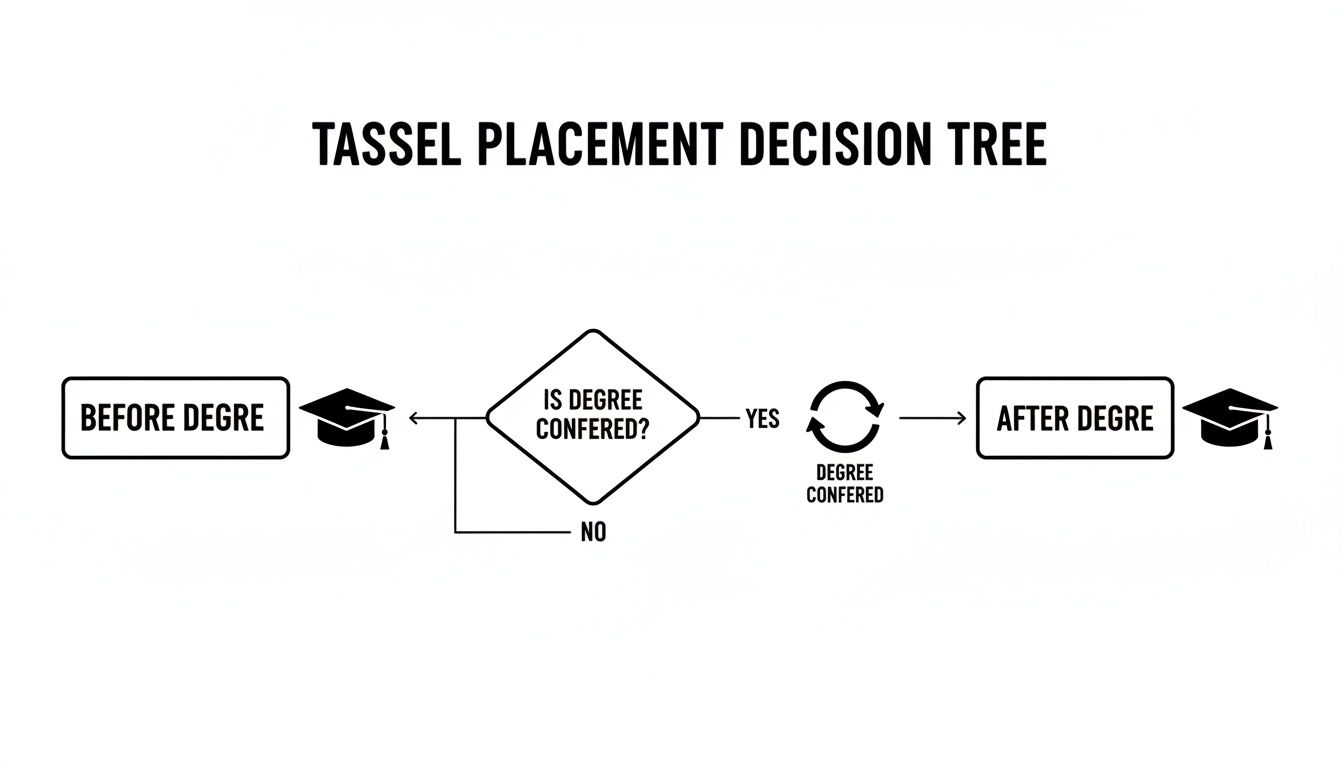
This visual guide confirms the standard etiquette everyone follows. Your tassel hangs on the right side before your degree is conferred, and you’ll move it to the left side afterward in that celebrated "turning of the tassel" moment.
Putting It All Together: Hoods, Stoles, and Cords
Your cap and gown are the foundation, but the rest of your regalia—the hood, stoles, and cords—are what truly tell your academic story. Each piece has its place, and layering them correctly is the final step to looking polished and honoring the traditions of commencement. Let's get every detail right.
The academic hood is probably the trickiest piece. It’s designed to hang down your back, showing off both the velvet trim (which represents your field of study) and the colorful satin lining (your school’s official colors).
The secret is to flip the satin lining "inside out" at the back so those vibrant colors are on full display. Most hoods come with a small loop at the front; just fasten it to a button on your shirt or gown to keep it from slipping backward during the ceremony.
Layering Like a Pro
If you've earned multiple honors, you might be wondering how to wear everything without it looking like a jumbled mess. It’s all about strategic layering.
Start with your primary stole, like one of our custom First Generation or Kente Stoles. Drape it evenly over your shoulders so it lies flat against your gown. This is your base layer.
Next, add any honor cords over the top of the stole. Let them hang parallel to the stole's edges. This simple method keeps everything looking neat and ensures every single one of your accomplishments is clearly visible.
This whole process is part of a tradition that stretches back to the 1300s, evolving from the ecclesiastical robes of medieval scholars. Modern regalia is a language, and arranging each element correctly—from cultural stoles to Greek cords—is how you speak it fluently.
A quick note for doctoral candidates: your regalia is a bit different. You'll be wearing a soft, plush tam instead of a mortarboard, and it's often worn with a slight, distinguished tilt. Your hood is usually presented to you on stage during a special hooding ceremony, rather than worn into the event.
Getting these final pieces in place is what completes your academic look. For a more detailed walkthrough on getting that tricky hood to sit just right, be sure to check out our guide on how to wear the academic hood.
Your Last-Minute Graduation Cap Questions, Answered
Even with all the planning, a few little worries always pop up right before the ceremony. Don't sweat it. Here are some quick, field-tested answers to the most common cap questions so you can walk across that stage feeling great.
What Do I Do If My Cap Feels Too Loose?
If your mortarboard is doing a little wobble dance on your head, bobby pins are about to become your best friend. For a fit that won’t budge, you'll want at least four to six pins. Slide them through the cap's elastic band and into your hair at opposing angles—creating an 'X' shape on each side gives you a much stronger hold than just lining them up.
Got very fine or short hair? Here’s a great little trick I've seen work wonders: stick a strip of velvet fabric or a foam hat sizer right inside the band. That little bit of texture creates just enough friction to stop it from slipping.
Can I Decorate My Graduation Cap?
This one depends entirely on your school's vibe. Many universities now fully embrace cap decoration as a fantastic form of self-expression, but others are pretty strict about keeping the ceremony looking uniform.
The only way to know for sure is to check your university's official commencement guide or shoot a quick email to your graduation coordinator. A little confirmation beforehand means your creative masterpiece won't get you in trouble on the big day.
If you get the all-clear, it’s a wonderful way to make your regalia feel truly yours.
How Can I Avoid Getting Hat Hair?
Ah, the dreaded "hat hair." The key is to protect the volume at your roots. Before you even think about putting on your cap, give your hair a light mist of texturizing spray or dry shampoo. This gives it a little lift and helps it resist getting squashed flat.
Hairstyles like loose waves or a low, relaxed bun also tend to fare much better than more structured, high-volume styles. Once the ceremony's over, you can do a quick refresh by flipping your head over and tousling the roots with your fingers for an instant volume boost.
Which Way Is the Front of the Mortarboard?
Believe it or not, every mortarboard has a definite front and back. The front is the corner that’s designed to point forward, centered right over your forehead. Most caps even have a slightly longer and more pronounced point at the front to give you a hint.
When you put it on, take a quick look in a mirror to make sure one of the four corners is aimed straight ahead. That’s what creates the classic diamond shape, instead of having a flat edge facing forward.
For every question you have about graduation, Graduation Cap and Gown has the answer and the perfect regalia. From finding the right fit to selecting the perfect honor cords, explore our complete collection at https://www.graduationcapandgown.com and make your day flawless.