

A graduate steps onto the commencement stage in a black gown, and the green-white-green stole catches the light before the diploma is even handed over. From the audience, it reads as more than a colorful accessory. It carries Nigerian identity into a formal academic moment.
A Proud Walk Across the Stage
The stole lies neatly over the graduate's shoulders, its green panels standing out against the dark gown while the white center creates a clean line down the chest. Family members can recognize the Nigerian flag colors from a distance, and photographs capture the same message from every angle: this graduate is celebrating an academic milestone without setting heritage aside.
A Nigerian graduation stole can express family pride, cultural belonging, and national identity at the same time. For a student graduating far from Nigeria, it may make a campus ceremony feel connected to home. For another graduate, it may honor parents, grandparents, a student association, or a community that supported the journey.
The most polished result comes from treating the stole as part of the full regalia rather than adding it at the last minute. Its length should suit the graduate, its fabric should work with the ceremony environment, and its colors should sit comfortably beside the cap, gown, cords, hood, or medals. The correct wearing position also matters, especially when the ceremony includes official photographs. The guide to wearing graduation regalia can help graduates check the placement before the procession.

The practical questions are just as important as the symbolism. Is the item a stole or a sash? Should it be plain, embroidered, woven, or printed? Which size works for a high school graduate, and which suits a university ceremony? Buyers also need to consider heat, outdoor photographs, storage, delivery timing, and whether an institution has rules about cultural accessories.
A thoughtful choice lets the colors speak clearly while keeping the graduate comfortable and properly dressed throughout the event.
What a Graduation Stole Actually Is
A graduation stole is a long, flat piece of academic regalia worn around the neck, with both ends hanging down the front of the gown. Think of it as a formal scarf placed over a blazer. It doesn't usually wrap tightly around the body. Instead, it rests across the shoulders and creates two visible panels over the chest.
A stole is commonly described as a wide, flat fabric panel with pointed ends, often about 60 to 72 inches long and 4 to 5 inches wide at the center. Those dimensions are general regalia conventions, so the product's own size chart and the ceremony's requirements should take priority. A Nigerian flag stole may use green-white-green panels, a printed flag, a Coat of Arms design, or additional text.
The words stole and sash are often used interchangeably in product listings, but the wearing shape can differ.
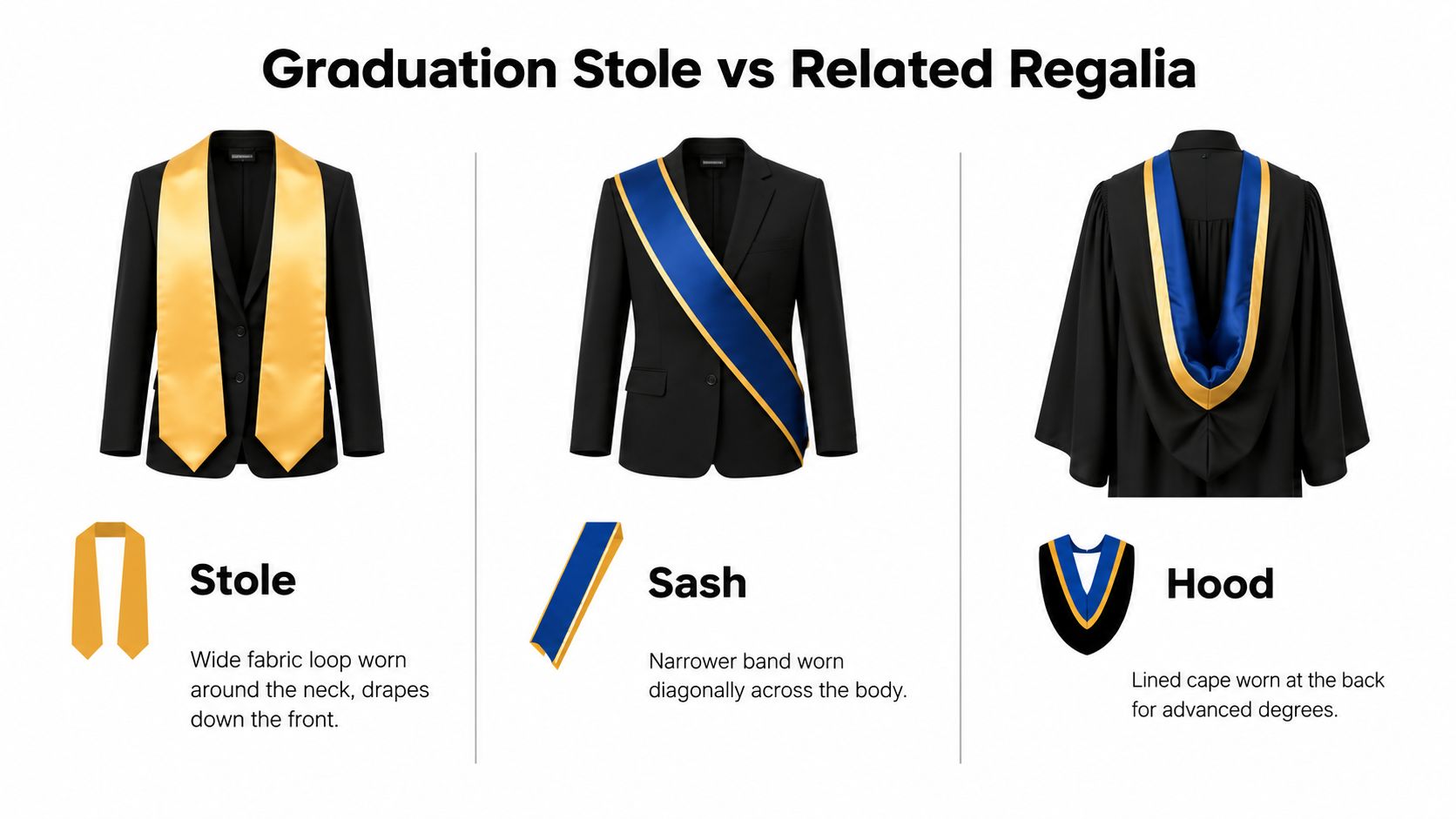
| Regalia item | What it looks like | Typical purpose |
|---|---|---|
| Stole | A broad fabric piece worn around the neck and draped evenly down the front | Cultural identity, honors, organizations, or other affiliations |
| Sash | A band that may be worn diagonally across the body | Recognition, branding, or decorative presentation |
| Hood | A lined academic garment resting over the shoulders and down the back | Degree-level and academic-discipline identification |
| Honor cord | A thin twisted rope worn around the collar | Honors, societies, service, or organizational recognition |
Most Nigerian flag graduation designs use a neck-drape placement, with the two ends hanging at equal lengths. Some groups choose a shoulder drape or a crossed-chest presentation, but the institution or organization may specify how its regalia must be worn.
Placement affects both comfort and meaning. A stole that twists can hide the white center or make the green panels look uneven. A stole that sits under a hood may disappear in photographs, while one placed too far to the side can look accidental. Check the ceremony instructions before pinning anything, because a university's regalia policy takes precedence over a general product description.
The Heritage Behind the Nigerian Graduation Stole
The Nigerian flag's green-white-green arrangement gives the stole its most immediate visual meaning. In this tradition, green is associated with Nigeria's agricultural wealth, while white represents peace. At commencement, those colors become a compact expression of national identity worn during a public celebration of learning.
That meaning can sit alongside other forms of African and Nigerian heritage expression. A graduate might choose a flag-inspired stole for a clean, recognizable statement, while another might prefer Kente, Ankara, or Adire-inspired fabric that reflects a broader visual tradition. These choices are related, but they aren't interchangeable. A Nigerian flag stole points directly toward national identity, whereas a patterned textile may communicate family heritage, regional connection, cultural style, or an organization's chosen design language.
Graduates of African descent have long used heritage-focused regalia to make identity visible within ceremonies that often use standardized black gowns and institutional colors. The contrast is part of the appeal. A flag stole can stand out clearly in group photographs without requiring the graduate to replace the official gown or hood.
Identity can be layered
A Nigerian student association may select matching stoles for its members. A graduate with Nigerian and another national identity may choose a reversible or coordinated design. Someone else may wear a Nigerian stole to honor parents who made the academic journey possible.
These choices shouldn't flatten Nigeria's cultural diversity. Igbo, Yoruba, and Hausa identities have distinct histories, languages, artistic traditions, and regional associations. A green-white-green stole communicates Nigerian national belonging, but it doesn't claim to represent every cultural detail within the country. Graduates who want a more specific expression can consider textile patterns, names, symbols, or organization-approved artwork.
The meaning of Kente stoles offers useful context for understanding how commencement accessories can carry cultural significance beyond decoration. The same principle applies here: the most appropriate design is the one whose symbols match what the graduate intends to honor.
That intention should guide the material and finish as much as the color choice.
Popular Styles and Materials to Choose From
Nigerian graduation stoles usually fall into a few practical style groups. A satin-finish flag stole offers a smooth surface, noticeable sheen, and sharp color contrast. A woven Kente or Ankara option creates more texture and visual depth. Printed polyester designs can provide a straightforward flag presentation, while embroidered versions add names, dates, societies, or school details.
Material affects how the stole behaves during the ceremony. Satin tends to drape smoothly and reflect light, which can make the green and white sections stand out in photographs. Lighter satin may feel easier to wear during a long outdoor event in warm weather. Heavier woven fabric can look richer and more substantial, but it may feel warmer beneath stage lighting or in direct sun.
| Style or material | Best for | Key tradeoff |
|---|---|---|
| Bridal satin | A polished Nigerian flag look with smooth drape | Can show creases and may require careful pressing |
| Polyester | Printed designs and practical group orders | Usually has less textile texture than woven fabric |
| Silk blend | Graduates seeking a softer, refined finish | Requires closer attention to care instructions |
| Kente or Ankara fabric | Cultural texture, bold pattern, and heritage styling | Can feel heavier or compete with a detailed gown |
| Embroidered stole | Names, class years, societies, and logos | Personalization requires proofing and production time |
| Printed stole | Clear flag graphics and consistent group designs | Fine details may look different from threadwork |
| Reversible design | Showing Nigerian colors on one side and school or society colors on the other | Both sides must coordinate with the gown and accessories |
The different types of graduation stoles show why buyers should decide whether they want a cultural flag statement, a textured textile, an honor marker, or a combination.
Match the stole to the gown
A glossy stole can work well with a smooth polyester gown, while a heavily textured woven piece may create a deliberate contrast with a matte gown. The goal isn't to make every fabric identical. It's to keep the overall outfit intentional.
If the gown already includes a hood, multiple cords, and a medal, a clean Nigerian flag stole may provide enough visual detail. If the gown is simple, embroidery or woven texture can add personality without overwhelming the silhouette.
How to Pick the Right Stole for Your Ceremony
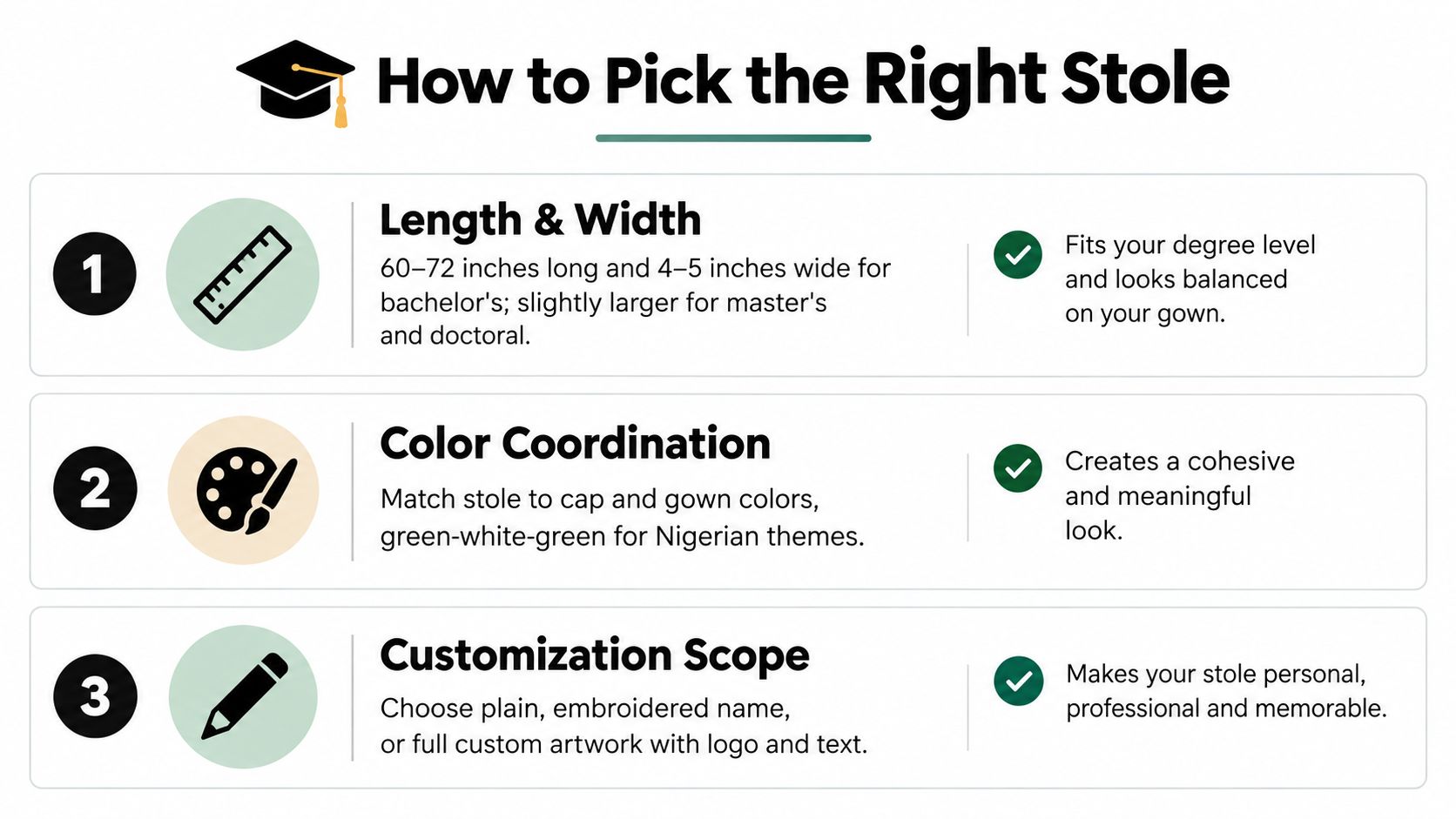
Three decisions usually determine whether a Nigerian graduation stole looks right: fit, color coordination, and personalization. Make them in that order. A beautiful design won't help if the stole hangs too low, hides the graduate's name, or conflicts with mandatory institutional regalia.
Start with length and width
Education level gives buyers a useful starting point. Industry product guidance commonly lists 25 inches for kindergarten and preschool, 31 or 33 inches for elementary and high school, and 33 or 36 inches for colleges and universities. These conventions are described in the Nigeria graduation stole sizing guidance, but the seller's measurement chart and the ceremony's specifications should still decide the final purchase.
Measure from the shoulder area down toward the intended hem. A stole that reaches too far can catch against the gown or interfere with walking. One that's too short may sit high on the chest and look disconnected from the rest of the regalia. Check how the length looks while standing naturally, not only while holding the stole stretched out.
Build the color combination
The Nigerian palette gives you a strong foundation. Then compare it with the gown and any required accessories.
- Green-white-green makes the national reference immediately recognizable.
- School colors can appear on the reverse side, border, lettering, or embroidery.
- Honor society or faculty colors may need to remain visible through cords, hoods, or medals.
A reversible stole can solve a genuine coordination problem when the Nigerian colors and school palette don't sit comfortably together. A simpler flag stole may be better when the ceremony already includes several required colors.
Decide what deserves personalization
Names, graduation years, faculties, societies, and logos are common choices. Keep the text readable from a distance, and check whether a logo has permission for use. Embroidery can add a dimensional finish, while printing may suit detailed flag artwork or larger graphics.
Review every spelling, accent, year, and color before production. A digital proof should show the layout, placement, and approximate scale. For a coordinated class order, approve one sample design before submitting individual names.
Coordination check: Confirm the gown color, stole length, Nigerian palette, cords, hood, embroidery position, and walking instructions before checkout.
Wearing and Caring for Your Stole
Place the stole around the back of the neck and let both ends fall evenly over the front of the gown. Keep the color side facing outward, and position names, flags, logos, or embroidery where cameras can see them. Before walking, look down once to confirm that the center line is straight and neither end has twisted.
Layering needs a little planning. Put on honor cords first, then the stole, then the hood if the institution permits that arrangement. This order can keep the stole visible while preventing cords from disappearing beneath the fabric. A university's official instructions may use a different order, so follow those directions when they conflict with general styling advice.
Avoid the small mistakes
A few adjustments make a large difference in photographs:
- Untwist the center: A twisted stole can hide the white panel or distort the flag pattern.
- Keep both ends even: Unequal lengths make the garment look off-center.
- Show the personalization: Move names and logos away from gown lapels or a hood edge.
- Pin carefully: If a pin is allowed, secure the stole without pulling one side upward.
- Check movement: Walk, sit, and turn once before the ceremony begins.
Care starts as soon as the graduate removes the stole. Blot a fresh mark rather than rubbing it, because rubbing can spread the stain or disturb the finish. Follow the manufacturer's cleaning instructions, especially for satin, silk blends, printed surfaces, and woven Kente threadwork.
Store the stole flat or roll it gently instead of folding it sharply. If pressing becomes necessary, use low heat and place a pressing cloth between the iron and the fabric. This protects satin sheen and reduces the risk of flattening or damaging woven details.
For long-term storage, keep the stole clean, dry, and away from direct sunlight. A breathable garment bag or archival storage box can help preserve the color and embroidery so the piece remains suitable for alumni celebrations, cultural events, or family photographs.
Ordering, Customization, and Shipping Tips
Custom ordering begins with information, not decoration. Prepare the ceremony date, education level, desired length, Nigerian flag treatment, spelling, logo files, thread colors, and delivery address before requesting a quote. A vendor should explain which details are printed, embroidered, woven, or added through another finishing method.
For embroidered or printed custom work, a realistic production window is 2 to 4 weeks, as described in the available product guidance for custom graduation stoles. Build in time for artwork review, corrections, finishing, and shipping rather than treating the production estimate as the complete delivery promise.
Confirm the proof before production
The proof should show the text, placement, font, flag colors, logo proportions, and any border treatment. Check names character by character. A coordinator handling a group order should ask each graduate to approve their own spelling while one person confirms that the shared design is consistent.
The custom graduation stole collection is one place to compare personalization formats before finalizing the artwork.
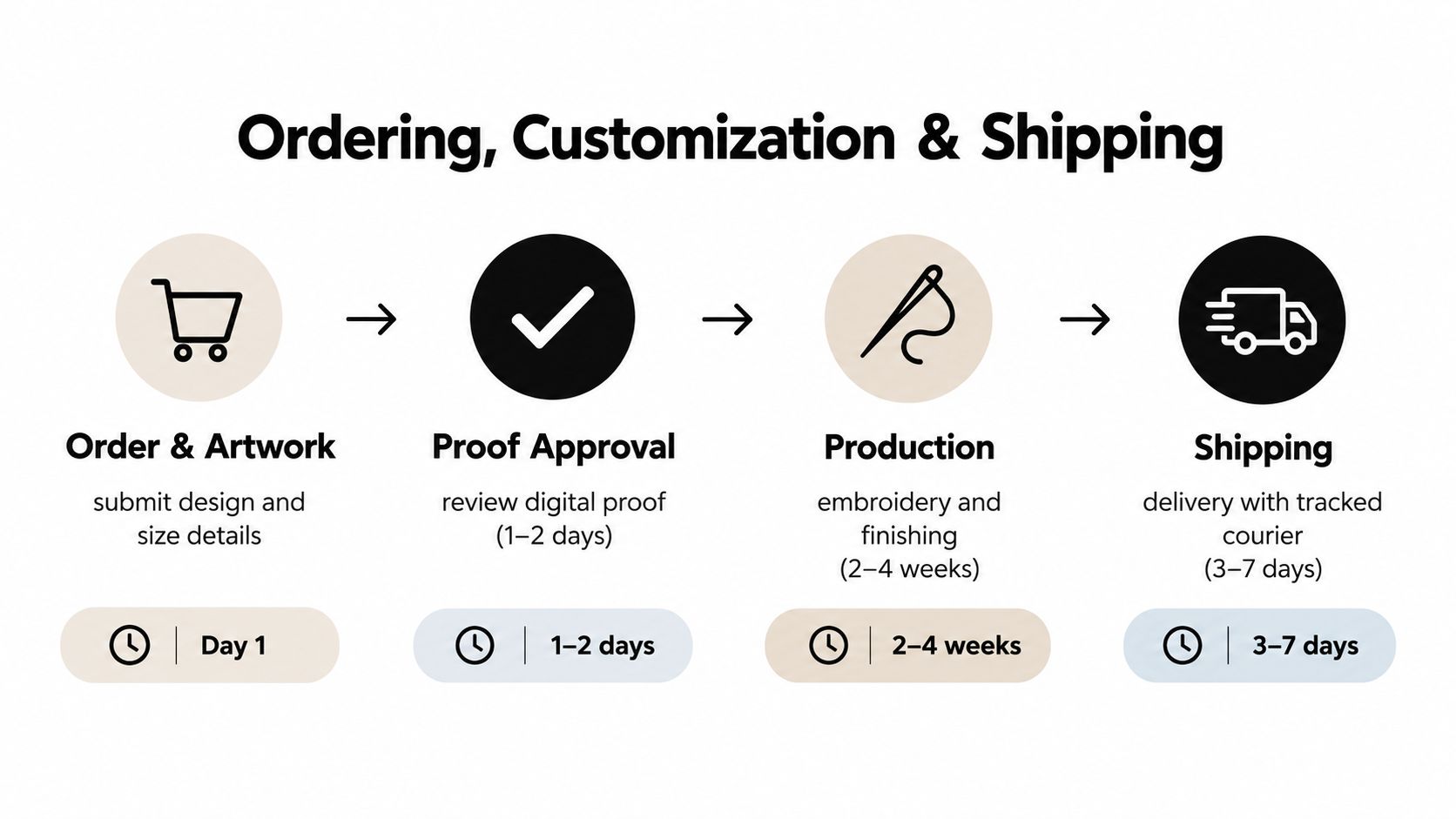
Shipping time depends on destination, service level, customs handling, and the seller's fulfillment location. Domestic U.S. orders may have different options from Canadian deliveries or international shipments to Nigeria and the U.K. Ask whether tracking is included, whether customs documents are required, and who handles duties or import charges.
Before paying: Ask for a digital proof, confirm the fabric or finish, verify the delivery estimate, and request a swatch when color accuracy matters.
May and December ceremonies can create busy ordering periods, so early planning gives coordinators more room to correct artwork or replace an incorrect item. Last-minute buyers should ask directly about rush production and available stock rather than assuming a custom order can be accelerated.
For group orders, ask whether bulk pricing and consolidated invoicing are available. Treat vendors cautiously if they refuse to show a proof, won't clarify the material, or can't explain how a spelling correction would be handled before production.
Key Takeaways and Common Questions
A Nigerian graduation stole combines a recognizable green-white-green flag design with a visible statement of Nigerian identity. Choose the length according to the graduate's education level and the seller's chart, then coordinate the stole with the gown, hood, cords, and any school colors. Plain satin, woven textiles, printed designs, embroidery, and reversible options each create a different balance of comfort, texture, symbolism, and formality.
Common questions
Is the stole worn over or under the gown?
It's generally worn over the gown, around the back of the neck, with both ends visible down the front. Always follow the institution's regalia instructions if they differ.
Can it be reused after commencement?
Yes. Store it carefully and it can be worn for alumni gatherings, Nigerian student association events, cultural celebrations, or future family photographs.
How can a class coordinate matching stoles?
Approve one shared design, choose the same base fabric and dimensions, and collect individual names or details through a checked order sheet. One coordinator should review the final proof before production.
What if a customized stole arrives with a spelling error?
Photograph the error, keep the packaging and order confirmation, and contact the vendor promptly. Compare the delivered item with the approved proof, because that document usually determines whether the production matched the confirmed design.
Order early when the ceremony date is fixed, especially for embroidery, group quantities, or international delivery. Coordinators with institutional or bulk requirements should contact the vendor before placing the order so artwork, invoicing, and delivery can be confirmed together.
Graduation Cap and Gown offers Nigerian flag stoles, international cultural stoles, custom graduation accessories, and complete academic regalia for ceremonies from preschool through doctoral level. Visit Graduation Cap and Gown to compare sizes, colors, personalization options, and delivery choices for a Nigerian graduation stole that fits the ceremony and the story behind it.