

A graduation tam is that soft, plush velvet cap you see on graduates with advanced degrees. It usually has four, six, or eight sides and is a key part of both doctoral regalia and masters regalia.
Think of it as the academic equivalent of an upgrade. It instantly signals a higher level of scholarly achievement than the familiar flat mortarboard cap everyone knows.
Demystifying This Distinguished Symbol

When you picture graduation, that classic square mortarboard is probably the first thing that comes to mind. It's an iconic symbol, no doubt.
But as students climb the academic ladder, their regalia evolves to match their accomplishments. The graduation tam is a perfect example of this. Unlike the rigid, flat-topped mortarboard worn by bachelor's degree recipients, the tam is soft, comfortable, and has a much more substantial presence.
Its unique shape immediately sets the wearer apart, telling everyone in the room that they've completed a master's or doctoral program. This visual distinction is completely intentional and carries a lot of historical weight.
A Tradition Rooted in History
Academic headwear isn't a modern invention—its story goes all the way back to medieval European universities in the 12th and 13th centuries.
The modern tam actually evolved from the pileus quadratus, a square cap that became mandatory for Masters of Arts at Oxford in 1565. The tradition spread quickly. By 1588, Cambridge required scholars below the rank of doctor to wear a similar cap, cementing its role in academic life.
These traditions were eventually standardized here in the United States with the Intercollegiate Code of Academic Costume in 1895, which laid out specific guidelines for regalia that are still followed today. You can learn more about the journey of the graduation cap and gown from medieval tradition to today's ceremonies.
Graduation Tam vs Mortarboard at a Glance
Sometimes the easiest way to understand the difference is to see a direct comparison. While both are types of academic headwear, they represent very different levels of achievement. The table below breaks down the key distinctions at a glance.
Think of the mortarboard as the foundational symbol of earning a college degree. The tam, on the other hand, represents specialization and the deep scholarship that comes with an advanced degree.
| Feature | Graduation Tam | Mortarboard (Cap) |
|---|---|---|
| Shape | Soft, plush, with 4, 6, or 8 sides | Rigid, flat square top |
| Material | Typically velvet | Usually polyester or another matte fabric |
| Worn By | Master's and doctoral degree recipients | Bachelor's and associate degree recipients |
| Significance | Represents advanced scholarship and specialization | Symbolizes the completion of an undergraduate degree |
| Comfort | Generally more comfortable and flexible | Stiff and less forgiving |
| Tassel | Often a thicker, gold bullion tassel for doctorates | Standard tassel in school or discipline colors |
As you can see, every element—from the material to the shape—is designed to tell a part of the graduate's academic story. It’s a visual language that honors the unique journey each person took to get to that stage.
The Story Behind Your Academic Headwear
When you put on a graduation tam, you’re not just wearing a hat. You're connecting to a tradition that stretches back nearly a thousand years, stepping into a piece of living history worn by scholars in the very first European universities. Knowing its story adds a whole new layer of meaning to your big day.
It all began in the 12th century. Back then, university halls were cold, drafty buildings, so scholars wore robes, hoods, and caps for a simple, practical reason: to stay warm. Over time, what started as a functional outfit slowly transformed into a symbol, a way to visually set learned individuals apart from everyone else.
From Medieval Necessity to Modern Symbol
The direct ancestor of all academic headwear is the pileus quadratus, a square-shaped cap worn by medieval clergy and academics. By the 1560s, prestigious institutions like Oxford University made this cap a required part of the academic dress for anyone earning a Master of Arts degree, cementing its role as a true badge of achievement.
This tradition evolved over the next few centuries, with different universities putting their own unique spin on the style. The soft, rounded shape of the modern tam we see today is a direct nod to these historical variations, distinguishing it from the rigid, flat mortarboard that became the standard for undergraduate degrees.
Standardizing Academic Success
Here in the United States, the system we all recognize was largely shaped by the Intercollegiate Code of Academic Costume, established way back in 1895. Before this code, academic regalia was a chaotic jumble of different styles with no rhyme or reason. The Code created a unified visual language, assigning specific colors, shapes, and materials to different degrees and fields of study.
This is why a doctoral graduate in philosophy wears a different colored hood than a medical doctor. The tam was officially designated for advanced degrees, creating an instant visual cue that separates master's and doctoral recipients from bachelor's graduates.
This code transformed academic dress from a confusing mix of university traditions into a cohesive system understood across the country. You can take a deeper dive into the history and meaning of academic regalia to see how every single element tells a part of the story.
So when you wear your doctoral tam or faculty regalia, you are taking part in a ceremony with incredibly deep historical roots. The soft velvet, the distinct shape, and the ornate tassel aren't just random fashion choices. They are carefully preserved symbols of your dedication, your intellectual rigor, and your official entry into a global community of scholars that has been growing for centuries.
Decoding the Different Types of Graduation Tams
When you see a group of faculty or doctoral graduates lining up for commencement, take a closer look at their headwear. You'll quickly notice that not all tams are created equal. The subtle differences in shape, style, and material aren't just for show; they're a key part of the academic regalia story, signaling different achievements and institutional traditions.
Figuring out these variations is the key to appreciating the full meaning behind this distinguished piece of headwear. The most obvious difference? The number of corners. Tams usually come in four, six, or eight-sided versions, and that number often gives you a clue about the wearer's degree. While there’s no single, universal rule, a clear tradition has emerged over time.
This infographic shows just how much academic headwear has evolved from its medieval roots to the modern tam we see today.
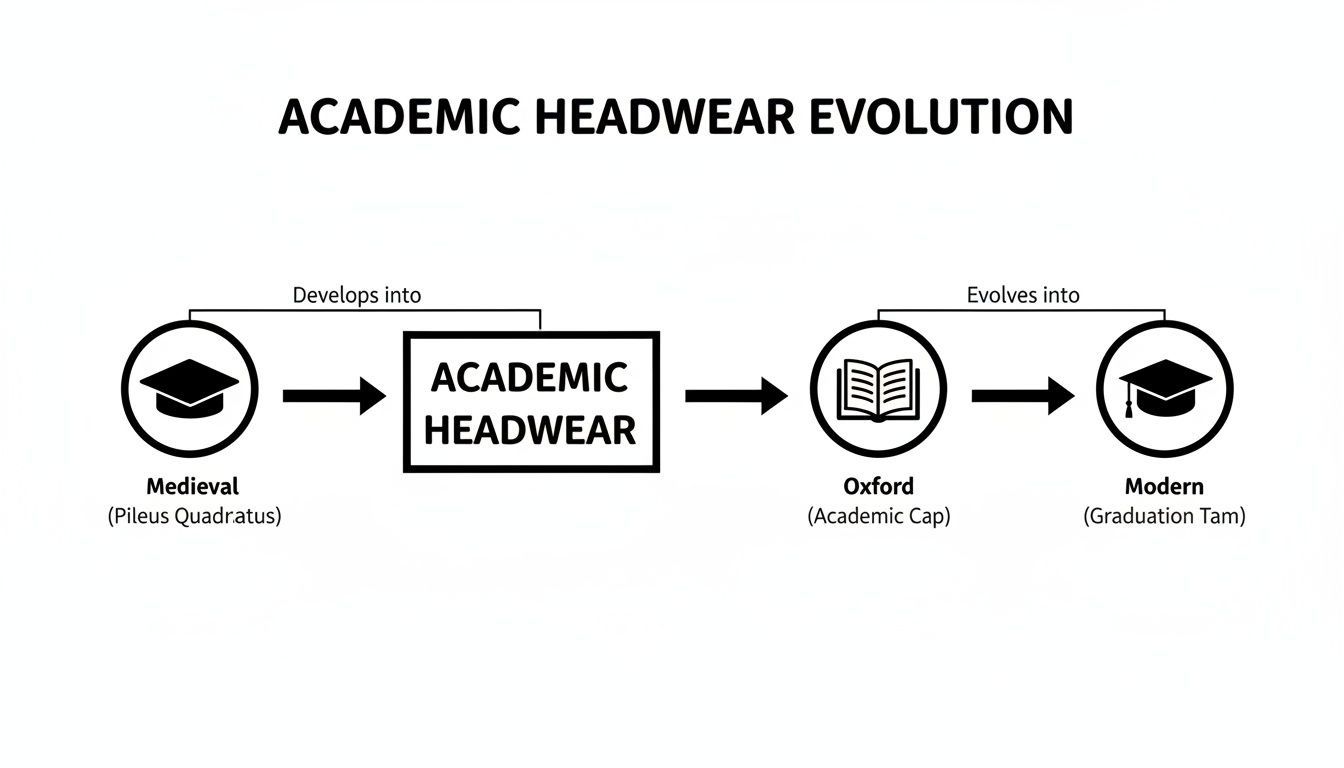
You can see a clear line from the simple pileus quadratus to the refined and symbolic tam, highlighting its deep roots in academic tradition.
Understanding Tam Shapes
The number of corners on a tam is like a quick visual reference for the wearer’s academic standing. It’s a shorthand for their level of achievement.
- Four-Sided Tams: These are less common but are sometimes used for master's degrees or by institutions with their own specific traditions. They look the most like the classic mortarboard but keep the soft, comfortable feel of a tam. You can check out a classic 4-sided doctoral tam to see how this style blends tradition and comfort.
- Six-Sided Tams: This is a very popular choice for many master's programs and some doctoral degrees. The six-sided design creates a distinct, rounded profile that sets it apart from both the flatter mortarboard and the fuller eight-sided version. It's often included in a complete Master's Regalia set.
- Eight-Sided Tams: The eight-sided tam is the one most traditionally associated with doctoral degrees, like a Ph.D. Its full, prominent shape is a powerful symbol of the highest level of academic accomplishment.
Material and Embellishments Matter
Beyond its shape, the fabric of the tam is incredibly important. The vast majority of tams are made from plush, high-quality velvet. This luxurious material isn't just about looking good; it denotes the advanced nature of the degree. Unlike the simple polyester or matte fabrics of undergraduate caps, velvet signals a higher academic honor.
The final piece of the puzzle is the tassel, which adds another layer of distinction. While a master's tam might have a standard silky tassel, doctoral regalia takes it up a notch.
Doctoral graduates are distinguished by a gold bullion tassel. This thick, ornate tassel is reserved exclusively for those who have earned a terminal degree, making it one of the most respected symbols in all of academic dress.
Once you know these key elements—the number of sides, the velvet fabric, and the type of tassel—you can easily decode the meaning behind any tam you see. Each piece works together to tell a story of hard work and scholarly dedication, helping you confidently select the right regalia to honor your own academic journey.
Who Gets to Wear a Graduation Tam?
As you get ready for commencement, one of the most common questions that comes up is who actually gets to wear this distinctive piece of headwear. The answer is pretty straightforward: the graduation tam is a symbol of advanced scholarship, reserved for those who have climbed to the higher rungs of the academic ladder. It's a clear visual cue that separates them from undergraduates.
The honor of wearing a tam is typically granted to graduates who have earned a master's or doctoral degree. If you've just wrapped up your master's thesis or successfully defended your dissertation for a Ph.D., Ed.D., M.D., or J.D., you've earned the right to swap the traditional mortarboard for the more prestigious tam. This distinction is a cornerstone of academic regalia tradition.
It's Not Just for Graduates
The use of the tam isn't just limited to the students crossing the stage. You'll also spot many other key figures at the ceremony wearing them, and for good reason.
- Faculty Members: Professors, particularly those holding a doctorate, wear the regalia of their own alma mater during academic processions. A professor marching alongside their students will wear a tam as part of their full doctoral regalia, representing their own academic credentials. Many choose a custom Faculty Regalia set to represent their institution with pride.
- University Leadership: You can bet that deans, provosts, and university presidents almost always hold doctoral degrees. They wear tams as part of their official academic dress during commencement, symbolizing their leadership and scholarly standing within the institution.
Essentially, anyone who holds a master's or, more commonly, a doctoral degree is entitled to wear a tam during academic ceremonies. It signifies their status in the community of scholars. If you're finishing up an advanced degree, you’ll want to find the right Masters Regalia or Doctoral Regalia package to properly honor your achievement.
The tam serves as an immediate, non-verbal announcement of academic accomplishment. It tells the world that the wearer has dedicated years to specialized study, research, and intellectual contribution beyond the bachelor's level.
A Mark of Academic Seniority
Think of the academic procession at graduation as a visual timeline of educational milestones. The undergraduates in their mortarboards represent the foundational achievement of a college degree. Following them, the graduates and faculty in tams represent the next level—a deeper, more intense commitment to a specific field of study.
This visual hierarchy is completely intentional and steeped in tradition. It offers a way to publicly acknowledge the immense effort and intellectual rigor required to earn a postgraduate degree. To get a complete picture of the full doctoral look, you can explore our detailed guide on the components of a PhD cap and gown.
So, when you see someone in a tam, you know you’re looking at a master's graduate, a newly minted doctor, or a seasoned academic leader.
How to Wear Your Tam for Graduation Day

You’ve put in the years of hard work, and now it’s time to step into the regalia that honors your incredible achievement. Getting the fit and placement of your graduation tam just right is the final touch for a polished, confident look on your big day. A well-fitting tam ensures you can focus on the ceremony, not on constant adjustments.
The first step is simply getting the size right. An ill-fitting tam can be a major distraction, either slipping over your eyes or feeling uncomfortably tight through a long ceremony.
To find your perfect fit, grab a soft measuring tape and wrap it around your head, about one inch above your eyebrows. That measurement in inches is your tam size—it’s that straightforward. Getting this right is the key to comfort.
Proper Orientation and Tassel Placement
Once your tam fits perfectly, wearing it correctly is simple. The tam has a distinct shape, and one of the points is meant to face forward, centered perfectly on your forehead. The rest of the tam should sit level on your head, not tilted back or pushed too far forward. Think of it like a crown: it should sit securely and comfortably.
Before your degree is officially conferred, where you place the tassel is critical. It’s a visual signal of your status as a candidate for graduation.
- Before the Ceremony: The tassel belongs on the right side of your tam. This is the universal position for every candidate who has not yet officially graduated.
- After the Ceremony: Once your degree is awarded, you'll be instructed to move the tassel from the right side to the left side. This symbolic gesture, often done in unison with your fellow graduates, marks your official transition from candidate to graduate.
A key difference for some doctoral degree holders is that the gold bullion tassel is often permanently attached. In these cases, instead of flipping the tassel, some universities instruct graduates to simply turn the entire tam slightly, shifting the tassel's position.
Styling and Storage Tips
To complete your look, think about your hairstyle. Low ponytails, simple buns, or just wearing your hair down and styled away from your face work best. This prevents any bulk under the tam and helps it sit correctly.
After the celebration is over, proper storage is essential to protect your investment. A dedicated regalia garment bag is the perfect solution. It will keep your tam, gown, and hood safe from dust, moisture, and creasing, preserving it as a cherished keepsake for years to come.
Finding the Perfect Tam and Regalia Online
Shopping for academic regalia online can feel a little daunting, but it’s where you’ll find the best selection and prices by far. Knowing what to look for is the key to finding a set that perfectly honors your achievement without any of the hassle.
It really boils down to quality and accuracy. You'll want to find retailers who specialize in rich, high-quality velvet for their tams and offer options for different tassels—like the classic silky tassel for master’s degrees or the distinctive gold bullion tassel reserved for doctorates.
Matching Your University's Standards
The most critical step in ordering online is making sure your regalia matches your university's specific requirements. Schools often have unique rules about color combinations and styles that you absolutely have to follow.
This is where a good online tool can save the day. Our "Find Your University" feature takes the guesswork out of the equation, instantly matching you with the correct colors and standards for your school. While the original Intercollegiate Commission of 1894 set some pretty strict rules for regalia, things have loosened up a bit over the years. By the 21st century, the code became more of a voluntary guide, which is why you see so much more flexibility in designs and colors today.
Whether you’re in the market for a complete doctoral package or just need a single piece, buying online puts you in control. You can order a classic doctoral graduation tam and gown, add custom stoles to tell your story, or even get fast shipping for those last-minute needs. Making the right choice online guarantees you’ll look polished and feel totally confident when you walk across that stage.
For other helpful resources and student communities, you might find valuable discussions by visiting the saucial Homepage.
Graduation Tam FAQs: Your Questions Answered
Alright, let's clear up some of the common questions we get about graduation tams. Think of this as your quick-reference guide to make sure you have all the details sorted out before your big day.
One of the first things people ask is if they can wear a tam for their bachelor's degree. The short answer is almost always no. The graduation tam is a special piece of regalia reserved for those who have earned a master's or doctoral degree. It’s a symbol of advanced academic work, while the classic mortarboard cap is the standard for undergraduates.
Distinctions and Details
Another point of confusion is the whole 6-sided versus 8-sided tam thing. While it’s not a universal, hard-and-fast rule, the number of sides often gives a clue about the degree level.
- 8-Sided Tams are most often associated with doctoral degrees, like a Ph.D.
- 6-Sided Tams are typically worn by those receiving a master's degree or certain professional doctorates.
It’s incredibly important to check your university's specific academic dress code. Traditions can vary quite a bit from one school to another, and you want to make sure your regalia is perfectly in line with their requirements.
Finally, what’s the deal with tassel color? That’s determined by your field of study—Light Blue for Education, Gold for Science, and so on. But graduates with doctoral degrees get a special gold bullion tassel, a thick, beautiful tassel that really stands out. The tam itself is almost always made of rich black velvet, completing the distinguished look.
Of course, once the regalia is sorted, thoughts often turn to celebrating the moment. Finding the right graduation gifts is another way families and friends commemorate all the hard work. Getting every detail right, from your cap to the celebration, makes the day that much more special.
At Graduation Cap and Gown, we make it easy to find the perfect academic regalia for your ceremony. Visit us to explore our extensive collection and ensure you look your best on graduation day. https://www.graduationcapandgown.com