

When you're figuring out what to wear for graduation, the first and most important piece of the puzzle is your official academic regalia. Your graduation cap and gown are the main event, the required attire for the ceremony. Everything else you choose to wear simply plays a supporting role.
Your Graduation Look Begins with Official Regalia
It's easy to get caught up in planning the perfect outfit, but let's be real: the foundation of your entire graduation look is the academic regalia your school requires. Think of your cap and gown as the star of the show; the clothes underneath are just there to complement them. Starting here makes all your other style choices so much easier and guarantees you'll look polished and appropriate on the big day.
The core pieces of your regalia set the tone for everything else. For most graduates, that means a gown, a cap (often called a mortarboard), and a tassel. If you're earning a graduate degree, you'll also have an academic hood, which is a big deal—it signifies your specific field of study and the level of your achievement. Each piece has a rich history and a specific purpose that contributes to the formal, celebratory atmosphere of the ceremony.
Understanding the Essential Components
Navigating the world of academic dress is actually pretty simple once you know the basics. The gown's color and cut often tell you the degree level. For example, bachelor's gowns usually have pointed sleeves, while master's and doctoral gowns get more elaborate. The cap should be worn flat on your head, and that graduation tassel? Its placement tells everyone whether you've officially graduated yet.
This diagram breaks down how each piece of your official academic attire fits together.
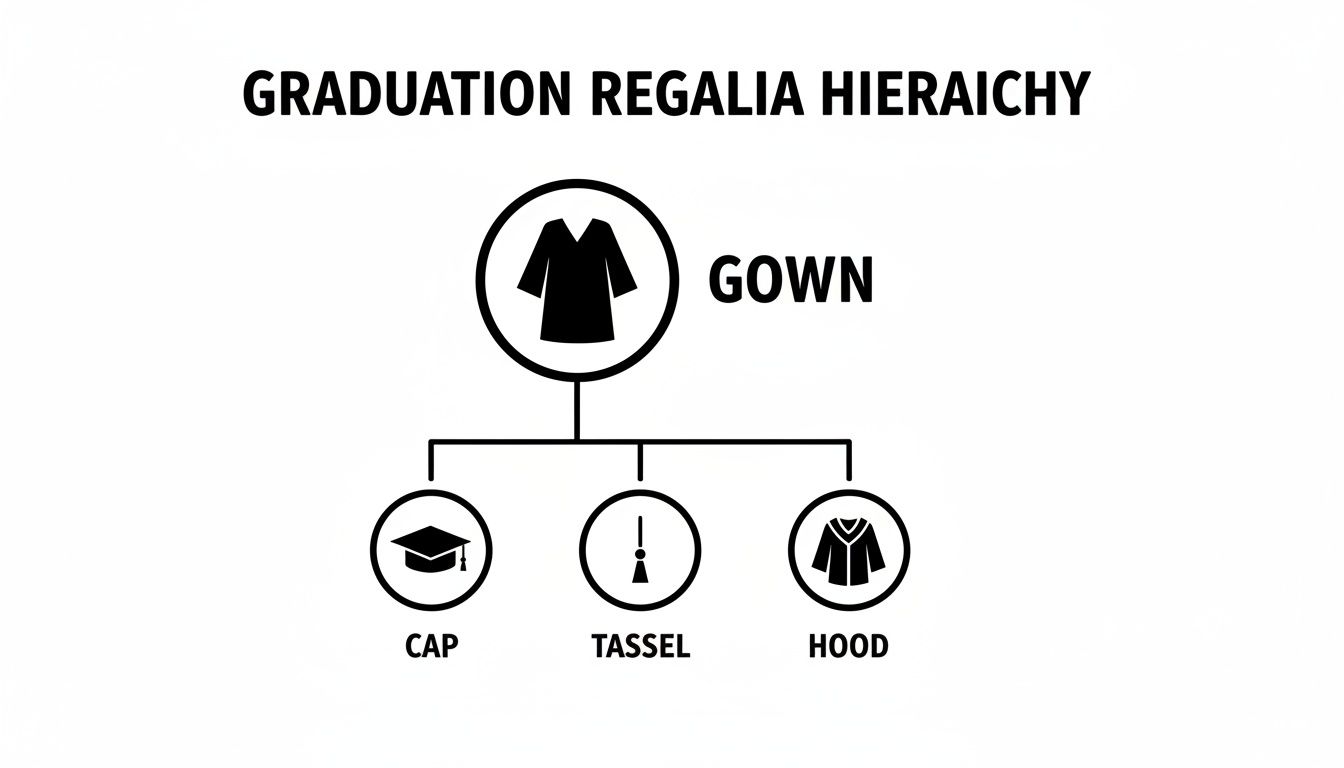
As you can see, the gown is the base layer, with the cap, tassel, and (if applicable) the hood building on it to create your complete, official look.
This tradition is a massive part of academic culture. In fact, the global market for graduation caps and gowns was valued at $1.35 billion in 2024 and is on track to hit $3.3 billion by 2032. North America makes up 38% of that revenue, thanks to strong traditions in both high schools and universities. This just goes to show how central proper regalia is to the whole experience, with more and more students looking to personalize their look with custom sashes or eco-friendly materials.
Securing Your Official Regalia
Before you can even think about what shoes to wear, you absolutely have to get the correct regalia for your school. Every university has its own specific requirements for gown color, tassel color, and hood design.
The single most important step in preparing for graduation is ensuring you have the correct, university-approved regalia. It's the non-negotiable part of your attire that guarantees you can walk across the stage.
Our "Find Your University" tool is designed to make this foolproof. Just select your school, and you'll instantly see the complete, approved regalia package you need. No guesswork involved. Once you know the exact color and style of your gown, picking out a complementary outfit underneath becomes a breeze.
For a deeper dive into the history and symbolism, check out our guide on what academic regalia is and why it matters. A little background knowledge can help you really appreciate the tradition as you celebrate your huge success.
Choosing the Perfect Outfit to Wear Under Your Gown
Now for the fun part—what you’ll actually wear underneath all that academic regalia. While your gown is definitely the star of the ceremony, the outfit you choose is your chance to feel confident and comfortable from the first photo of the day to the last celebratory handshake.
This is all about finding a look that feels like you, looks great in pictures, and holds up through a surprisingly long day of walking and sitting.

Think of your outfit as the foundation for your official graduation look. It should complement your gown, not compete with it. The key is to find that sweet spot between formality, comfort, and personal style so you feel your best while celebrating this huge achievement.
Finding the Right Style for You
When you're deciding what to wear, your own personal style should always lead the way. Whether you feel most comfortable in a classic dress or a sharp suit, the goal is to pick something that makes you feel polished and ready for the moment.
For a traditional, timeless look, a lot of graduates go for dresses or skirts. A-line or fit-and-flare styles are fantastic choices because they won’t bunch up or create weird bulk under the flowing fabric of your gown. On the other hand, a well-tailored suit or a sharp combo of dress pants and a crisp collared shirt is a sophisticated alternative that’s both professional and comfortable.
No matter what you choose, keep these practical tips in mind:
- Necklines: Your gown has a distinct V-neck. Pick a neckline that works with it, not against it. A crew neck, scoop neck, or a classic button-down collar creates a clean, intentional look that frames your face perfectly without awkwardly peeking out.
- Sleeve Length: Unless your ceremony is happening outdoors in a cool climate, short sleeves or a sleeveless top are usually your best bet. That gown can get surprisingly warm, and this simple choice helps prevent overheating.
- Length Matters: The hemline of your dress or skirt is a key detail. Aim for something that's either shorter than your gown or just a little bit longer. You can get more detailed advice in our guide on the proper length of a graduation gown to help you coordinate the whole look.
Fabric and Color Choices
The fabric you choose can make or break your comfort on graduation day. These ceremonies can last for hours, and you’ll likely be sitting in a crowded venue, so breathability is everything.
Choose lightweight, natural fabrics like cotton, linen, or rayon. These materials let air flow much better and will help you stay cool, preventing that dreaded "sweating under the gown" situation.
You’ll want to steer clear of bulky stuff like heavy knits or stiff fabrics that can add unflattering volume under your regalia. Your goal is a smooth silhouette that looks just as good when you take the gown off for photos with family and friends.
When it comes to color, a little strategy goes a long way. Here’s a quick breakdown of what works best:
| Color Palette | Why It Works | Best For |
|---|---|---|
| Neutral Tones | Black, navy, white, or beige provide a classic backdrop that never clashes with your regalia. | A sophisticated, timeless look that keeps the focus on your cap and gown. |
| School Colors | Wearing a shade that complements your school's official colors shows spirit in a subtle, stylish way. | Graduates who want to display school pride in their personal attire. |
| Pastels & Softs | Light blues, blush pinks, or mint greens add a touch of color without being overpowering. | Spring and summer ceremonies, adding a fresh and celebratory feel. |
It’s probably best to avoid overly bright neon colors or busy patterns. They can sometimes be visible through the gown’s fabric and might distract from the formal look of your academic regalia.
Don't Forget the Finishing Touches
Once you've picked out the perfect outfit, the final step is making sure it stays pristine until you walk across that stage. A long day of travel, waiting around, and celebrating can lead to some serious wrinkles.
This is where one simple accessory can be a total lifesaver.
Investing in a high-quality garment bag is one of the smartest moves you can make. It protects your entire ensemble—from your dress or suit to your perfectly pressed gown—making sure everything stays wrinkle-free and ready for its big debut. It’s a small detail that makes a huge difference in your presentation and gives you one less thing to worry about on a day that’s all about you.
Selecting Shoes for a Comfortable and Confident Walk
Let's be honest, your choice of footwear is one of the most underrated—yet absolutely critical—decisions you'll make for graduation day. You're going to be on your feet for hours, from standing and waiting to that final, triumphant walk across the stage. The right shoes are the foundation for a confident strut, not a painful hobble.
Think of it this way: the wrong pair can completely derail your experience with aching feet, surprise blisters, or—worst case scenario—a stumble during your big moment. The goal here is to find that perfect sweet spot between a style that elevates your outfit and comfort that will carry you through the entire celebration.
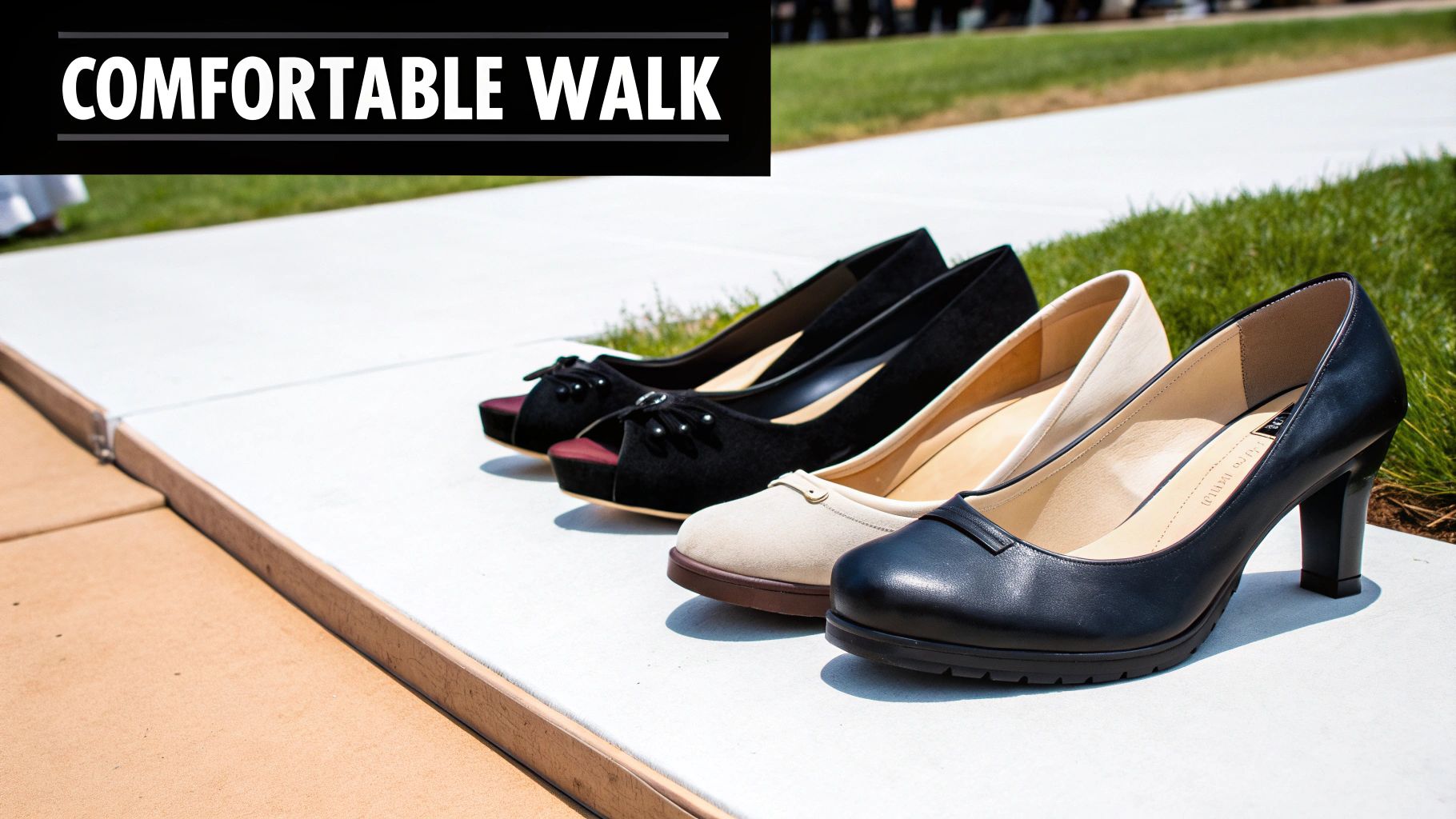
This decision is about so much more than looks; it's a practical choice that will directly impact how much you actually enjoy your own achievement.
Finding Your Perfect Fit and Style
When you start thinking about what shoes to wear, a few styles immediately come to mind for blending elegance with pure, simple practicality. It's so important to pick a style that not only looks incredible but feels supportive from the first photo op to the last.
- Block Heels: These are a graduate's absolute best friend. Their wide, sturdy base offers way more stability than a stiletto ever could, distributing your weight evenly and taking the pressure off the balls of your feet. This makes them a dream for walking on all kinds of surfaces, from polished stages to grassy quads.
- Wedges: Just like block heels, wedges deliver amazing support and stability. The continuous sole means you never have to worry about a heel getting caught in a crack or sinking into soft ground, making them a fantastic, stress-free option for outdoor ceremonies.
- Elegant Flats: You should never, ever underestimate the power of a seriously stylish flat. Modern options like pointed-toe flats, chic loafers, or embellished ballet flats can provide maximum comfort without sacrificing an ounce of sophistication. They are a foolproof choice for a long day.
- Classic Dress Shoes: For anyone rocking a suit or dress pants, classic leather or suede dress shoes like oxfords, derbies, or loafers are the way to go. Just make sure they have a comfortable insole, because brand-new dress shoes can be notoriously stiff.
If your heart is set on heels, make sure you're prioritizing styles built for the long haul. The world of comfortable heels for women has come a long way. The key is finding a pair that feels just as good as it looks.
Considering Your Ceremony’s Location
The venue for your graduation ceremony plays a huge role in figuring out the best footwear. What works perfectly in an indoor auditorium might be a complete disaster on an open field.
Thinking about the terrain you'll have to navigate is not just a detail—it's a strategic move. Your shoe choice should be directly influenced by whether you'll be walking on grass, turf, polished floors, or uneven pavement.
An outdoor ceremony on a grassy lawn, for example, is basically a minefield for skinny heels. They will sink right into the soft ground with every single step, which makes walking awkward and can even ruin the shoes. In this situation, wedges or block heels are a far superior choice. On the other hand, for an indoor ceremony on a smooth, polished stage, most dress shoe styles will work well, but you might want to double-check the sole for good grip to avoid any slipping.
The Golden Rule: Break Them In
If you take only one piece of advice from this entire guide, let it be this: never wear brand-new shoes on graduation day. This is the single most important thing you can do to prevent blisters and serious discomfort. New shoes, especially dress shoes and heels, are often stiff and need some time to mold to the unique shape of your feet.
Start breaking in your chosen pair at least a week or two before the ceremony. Just wear them around your house for an hour or two each day. This simple process lets the material stretch and soften in all the right places, revealing any potential spots that might rub or cause irritation later. Think of it as a dress rehearsal for your feet. It ensures that on the big day, you can focus on your accomplishment, not on aching arches or painful blisters. A confident walk starts with comfortable feet.
Personalizing Your Look with Accessories and Stoles
Once you've got your official regalia sorted, the real fun can start. This is your chance to take that standard academic uniform and turn it into a powerful statement about your journey, your accomplishments, and your heritage. Adding accessories, honor cords, and specialty graduation stoles is how you make the look your own, telling a story that’s deeply meaningful.
These aren't just decorations; they're symbols. They represent late-night study sessions, cultural pride, and personal milestones. From the shimmering cords that signify academic excellence to a custom stole that honors your family's roots, each piece adds a layer of you to the ensemble. It ensures that when you walk across that stage, you're not just another graduate—you're a graduate with a story to tell.

University Honors vs Personal Statements
It's helpful to think of graduation accessories in two main categories: the ones your university gives you and the ones you choose for yourself. Both are key to creating a complete look, but they tell different parts of your story.
University-issued honors are the official badges of your academic performance. These typically include:
- Honor Cords: These braided cords, often in bright colors, signal membership in an honor society or a specific GPA achievement (like Cum Laude or Summa Cum Laude). Each color combination represents a different field of study or level of academic success.
- Academic Medals: Some schools award medals or medallions for outstanding leadership, research, or specific departmental awards. You wear these around your neck, and they sit proudly right on top of your gown.
Personal adornments, on the other hand, are all about you. They're chosen to represent your identity, heritage, or personal journey. This is where you can truly shine. These items might include:
- Cultural Stoles: A Kente Stole, for instance, is a powerful way to celebrate African heritage. Its vibrant colors and intricate patterns tell a rich story of history and pride.
- First Generation Stoles: For students who are the first in their family to graduate, a First Generation Stole is a beautiful and deeply significant way to honor that groundbreaking achievement.
- Greek Life Stoles: Members of fraternities and sororities often wear stoles displaying their organization’s letters and colors, showcasing a brotherhood or sisterhood that was a huge part of their college experience.
How to Wear Each Piece Correctly
Layering everything correctly is the key to looking polished instead of cluttered. Your stole should be draped evenly over your shoulders, with both sides hanging at the same length down the front of your gown. If you're wearing multiple honor cords, a pro tip is to neatly pin them to the inside of your gown's yoke near the shoulders. This keeps them from slipping around or getting tangled.
The goal is to create a look that is both celebratory and dignified. Arrange your stoles and cords so they lay flat and are clearly visible without looking cluttered. This thoughtful presentation shows respect for both your academic achievements and your personal heritage.
The demand for these personal touches is absolutely booming. Customization is one of the biggest trends in graduation attire, with market analysis showing a huge spike in personalized embroidery and themed items. The cap and tassel segment alone is growing at an 8.9% CAGR, which makes it clear that graduates want their regalia to be as unique as they are. With the number of US high school and college graduates expected to top 20 million annually, this desire for meaningful personalization is only going to get stronger.
You can learn more about all your options in our article on the different types of graduation stoles.
Choosing Subtle Personal Jewelry
Beyond your official regalia, some simple and elegant jewelry can add that final touch of class. A delicate necklace, a pair of classic earrings, or a tasteful watch can complement your look without overwhelming it. Subtlety is the name of the game—you want accessories that enhance your appearance, not distract from your cap and gown.
For a little extra flair, consider accessories like a subtle necklace or tasteful earrings. If you're thinking about wristwear, a guide on how to style layered gold bracelets can offer some great inspiration. These finishing touches help complete your look, ensuring you feel polished and confident from head to toe.
Navigating Guest and Graduate Dress Codes
Graduation day isn’t just a huge moment for the person crossing the stage; it's a milestone for the entire family. Everyone wants to look their best, but figuring out the unspoken rules of what to wear can sometimes be tricky. This guide will give you some clear, simple advice for both graduates and their guests so everyone is dressed perfectly for the big day.
For graduates, the most important rule is to always double-check your school's official dress code. Even if you've planned what's going under your gown, some schools have very specific guidelines that you can't ignore. These rules are usually in place to keep the ceremony feeling formal and dignified, making sure everyone looks uniform and polished.
Decoding the Invitation for Guests
When you get a graduation invitation in the mail, it might mention a dress code like "business casual" or "semi-formal." These terms can feel a little vague, but they're easier to crack than you might think.
- Business Casual: This is the most common dress code for graduation ceremonies. It hits that sweet spot right between professional and relaxed. Think dress pants or a nice skirt with a blouse, a polo shirt with chinos, or a simple daytime dress.
- Semi-Formal (or Cocktail Attire): If the ceremony is in the evening or at a more formal venue, you might see this. It calls for a step up from business casual. Men should probably go for a suit and tie, while women can choose a cocktail dress or stylish dressy separates.
No matter the official code, always think about the venue. An outdoor ceremony under the hot sun calls for breathable fabrics and comfortable shoes, while an indoor event in an air-conditioned hall might feel a bit chilly. For a deeper dive into what the graduate should be wearing, you can read our detailed guide on how to properly wear graduation regalia.
A Simple Checklist for Guests
Feeling a little lost on what to wear to graduation as a guest? Just follow this straightforward checklist to put together a polished and appropriate outfit that shows respect for the graduate and the event itself.
Your goal as a guest is to look celebratory and put-together without upstaging the graduate. Think sophisticated, but not distracting. The focus should remain on the person in the cap and gown.
Here are a few simple do's and don'ts to guide your choices:
| Do Wear | Don't Wear |
|---|---|
| Dresses or skirts at a modest length | Anything too short, tight, or revealing |
| Dress slacks or chinos with a collared shirt | Jeans, shorts, or t-shirts with logos |
| Comfortable yet elegant footwear | Flip-flops, sneakers, or overly casual sandals |
| Polished layers like a blazer or cardigan | Anything that could be mistaken for loungewear |
At the end of the day, your presence is the most important gift. By dressing appropriately, you're honoring the incredible significance of the graduate's achievement and helping to make the day feel as special as it truly is. A little bit of planning ensures you’ll be comfortable, confident, and ready for every single photo op.
Your Graduation Day Preparation Checklist
The final countdown is on. You’ve planned the outfit, sent the invites, and now it’s time to focus on the small details that will make graduation day smooth, memorable, and stress-free. Getting your regalia perfect is the last big step.
Your gown will probably arrive with some serious creases from being folded up in its packaging. To get it looking crisp for photos, the absolute best method is to steam it. If you don’t have a steamer, no sweat—just hang it in the bathroom while you take a hot shower. The steam works wonders. Whatever you do, don't use a direct iron; that intense heat can easily melt or damage the fabric.
Pre-Ceremony Regalia Check
Before you even think about walking out the door, take a minute for a final regalia check. These aren't just random traditions; they’re symbolic gestures that mark your big transition from student to graduate.
First, your cap (also called a mortarboard). It should sit flat on your head, perfectly parallel to the ground. Don’t tilt it back like a beanie or perch it on the back of your head. Think of it as a square platform, a foundation for your achievement.
The tassel placement is just as important. Before the ceremony starts and as you walk to the stage, your tassel belongs on the right side of your cap. This signifies that you haven't officially graduated yet. Once your name is called and your degree is conferred, you'll be told to move it to the left side in a moment known as "the turning of the tassel."
Graduation season goes into overdrive in May and June, and you can see a massive spike in searches for gowns and accessories. This rush highlights a crucial point: having your regalia correct and ready on time is non-negotiable. With sizing issues affecting up to 30% of buyers, having a reliable source is vital for last-minute needs. Learn more about graduation market trends and insights.
The Lifesaver Graduation Day Emergency Kit
Tuck a few essentials into a small bag or pocket, and you can handle just about any minor wardrobe hiccup with grace. Trust us, a small emergency kit can be a total lifesaver.
Here’s a quick list of what you should bring:
- Bobby Pins: These are non-negotiable for locking your cap to your hair, especially if there's even a hint of wind. Use more than you think you need.
- Safety Pins: An absolute hero for a quick fix on a loose hem or a fussy zipper.
- Travel-Size Hairspray: A quick spritz can tame flyaways and give your cap a little extra grip.
- Blister Band-Aids: Even comfortable shoes can turn against you after hours of standing and walking.
- Double-Sided Fashion Tape: The secret weapon for keeping collars, stoles, or necklines perfectly in place under your gown.
To make sure you don't miss a thing, we've put together a handy checklist to run through on the morning of your ceremony.
Graduation Day Checklist
This step-by-step checklist will ensure you have everything you need for a smooth and memorable ceremony. Just check things off as you go!
| Item Task | Check When Complete | Notes |
|---|---|---|
| Steam your graduation gown. | ☐ | Do this the day before to let it hang overnight. |
| Check cap and tassel placement. | ☐ | Tassel starts on the right side. |
| Assemble your emergency kit. | ☐ | Pack bobby pins, safety pins, etc. |
| Lay out your full outfit. | ☐ | Clothes, shoes, and accessories all ready to go. |
| Charge your phone. | ☐ | You'll want it for photos! |
| Confirm your meeting time and location. | ☐ | Know where you need to be and when. |
| Eat a good meal. | ☐ | It's a long day, so don't skip it. |
| Have your tickets ready. | ☐ | Put them somewhere safe for your family. |
With everything on this list checked off, you'll be set for a day focused entirely on celebrating your incredible accomplishment.
And if you realize you've forgotten something critical, like an honor cord or even your tassel? Don't panic. Our fast and overnight shipping options were made for exactly these kinds of last-minute emergencies. We’ll make sure you get what you need, right when you need it. You've done the hard work—now go and soak in every moment of your well-deserved celebration.
Common Questions About Graduation Attire
Even when you think you have the perfect outfit picked out, a few last-minute questions always pop up as graduation day gets closer. Don't worry, it's completely normal. Here are some quick, straightforward answers to the things graduates are actually wondering about.
Can I Wear Jeans Under My Graduation Gown?
Technically, yes, they’re hidden under the gown. But should you? Probably not. Most graduation ceremonies follow a business casual dress code, and you'll want to look and feel your best for all the pictures with family and friends that happen before and after you walk the stage.
Think about it—the gown comes off eventually. Swapping the jeans for a pair of dress pants, a skirt, or a nice dress will better match the importance of the day and ensure you feel confident and put-together for the entire celebration.
How Do I Keep My Graduation Cap from Falling Off?
This is the big one. Nothing is more stressful than worrying about your cap taking a tumble during your big moment. While the cap’s built-in elastic band does some of the work, bobby pins are your absolute best friend.
For a rock-solid hold, crisscross two bobby pins on each side of the cap, making sure to weave them through the fabric and anchor them firmly into your hair. It’s a simple trick, but it creates a surprisingly strong grip that will keep your cap secure, even if you’re dealing with a windy outdoor ceremony.
A question we get all the time is whether bachelor's degree candidates need an academic hood. The answer is no; hoods are traditionally reserved for graduate-level degrees like a Master's or Doctorate. Your Bachelor's regalia is all about the cap, gown, and tassel. You'll show off your honors with items like our custom honor cords or a powerful First Generation stole.
Finally, when choosing your outfit's colors, play it safe. Pick something that won’t clash with your school's regalia. You can't go wrong with neutral tones like black, white, navy, or beige—they're classic for a reason. Or, for a more coordinated look, choose a color that complements your school's official colors. Just try to avoid super bright colors or busy patterns that might peek through the gown.
At Graduation Cap and Gown, we have everything you need to feel prepared and polished for your big day, from official regalia to personalized stoles that celebrate your unique journey. Shop our full collection today!