

You're standing in a crowded colonnade with coffee-cart steam drifting past, parents waving printed programs, and a commencement line that snakes beyond the dean's table. Your cap is balanced in one hand, your phone is filling with family messages, and you're wondering whether the outfit under your gown will survive the ceremony, the stage, the grass, the stairs, and dinner afterward.
That's the practical problem behind good college graduation outfit ideas. The gown creates the tradition, but the hidden outfit determines whether you can sit comfortably, walk securely, and look polished when the robe opens or comes off. Use this guide to choose the under-gown outfit first, then coordinate the cap, hood, stole, cords, shoes, and weather layers around it.
What to Picture Before You Pick an Outfit
Start by treating commencement as four separate situations rather than one photo opportunity. During the procession, you'll walk in a crowded group, find your seat, and remain seated for an extended ceremony. The gown should hang cleanly, your neckline shouldn't press against the collar, and your shoes should let you walk without catching the hem.
The stage handshake is brief, but it's one of the most visible moments of the day. The camera may catch your cap angle, hood, sleeve opening, collar, and the way your trousers or dress hem sits beneath the robe. A neckline that feels fine in a dressing room can disappear under the gown, while a bulky shoulder seam can create bunching around the hood.
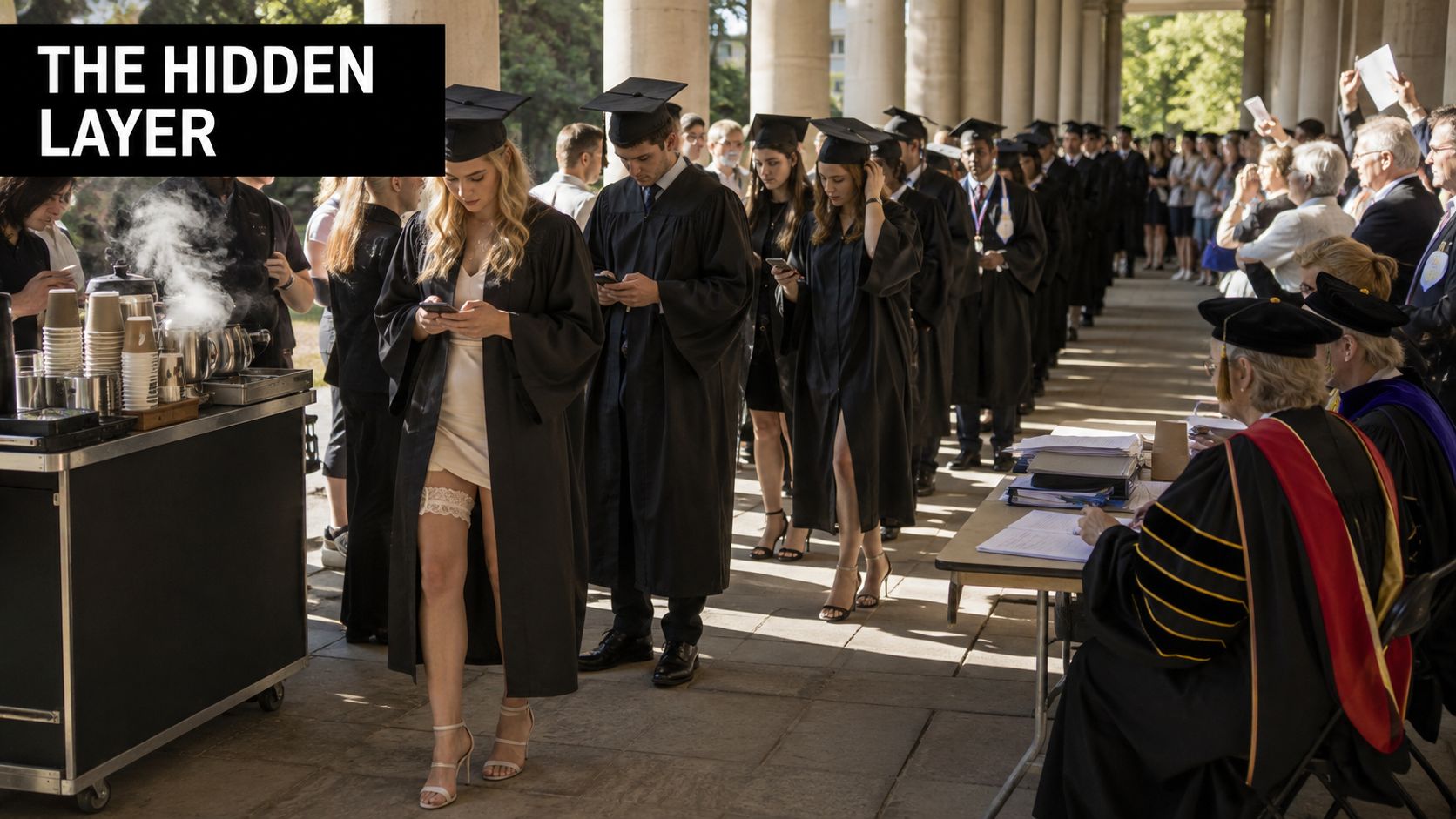
Use four ceremony checkpoints
- Procession walk: Check whether your shoes grip the floor and whether the gown clears your feet. You shouldn't need to gather fabric while climbing stairs or stepping around chairs.
- Seated ceremony: Choose a waistband, bra, and neckline that stay comfortable while you're seated for a long period. A stiff belt or tight bodice becomes distracting under a closed gown.
- Stage crossing: Make sure the sleeve opening, hood, and stole sit evenly. Your hands should come through naturally for the diploma or handshake.
- Photos and dinner: Select an outfit that still looks intentional after the gown comes off. A simple dress, pressed trousers, a jumpsuit, or a coordinated two-piece set earns its place.
The visible zones are small but important. Expect attention around the collar, the gap at the sleeve cuff, the few inches below the gown hem, and any area exposed when the robe shifts over one shoulder. The full gown can hide most of your clothing, but it can't hide poor fit, uncomfortable shoes, or a neckline that fights with the regalia.
For more practical guidance before you shop, use this guide to what to wear to graduation. Then try the complete outfit with the gown if possible. Walk, sit, climb a few steps, and take a phone photo from the front and side.
Practical rule: Choose the outfit you can wear for the entire schedule, not only the outfit that looks good for one portrait.
A polished white dress may suit your photos, but fitted trousers may work better for grass, cold weather, or a ceremony with long outdoor lines. A slip dress may create a smooth layer under a gown, while a structured jumpsuit can make movement easier. The right answer depends on the venue and your body, not a trend list.
How the Cap Gown Tassel Hood and Stole Work Together
Academic regalia is a coordinated system, not a collection of random decorations. Academic dress has roots in medieval European universities, with traditions traceable to the 12th and 13th centuries. In the United States, formal standardization began in 1894 and 1895, and the University of Pennsylvania notes that the modern system adopted in 1960 has been used by nearly 95% of U.S. postsecondary institutions. The history of academic regalia explains why caps, gowns, hoods, tassels, and color-coded trim remain familiar across commencement ceremonies.
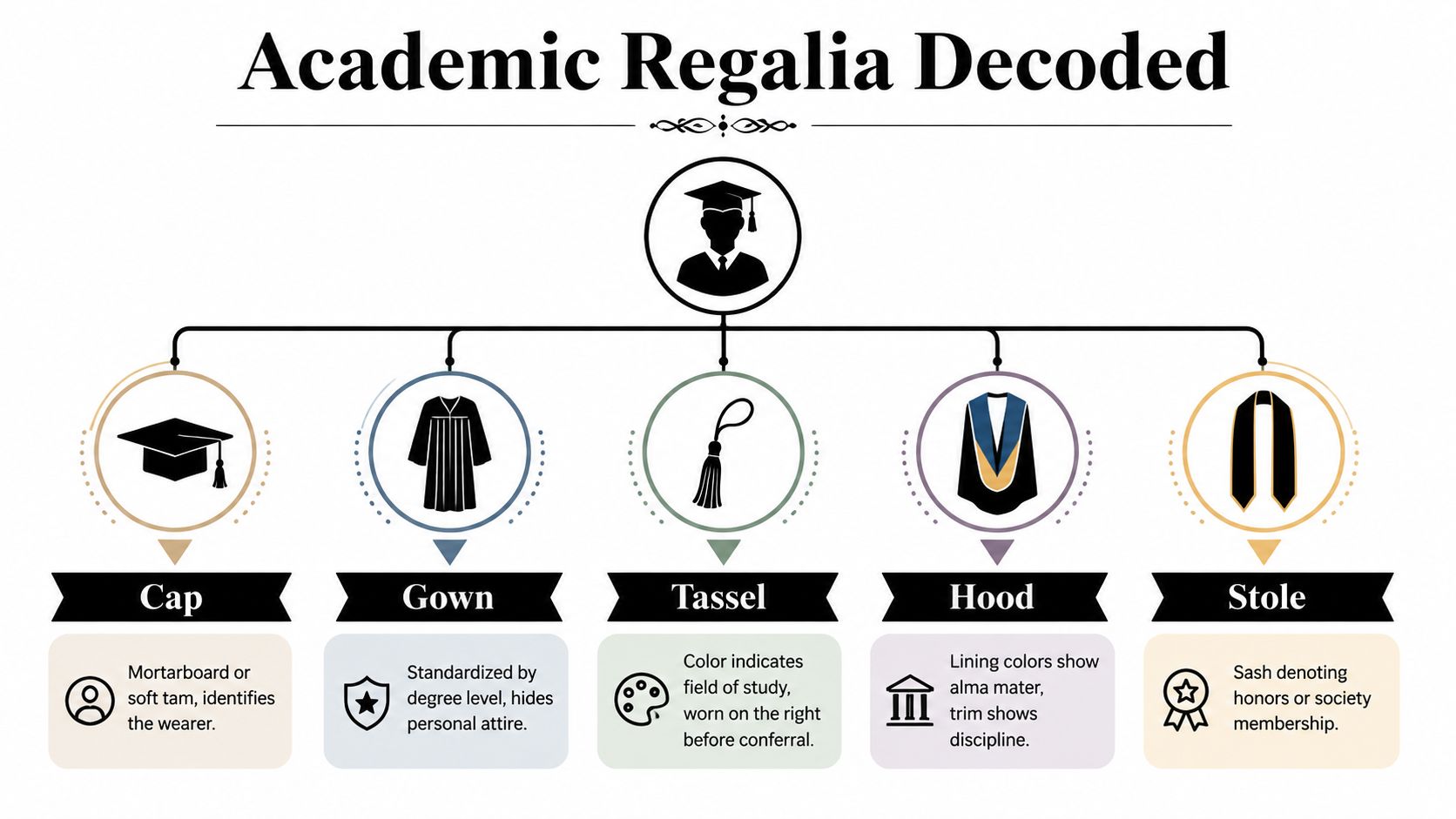
Learn what each piece communicates
The mortarboard or soft tam identifies the wearer as a graduate. The tassel is the moving part. Bachelor's candidates often begin with the tassel on the right side and move it to the left after degrees are conferred, as described in King University's graduation dress code. Follow your institution's direction if it differs, because the ceremony staff may give a specific cue.
The gown communicates degree level through its cut and sleeves. Bachelor's gowns generally have open, pointed sleeves. Master's gowns use oblong sleeves, and doctoral gowns use bell sleeves with velvet bands. The University of Toledo describes how the recognizable mortarboard and gown became standard after late nineteenth-century rule-making, including the first United States code of color and design in 1895 and a Harvard dress code established in 1897 that most American universities followed by 1902. The history of commencement regalia provides that background.
The hood sits over the shoulders. Its lining identifies the degree-granting institution, while the velvet edge or trim identifies the academic discipline. A stole is a sash that may represent honors, an organization, cultural identity, first-generation status, veterans' service, or another approved affiliation. Cords and medals add further recognition, but your registrar's rules control what you may wear.
Put the layers on in a stable order
Use this sequence unless your school provides a different instruction:
- Put on the under-gown outfit and secure any comfortable jewelry.
- Add the gown and zip or fasten it as directed.
- Place approved stoles or cultural pieces over the gown.
- Add honor cords, medals, or other approved recognition items.
- Position the hood over the shoulders, keeping the lining visible.
- Put on the cap and check the tassel side before entering the ceremony.
The hood normally sits above the shoulder layers, but some institutions distribute or position it differently. Never guess based on a photograph from another university. Check your school's instructions, then use this guide to wearing graduation regalia for a visual preparation reference.
Tassel color and hood trim don't need to match. The hood trim follows the academic discipline, while the tassel may follow institutional or field-specific rules. For examples, UWM identifies golden yellow with science, dark blue with philosophy, apricot with nursing practice, and citron with social work. UWM's explanation of academic regalia can help you understand why the colors should be verified rather than selected by appearance alone.
If you plan to wear a small necklace or earrings, a practical JewelryBuyDirect retail jewelry guide can help you choose pieces that complement the neckline without competing with a hood or stole.
Dressing for Bachelor Master and Doctoral Ceremonies
Your degree level changes which parts of the under-gown outfit remain visible. A bachelor's gown usually creates a relatively closed, simple frame. A master's sleeve can expose your wrist and cuff. Doctoral regalia creates a stronger shoulder and neckline frame because the gown includes velvet panels and bell sleeves with velvet bars.
Official guidance can also differ by institution. The University of New England explains that bachelor's candidates wear black gowns with open sleeves, master's candidates wear oblong sleeves, and doctoral candidates wear bell sleeves with velvet bands. It also notes that approved cords and stoles may be worn while gown alterations are prohibited. Read the academic regalia guide for your ceremony's specific limits.
Compare the visible details
| Degree Level | Visible Under Gown | Best Neckline | Fabric Note |
|---|---|---|---|
| Bachelor's | Collar frame, lower hem, shoes, and occasional sleeve cuff | V-neck, open collar, or modest jewel neckline | Smooth, lightweight fabric that won't bunch under the closed gown |
| Master's | Neckline, lower hem, forearm opening, watch, bracelet, and cuff | Clean V-neck, crew neckline, or simple collared shirt | Pressed fabric with a controlled sleeve and comfortable wrist finish |
| Doctoral | Neckline, shoulders, front panel contrast, bell sleeve openings, and formal accessories | Open collar, refined blouse neckline, or structured dress neckline | Substantial enough to hold its shape, but not bulky beneath the hood |
For a bachelor's ceremony, a slip dress, midi, or trouser outfit works well because it creates a smooth base. Avoid large shoulder details, stiff bows, or thick waist layers. A crew or jewel neckline may disappear beneath a high gown collar, while a modest V-neck can create a visible frame without exposing too much.
Master's candidates should inspect the sleeve opening before choosing a watch or bracelet. The accessory may show during the handshake, so choose one that won't catch on the gown. Keep cuffs narrow and pressed. A soft blouse sleeve can work, but avoid excess fabric that gathers at the forearm slit.
Doctoral regalia needs the most deliberate neckline. The hood and velvet front panels draw attention upward, so a collar, blouse edge, or dress neckline should look finished rather than accidental. A structured dress or smooth shirt can provide that finish without adding bulk beneath the shoulder line.
A maxi dress can work for photos after the ceremony, but check the hem carefully under the gown. If you're considering a formal option, buy a maxi dress online only after confirming that the length won't drag, bunch, or interfere with stairs.
For master's candidates, graduation regalia for a master's degree offers a useful reference when the sleeve and hood details feel unfamiliar. The safest under-gown choice is the one that keeps its shape, doesn't show through, and still feels appropriate when you remove the robe.
Coordinating Stoles Cords and Cultural Pieces With School Colors
Start with the pieces your university has issued or approved. A university stole, cultural stole, honor cord, medal, or organization sash may each have a specific purpose and placement. The registrar or commencement office should confirm whether multiple pieces can be worn together, especially if your cultural stole represents an identity that isn't part of the standard package.
Cultural pieces can include Kente, Serape, Indigenous, veterans, First Generation, Greek, and international stoles. Their meaning matters more than whether they match every color in the gown. Your goal is to keep the piece visible, secure, and respectfully positioned without covering required academic markings.
Build the arrangement from broad layers to narrow details
| Layer Position | Item Type | Worn By | Photo Visibility |
|---|---|---|---|
| Base | Gown | Every graduate | Creates the main silhouette and frames every accessory |
| Over-gown sash | University, cultural, identity, or organization stole | Graduates with approved recognition | Highly visible in front-facing photos |
| Centered detail | Additional approved stole or sash | Graduates permitted to wear multiple pieces | Can become crowded if both pieces are wide |
| Narrow upper layer | Honor cords or medals | Graduates receiving approved recognition | Visible across the chest and during the handshake |
| Shoulder layer | Academic hood | Graduates whose degree includes a hood | Frames the neckline and identifies institution and discipline |
Place the widest stole so it lies flat down the front. If you're wearing two stoles, keep each one straight and check that the ends finish at a similar height. A cultural stole should remain readable in family photographs, so don't let a second sash twist over its design.
Honor cords generally sit on top of stoles because they need to remain visible. Let the cords fall symmetrically, then test the arrangement while walking. If one cord slides toward the armpit, a small approved pin or discreet clothing anchor may help, but don't puncture rented regalia without permission.
Color coordination should begin with the hood trim, not with a fashion palette. The trim identifies the discipline, and school colors may appear in the gown, lining, stole, or tassel. NDSU, for example, lists orange for engineering, maroon for human development, olive green for pharmacy, and golden yellow for science and mathematics. UAB lists orange for engineering, gold-yellow for science, green for medicine, citron for social science, and brown for fine arts. These examples show why a discipline color isn't interchangeable with a school color.
Use one dominant identity piece and let the other accessories support it. If your cultural stole has strong metallic thread, choose restrained jewelry. If your honor cords are metallic, avoid adding several competing metallic pins. Before buying anything extra, confirm the permitted accessories with the registrar. The guide to cords and stoles can help you identify the pieces, but your ceremony policy decides what belongs in the lineup.
Shoes Weather Venue and Photography That Make the Outfit Work
Commencement footwear has a safety job before it has a fashion job. You may cross polished floors, ramps, stadium steps, grass, pavement, or uneven walkways while wearing a gown that limits your view of your feet. A low block heel or flat with a secure, non-slip sole is usually easier to manage than a narrow heel.
Test the shoes with the gown. The hem should clear the ground while standing and sitting, and the shoe should remain stable when you take a longer step. If you prefer height, select a stable block heel or wedge and carry backup flats for the procession, photo line, or walk to dinner.
Official commencement dress codes often require business or business-casual clothing and formal or dark shoes, while warning against jeans, shorts, flip-flops, sandals, and tennis shoes. One university guide recommends dark trousers or khakis, dark socks and shoes, and a pressed light-colored dress shirt with a dark tie for men. It also advises women to avoid high heels for safety and comfort. These commencement dress and conduct guidelines show why venue rules matter as much as personal taste.
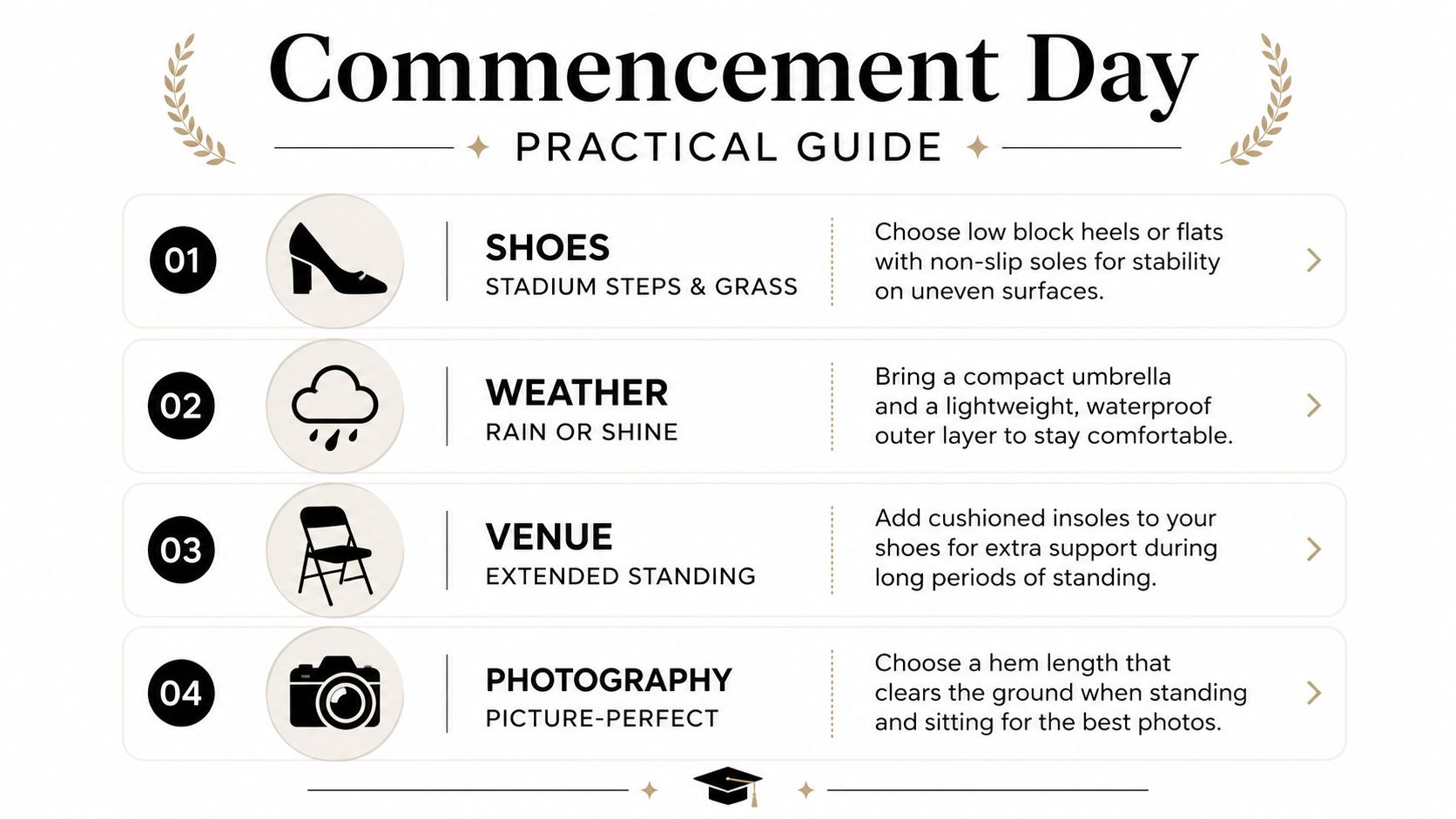
Plan for the venue and forecast
Indoor arenas may feel cool because of air conditioning, while outdoor quads can become warm under a gown. Wear a smooth base layer and bring a light jacket, wrap, or waterproof shell that can be removed for photographs. For rain, use a compact umbrella if the venue allows one and protect shoes with a water-resistant option.
Winter ceremonies require a different strategy. Choose a thin thermal layer under trousers or a dress, then add a coat over the gown only when moving outdoors. A thick sweater may create shoulder bunching beneath a hood, so prioritize warmth in a close-fitting layer rather than bulky knitwear.
Ask about aisle length, stage stairs, seating duration, ramps, and wheelchair access before finalizing shoes. If you use mobility equipment, choose clothing that won't catch on wheels or footrests, and ask the commencement office how the stage route works. A practical outfit should support your movement without making you feel conspicuous.
Make the outfit photograph cleanly
A gown photographs best when the under-gown hem doesn't create a second, uneven line. Choose a dress or skirt that sits comfortably above the gown's lower edge, or trousers with a clean break that won't puddle around your shoes. Solid colors usually make the regalia easier to read, while a small print can add personality after the robe comes off.
Keep the cap level for formal portraits. For a cap-toss photograph, follow the photographer's direction and angle your face toward the camera rather than tilting the mortarboard dramatically. Check that the tassel hangs freely and that your hood and stole sit flat before each group photo.
Photo check: Take one standing photo and one seated photo in the full outfit. The seated image often reveals bunching that you won't notice in a mirror.
Sizing Ordering and a Last Minute Outfit Checklist
Order the regalia from the measurements your school or retailer requests, not from your usual clothing size. Academic gowns need room to drape over your body and under-gown outfit, and sizing guides recommend using both height and weight because shoulder clearance and gown volume change with body shape. This graduation cap and gown sizing guide recommends a gown length between mid-calf and ankle, without dragging on the floor.
Use the measurement instructions for the exact gown, including whether height should be recorded with or without shoes. When comparing our bachelor's gowns, check the available sizes and ask for sizing guidance if your measurements fall between options. Try the gown with your planned outfit and shoes to confirm that the hem clears the floor and that you can move comfortably.
Order by components, not assumptions
Check the package contents against your school's order summary. A complete order may include a cap, gown, tassel, hood, stole, or other approved pieces, but degree level and university requirements determine what you need.
- Measure carefully: Record height in ceremony shoes and check weight against the retailer's chart.
- Confirm the gown cut: Bachelor's, master's, and doctoral gowns differ in sleeve and trim details.
- Verify the cap: Make sure the mortarboard or tam fits securely without pressing painfully.
- Check color information: Confirm the tassel, hood lining, and discipline trim against university instructions.
- Review delivery timing: Order before the school's stated deadline and check any rush-shipping cutoff rather than assuming an expedited option will solve a late order.
- Inspect on arrival: Open the package, compare every component with the order summary, and try everything on together.
Don't alter a gown immediately if it arrives too long. First check whether you selected the correct height range, whether the gown is intended to fall lower for your degree, and whether the garment is folded or wrinkled. If the length needs adjustment, ask the retailer or ceremony office about an approved solution. Some schools prohibit gown alterations, and an unauthorized hem can affect return eligibility.
A simple belt can sometimes improve the fit of an under-gown dress, but it shouldn't tighten the gown itself. Steam the gown according to the care instructions, hang it with enough room for the fabric to relax, and avoid pressing directly over velvet or printed trim.
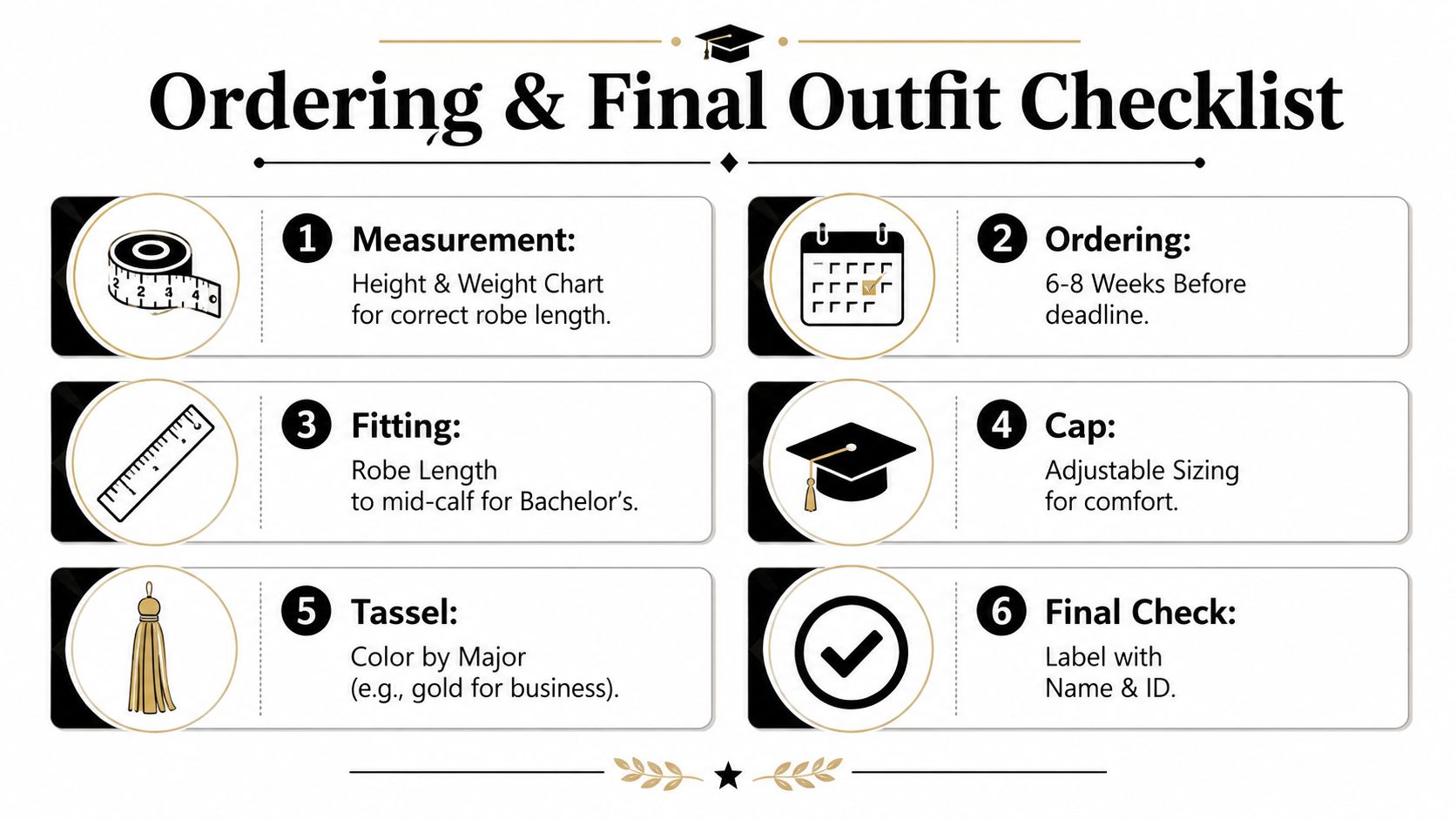
Use a timed packing checklist
A week before
- Try the full outfit: Wear the under-gown clothing, shoes, cap, gown, hood, and accessories together.
- Walk and sit: Test stairs, chairs, ramps, and a short outdoor walk.
- Prepare a repair kit: Pack safety pins, fashion tape, blister protection, a small sewing kit, tissues, and a phone charger.
The day before
- Steam carefully: Remove visible creases and hang the gown.
- Pack accessories: Place the tassel, hood, stole, cords, jewelry, and approved pins in one labeled pouch.
- Check the forecast: Set aside a coat, wrap, umbrella, or waterproof layer that fits over the regalia.
The morning of
- Wear the right base: Choose pressed, formal clothing that won't show awkwardly through the gown.
- Secure the cap: Confirm the mortarboard sits level and the tassel starts on the required side.
- Protect your feet: Apply blister protection before shoes become uncomfortable.
- Carry essentials: Bring identification, ceremony instructions, water, tissues, and touch-up products if permitted.
After the ceremony
- Remove regalia carefully: Keep hood pins, cords, and tassel together.
- Separate rental items: Follow the return instructions and don't pack damp clothing with the gown.
- Photograph the look: Take your family portraits before the stole shifts or the gown becomes creased.
The final inspection should happen before you leave home. Compare the cap, gown, tassel, hood, stole, and any cords with the order summary, then confirm that your name or identification label is attached wherever your school requires it.
Quick Outfit Decision Guide and Common Questions
Use this fast decision path when you're still unsure.
If you're wearing a bachelor's gown, choose a smooth dress, slip dress, tailored trousers, or a pressed shirt with a modest neckline. Keep the shoulder area flat because the gown creates a simple frame.
If you're wearing a master's gown, choose an outfit with a finished cuff and a sleeve that looks intentional through the forearm opening. A clean blouse, a simple dress, or a well-fitted shirt works better than loose fabric that gathers at the wrist.
If you're wearing doctoral regalia, choose a refined collar or neckline that can sit beneath the hood and velvet front panels. Keep the outfit formal and structurally simple so it supports, rather than competes with, the robe.
If the ceremony is outdoors, prioritize stable shoes, a smooth breathable layer, and a rain plan. If it's indoors, prepare for cool air without adding thick bulk under the shoulders. If you're going straight to dinner, choose an outfit that looks complete when the gown comes off.
Common questions
Which side should the tassel start on?
Bachelor's candidates often begin with the tassel on the right and move it to the left after conferral. Your institution's ceremony instructions take priority, so check them before lining up.
What fabric works beneath a warm gown?
Choose a lightweight, smooth fabric that doesn't cling or form bulky folds. Your venue and weather should guide the choice, but the fabric also needs to remain presentable after sitting and walking.
What if one stole represents more than one identity?
Ask the registrar or commencement coordinator whether you may wear multiple stoles or whether one approved piece can represent both affiliations. Don't assume that a meaningful personal piece is automatically permitted.
How do you keep a rented gown from looking wrinkled?
Hang it as soon as it arrives and use the care method supplied by the retailer. Steam cautiously around velvet, trim, and printed details, and never make an alteration before confirming the return and ceremony rules.
Should the under-gown outfit be white?
White can create a crisp contrast in photographs, but it isn't the only appropriate choice. School colors, a dark solid, a restrained print, or a professional neutral can all work when the neckline, hem, fabric, and venue are right.
Can trousers replace a dress?
Yes. Well-fitted trousers with a smooth shirt or blouse provide mobility and can be especially practical for grass, ramps, cold weather, or a long photo line. Keep the trouser hem clear of the shoe and avoid excess fabric beneath the gown.
The best college graduation outfit ideas solve several problems at once. They keep you comfortable while seated, stable while walking, formal under the gown, coordinated with the hood and stole, and ready for photographs after the ceremony.
Graduation Cap and Gown offers caps and gowns, tassels, hoods, tams, stoles, cords, diploma accessories, and degree-specific regalia for bachelor's, master's, and doctoral ceremonies. Visit Graduation Cap and Gown to compare the pieces you need, verify colors and sizing, and assemble a commencement look that works under the gown and after it comes off.