

The most popular advice for diploma frames cheap enough to feel like a bargain is simple. Grab the lowest sticker price, pick a finish you like, and hang it. That's also the advice most likely to cost you twice.
A frame can look perfect on the shelf and still crop your seal, press your paper against glass, or let sunlight fade the ink. Then you're paying for a second mat, replacement glazing, or a return you didn't plan for. Cheap isn't the problem. Buying the wrong cheap frame is.
Cheap Diploma Frame Prices Worth Paying
A frame can look like a bargain until its mat opening covers part of the diploma. Then you may need a new mat or a different frame, and the low sticker price no longer tells the whole story. The cheapest frame isn't always the lowest total cost. A poor fit, ordinary glazing, or permanent adhesive can erase the savings.
What each band really buys
Budget retail frames cost about $8 to $15 in 2025, while premium specialty frames can exceed $200, according to the DataIntelo global posters and frames report. The range reflects different uses, from simple display to custom materials and mounting.
| Band | Typical spend | Protection to expect | Best use |
|---|---|---|---|
| Retail budget frame | About $8 to $15 | Decorative molding, often ordinary glass or acrylic | Copy or very short display |
| Temporary diploma frame | Under $50 | Correct opening and a removable mount | Low-risk or replaceable certificates |
| Mid-range protective frame | Above $50 and below premium specialty pricing | Acid-free mat plus UV-filtering glazing | Original hung for years |
| Custom or specialty framing | About $30 to several hundred | Size-specific mats and conservation options | Oversized or irreplaceable originals |
| Online framing service | About $84 standard; about $127 personalized in 2025, according to the DataIntelo global posters and frames report | Labor plus materials chosen by the shop | When you do not want to mount it yourself |
Custom framing costs vary with the diploma's size, matting, materials, and shipping. A ready-made frame may cost less when its opening fits; an unusual size may call for custom work.
How to choose your band
Treat under $50 as the temporary tier. It can suit a photocopy, a certificate that can be reissued, or a display planned for a short time. Even at this price, look for the right opening and a mount you can remove. Avoid gluing the diploma in place.
The practical middle suits graduation diplomas that will hang for years. Choose a plain, sturdy frame and spend on an acid-free mat and UV-filtering glazing rather than carved ornament. These features offer a sensible level of protection for a document displayed in normal room light, though they do not provide full archival preservation.
Reserve the top band for a document that needs more specialized handling. An oversized sheet, curled parchment, or irreplaceable original may call for size-specific mats and conservation mounting. Decorative details such as gold fillets or an extra-thick profile do not provide that protection.
Practical rule: If you'd be upset to reprint it, don't put it in the cheapest tier just because the molding looks nice.
Choose your price band before shopping, then check that the frame suits the diploma. That way, a low price stays a saving rather than the start of another purchase.
Measure the Diploma Before You Buy
Treat frame sizes like shoe sizes. A common label helps you start looking, but it doesn't guarantee a fit, and forcing a tight fit hurts the thing you're trying to protect.
Start with the paper itself, not the cover it arrived in and not what you think your school uses. Lay the diploma flat on a table. Measure the width first, then the height, and include any deckled edge, raised seal area, or uneven border in your numbers. Ignore the printed school name. It's decoration, not a dimension.
This visual walkthrough shows the order to follow before you look at any frame opening.
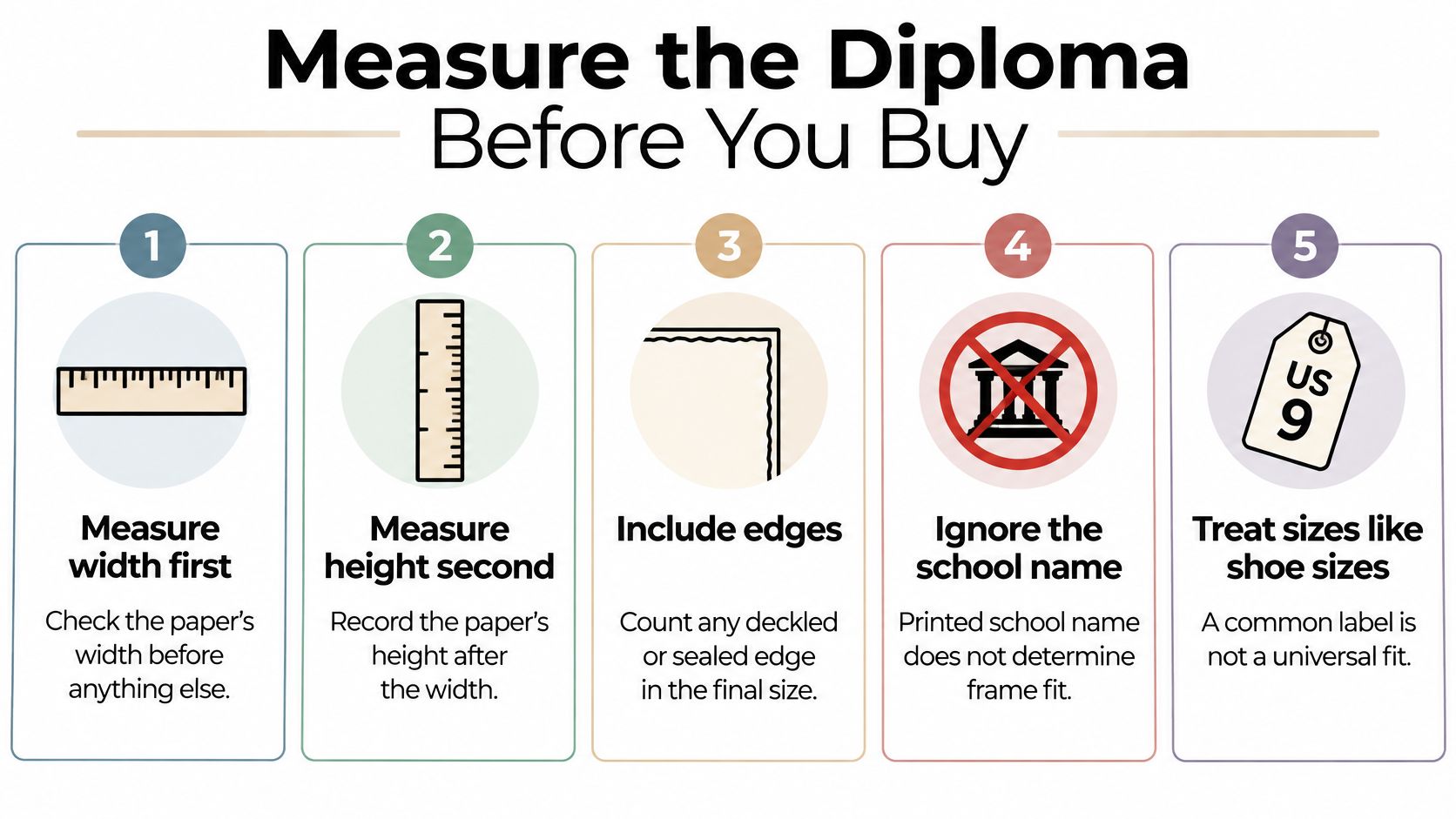
Why the school name won't tell you the size
Common openings include 8.5 by 11 inches, 11 by 14, 7.5 by 9.5, 12 by 15, 11.75 by 16, and 14 by 11. Two people from different schools can easily hold different sheet sizes, and two graduates from the same school can too.
Rice University is a clear example. The Rice University Registrar diploma page records that diplomas printed before November 1, 2017 measured 18 inches wide by 23 inches tall, while diplomas printed on or after that date measured 17 inches wide by 23 inches tall. The university explains the reduction happened because parts for larger-format machines were no longer being manufactured. Rice also describes its diplomas as large enough that they generally require professional framing.
That one-inch difference matters. A frame built for the later sheet won't properly hold the earlier one, and neither sheet belongs in a craft-store certificate opening.
| Document | Size | Frame implication |
|---|---|---|
| Common US certificate | 8.5 × 11 in | Most ready-made cheap frames target this |
| Larger certificate | 11 × 14 in | Needs a larger opening or no mat in a bigger frame |
| Small credential | 7.5 × 9.5 in | A standard 8.5 × 11 opening will look loose unless matted |
| Mid-large diploma | 12 × 15 in | Confirm both opening and outer frame size |
| Less common sheet | 11.75 × 16 in | Do not force into an 11 × 14 opening |
| Landscape diploma | 14 × 11 in | Check hanging hardware for horizontal display |
| Rice diploma before Nov 1, 2017 | 18 × 23 in | Not interchangeable with later sheets |
| Rice diploma on or after Nov 1, 2017 | 17 × 23 in | Generally too large for big-box certificate frames |
| Stanford-style example footprint | 8.5 × 11 document in a frame about 19 × 16.5 in | Wall space is much larger than the paper |
Check the wall and the depth too
Your second measurement is the finished footprint. Matting adds inches on every side, so an 8.5 by 11 document can easily become a frame that's roughly 19 by 16.5 inches overall. Measure the wall or desk space before you fall for a wide double mat.
This short video is worth watching if you're unsure how the document, mat, and outer frame relate to each other.
We recommend checking with your school for the correct diploma cover color and size, or measuring the diploma yourself. That same habit prevents frame returns.
Use a simple pass-fail test. The opening matches the sheet without bending it, the outer size fits the wall, and the frame is deep enough for glazing, mat, and backing. If any of those fail, keep looking, even if the price is tempting.
Mats Glass and UV That Protect on a Budget
A low-priced frame can cost more in the long run if its opening is wrong, its glazing offers little UV protection, or its mat holds the paper too tightly. The frame's profile may catch your eye, but the materials around the diploma affect how well it holds up.
A common dorm-store frame pairs a thick, glossy profile with a thin mat and plain glass. For a tighter budget, choose a simple frame you like, then check the mat and glazing specifications before paying extra for decorative trim.
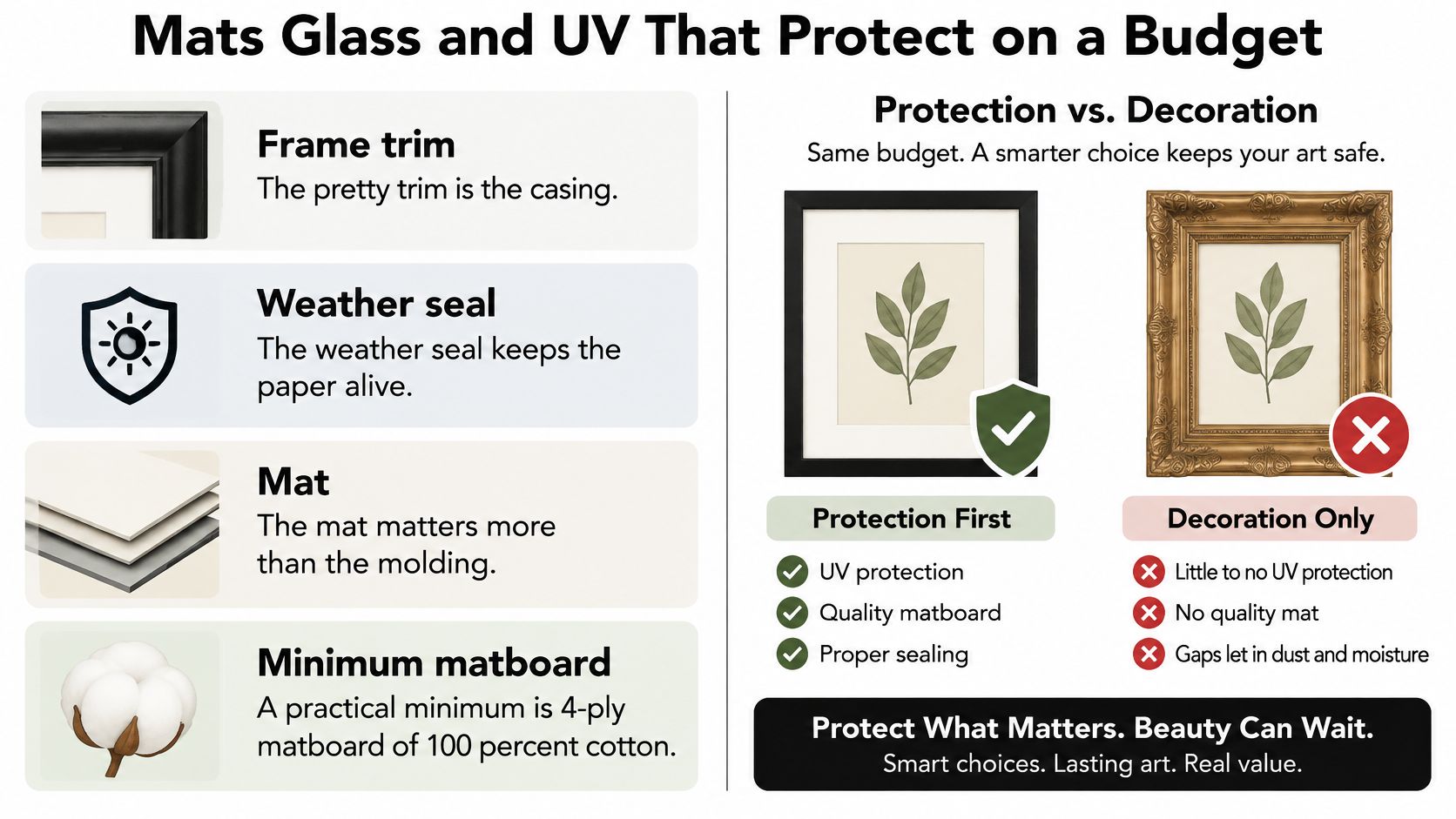
The mat is doing more work than you think
A mat creates an air gap between the diploma and the glazing. That space helps prevent the paper from sticking to the glazing or rubbing against it.
Look for 4-ply matboard made from 100 percent cotton rag or highly purified, lignin-free pulp, along with a neutral-pH backing. A buffered board with a pH around 7.5 to 8.5 is a common manufacturer specification. Check the product details for the material and backing rather than relying on a broad label.
- Acid-free: The board should not add acidity that can yellow paper over time.
- Lignin-free or 100 percent rag: These terms describe the board's composition.
- pH-neutral backing: The material behind the diploma should also be chemically stable.
“Archival” is useful only when the seller also identifies the materials. If the product page leaves the mat composition unclear, you cannot tell what is holding the diploma away from the glazing. This guide to diploma frames with picture openings explains how extra openings affect the layout; check the mat material as well.
Ordinary glass versus UV-filtering glazing
Ordinary glass transmits more than 90 percent of visible light and blocks only ultraviolet wavelengths below approximately 300 nm, while damaging UV exposure extends roughly from 300 to 400 nm, according to the Library of Congress paper preservation guidance. That remaining UV band can contribute to paper weakening and yellowing, and can fade inks, dyes, and printed seals.
For a diploma displayed near a window or kept on the wall for years, look for glazing rated to filter at least 99 percent of UV. The rating gives you a concrete basis for comparing products.
| Glazing choice | Advantage | Watch out for |
|---|---|---|
| Ordinary glass | Clear and inexpensive | Little protection in the damaging UV band |
| UV-filtering glass | Rates its UV filtration | Heavier and breakable |
| Regular acrylic | Light and less brittle | May block little UV, scratches and can bow |
| UV-filtering acrylic | Light with a stated UV percentage | Verify the rating, and clean it gently |
Acrylic is lighter and less brittle than glass, which can help with larger frames and shipping. It scratches more easily and can bow, so use a soft cloth and avoid harsh cleaners.
Even strong UV filtration cannot prevent all light damage. Hang the diploma out of direct sun and keep room lighting subdued where possible. Spend first on a suitable mat and rated glazing, then decide whether a more decorative profile is worth the added cost.
Eco Frames That Still Protect the Diploma
A recycled frame can reduce material waste, but its label alone says little about how well it will hold up around a diploma. For example, a recycled-polystyrene frame profile may be a practical choice if the document can be removed without pulling adhesive from the paper.
Judge the frame's material separately from the parts that touch the diploma. Reclaimed timber may suit a dry, shaded room, while the frame should still come apart cleanly so you can remove the document and replace or separate its components later.
For paper safety, use the mat, backing, and glazing specifications described in the previous section. Then let sustainability break a tie between frames that meet those requirements. A lower-impact material cannot make up for a mount that sticks to the diploma or a frame that traps it permanently.
When Sales Make Budget Frames Worth Waiting For
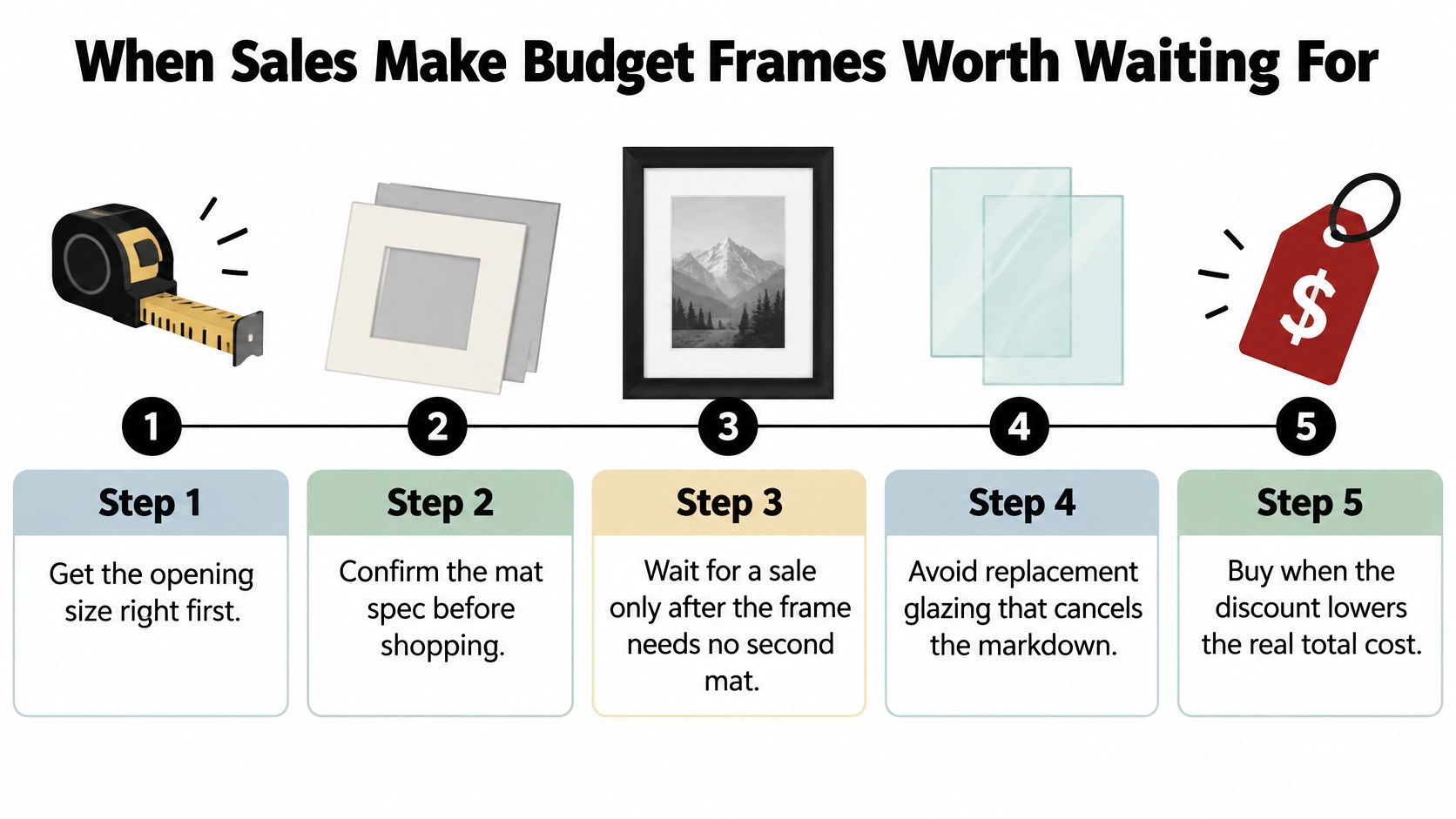
A sale matters only if it lowers the cost of a frame that suits your diploma. A markdown can disappear once you add a mat or glazing that the frame lacks, or pay extra for rushed delivery. For example, compare the checkout total, including shipping and any needed upgrades, with the cost of a ready-made frame that already meets your needs.
Timing is the sale-specific decision. If you need the frame for ceremony photos or a party, leave enough time for ordinary delivery rather than paying a rush fee. Waiting makes sense when the exact frame you want is likely to go on sale and you can wait comfortably.
Check whether the final price sits within the budget band you chose. Compare any quote against the averages above, then weigh what the higher-priced option adds. A discount is useful only if it brings the frame into your budget without changing what you planned to buy.
Graduation Cap and Gown offers a Lowest Price Guarantee. It can help with the price, but the frame still needs to be the one you want. A guarantee on the wrong purchase does not make it a good deal.
A plain ready-made frame may cost less than a discounted custom order if you do not need the extra service. Wait for a sale when it applies to the frame you have already chosen; skip it when the discount is the main reason to switch to a different option.
Sale test: Does the final price fit your budget, and are you still buying the frame you intended to buy? If not, the discount may not be worth waiting for.
DIY Framing That Does Not Damage the Diploma
A low-cost frame can become an expensive mistake if the opening is too small or the diploma gets stuck to the backing. A careful home setup should let you remove the document later without pulling, peeling, or trimming the paper.
Start with a clean, flat table and dry hands. Move drinks, pens, and pets away before opening the frame. Clearing the surface now is easier than reopening the frame to remove dust or a stray hair.
A reversible method that respects the paper
- Lay it flat and remeasure: Record the diploma's width and height, then check that the frame opening is no smaller. Never trim the diploma to fit.
- Position the window mat: Place the paper behind the mat opening so the mat, rather than the glazing, sits between the document and the clear front.
- Check the rabbet depth: The rabbet is the inner ledge that holds the frame's layers. The Canadian Conservation Institute's matting guidance gives about 2 cm as a typical combined allowance for glazing, mat, backing, and any spacer. It also recommends conservation-quality matboard because acidic or unstable materials can harm paper they touch.
- Attach the diploma at the top: Photo corners or removable hinges can hold it in place while allowing later removal. Keep the attachment method reversible.
- Leave room between paper and glazing: Use a spacer or mat gap so the glazing does not touch the ink. Choose the glazing to suit the display location.
- Inspect before closing: Check for dust and fingerprints while the frame is still open.
- Choose the display location carefully: For guidance on limiting light exposure, follow the advice in the Mats, Glass and UV section.
If you are framing other keepsakes too, these cap and gown shadow box ideas can help with a deeper display. Keep the diploma itself flat rather than folding it around other objects.
Fit check: If the diploma is larger than the frame opening, stop and choose a frame with the correct opening.
A wide university diploma can crease if forced into a smaller frame, and a crease may remain after the frame is replaced. For an irreplaceable original, consider displaying a high-quality scan and storing the diploma flat in an acid-free folder. That keeps the original out of the frame while still giving you a wall display.
Real Wood Frames That Stay Affordable
A wood frame can look affordable at checkout and cost more later if the opening is wrong or you need to replace parts that do not protect the diploma. A ready-made frame that includes its mat and glazing can simplify the purchase, but check the fit and listed materials before choosing.
Graduation Cap and Gown sells diploma frames and products for Doctorate, Masters, Bachelors, High School, and Pre-K/Kindergarten levels, as well as graduation accessories. For a closer look at wood finishes and frame profiles, read the wood diploma frame guide.
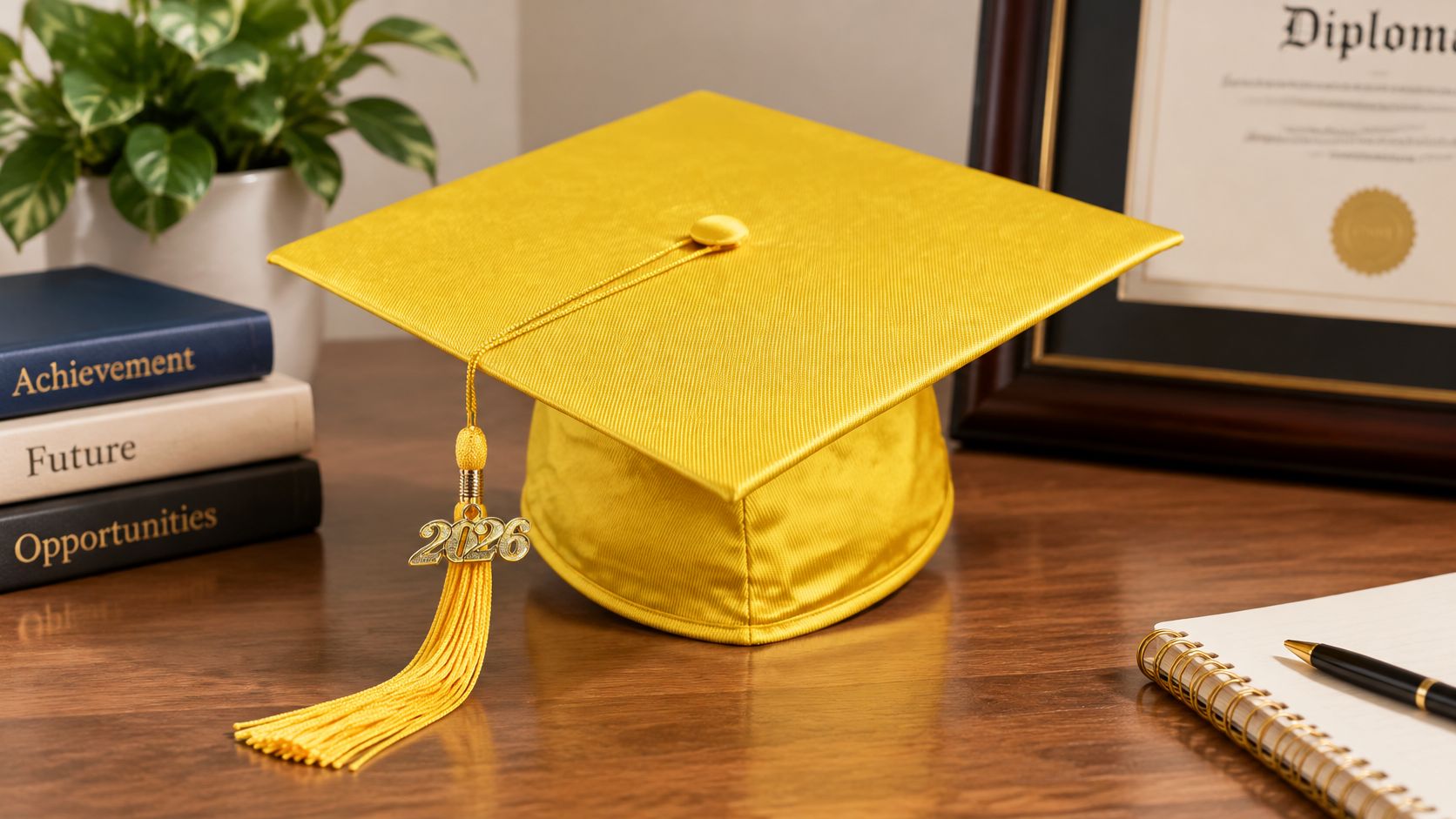
When the tassel is part of the display
The Real Wood Glossy Cherry Diploma Frame with Tassel Holder and Gold Trim fits an 8.5 by 11 certificate and includes a black-and-blue over gold double mat, UV-protection acrylic, and acid-free materials. Check the product page for its current specifications before ordering.
If you are also shopping for school regalia, the Shiny Gold High School Cap & Tassel is listed at $6.95. Its product page has the details to review before purchase.
When wall space is tight
The Real Wood Graduation Diploma Frame in Glossy Cherry with Gold Trim is listed as fitting an 8.5 by 11 diploma with a black-and-blue over gold double mat, or an 11 by 14 diploma without a mat. Its listed features include UV acrylic, an acid-free black suede mat, and hardware for vertical or horizontal hanging. Check the product page for the frame's full specifications.
Measure before you choose. A frame that fits the sheet and includes the materials you want may cost less overall than a cheaper frame that needs replacement parts or cannot safely hold the diploma.
Frame the Original or Hang a Copy
The cheapest frame can cost more if the opening is wrong or the document is exposed to bright light. Frame the original when its size fits the frame and you can mount it without altering the diploma.
A scan or photocopy may suit an oversized, curled, or irreplaceable original, especially on a sunny wall. Keep the original flat and away from light, and use the copy for display. A copy can be replaced; an original may be difficult to replace.
For an 8.5 by 11 diploma, a cherry frame with a double mat and UV acrylic is one option. Add a tassel holder only if you want the tassel displayed with the document. The diploma cover guide offers another way to think through presentation and storage between the ceremony and framing.
A small gallery can make the diploma part of a larger display. Ideas for framed canvas wall decor can help you plan the surrounding pieces while keeping the diploma easy to see. Choose a spot where the original will not sit in bright light just to match the layout.
For guidance on avoiding damage during mounting, revisit the DIY framing advice. Before ordering, check the diploma's stated size with your school, then compare it with the frame's opening.
Graduation Cap and Gown offers a diploma frame category and a Lowest Price Guarantee. Browse the frames after confirming the document size, and select an opening that matches it.