

The modern U.S. high school cap and gown tradition was standardized in 1911, and polyester is now the default fabric because it resists wrinkles and dries quickly. Those two facts explain why today's regalia looks formal, practical, and familiar at the same time.
Two weeks before commencement, a senior stands in the hallway mirror with a half-zipped gown, a tassel dangling from one hand, and a family member asking whether the cap is supposed to sit straight or slightly forward. The questions seem small until the ceremony is close. Then every detail matters, from the vendor and school color to the fit, tassel side, accessories, and the condition of the gown when it comes out of its package.
A high school cap and gown is more than clothing for a single afternoon. It's a shared uniform, a photo marker, and a visible sign that a student has reached a major milestone. The decisions are manageable when families make them in order: confirm the school rules, choose a package or individual pieces, measure carefully, check customization, meet the ordering deadline, and prepare the regalia before commencement.
Why the High School Cap and Gown Still Matters in 2026
Academic regalia carries a long history. Gowns are traced to the 12th century, the square mortarboard-style cap emerged in the 16th century, and the University of Coimbra connected graduation gowns with a 1321 rule requiring graduates to wear them, as described in this history of academic regalia and graduation day. In the United States, high school academic dress reached an important point of standardization in 1911, when the outfit was presented as an economical and egalitarian uniform.
That history helps explain why the garment still feels meaningful. A student wearing a school-issued color and a traditional mortarboard joins a ceremony language that has traveled from medieval universities into modern secondary schools. The 1912 U.S. Naval Academy cap toss also helped popularize the celebratory ritual that many high school graduates now recognize as part of commencement.
Why polyester became the practical standard
The fabric choice serves a real purpose. High school gowns are commonly specified as 100% polyester with wrinkle- and crease-resistant performance. Procurement guidance describes polyester as useful because it reduces maintenance, preserves the garment's appearance during handling, and dries quickly after cleaning. Those qualities matter when a school distributes, collects, transports, and sometimes reuses many gowns around one event. See this high school gown fabric guidance for the material details.
Polyester also supports school-specific color orders. A gown needs to look consistent across a graduating class, and a stable synthetic fabric helps schools maintain a coordinated appearance. It isn't the most breathable material, so clothing underneath should be comfortable and not overly bulky.

A uniform with personal meaning
The same gown can look nearly identical from one student to the next, yet each graduate brings a different story to the stage. The cap frames the face in family photos. The tassel marks a ceremonial transition. A stole, cord, or approved pin can identify an academic program, community, heritage, or achievement.
Before purchasing, families should read the school's regalia notice rather than relying on a general internet guide. Some districts specify the vendor, color, size information, and how the gown must be worn. A helpful primer on the wider tradition is what academic regalia means.
The rest of the preparation comes down to practical choices: whether a package or separate pieces make sense, how to measure, which custom elements are permitted, when to order, and how to keep polyester looking neat. Start early, and the cap and gown becomes a source of pride instead of a last-minute problem.
Package Deals or Single Pieces
Most families choose between a school-contracted package and individual regalia pieces. The package usually arrives as a coordinated set containing a cap, gown, and tassel. Depending on the school and vendor, it may also include a stole or honor cord. Individual purchasing means sourcing those pieces separately and confirming that every color, finish, and accessory complies with the school's requirements.
A package is usually the simpler route for a graduating class. The school's vendor has already matched the expected colors and basic style, and one shipment reduces the chance of forgetting the tassel. It can also make group photographs look consistent. The trade-off is limited personalization. A student may have fewer choices for fabric finish, stole design, or decorative details.
Separate pieces give families more control. A student might select a custom stole, an approved honor cord, or an upgraded satin accent. That flexibility creates extra work, though. Two items that appear to be the same school color online can look different in person, particularly when they come from different sellers or fabric finishes. A separate purchase also creates more delivery dates, return policies, and sizing decisions to track.
| Factor | Package Deal | Single Pieces |
|---|---|---|
| What arrives | Cap, gown, tassel, and sometimes a stole or cord | Each garment and accessory is ordered separately |
| Color coordination | Usually selected to match the school's approved design | Family must confirm that colors and finishes match |
| Convenience | One order and commonly one shipment | Several sellers, orders, or delivery windows may be involved |
| Personalization | More limited | More choice for approved stoles, cords, and accents |
| School compliance | Often aligned with the contracted vendor | Requires careful review of school rules |
| Replacement planning | Vendor may handle package corrections | Family must identify the correct replacement piece |
School ordering calendars should guide the decision. Many schools require orders well before commencement, and some districts allow gowns to be purchased only through a named vendor. One 2025 regalia guide states that gowns could be purchased only through Herff Jones Orlando, with orders filled using each student's reported height and weight. The guide also required students to wear the gown as designed with suitable clothing underneath, so a cheaper independent order might not be acceptable even if it looks similar. Review the full cap and gown cost discussion before comparing prices.
Counselor's rule: A lower sticker price doesn't help if the school rejects the garment, the color fails to match, or the replacement arrives after the ceremony.
Families should also budget for the whole occasion, not only the regalia. UK reporting found that cap-and-gown hire alone averaged £63, while the full graduation occasion averaged over £700, including the wider costs of attending and celebrating. That comparison appears in graduation gown pricing information. The lesson applies broadly: clothing may be one line in a much larger family budget that includes photographs, meals, travel, and celebration extras.
Sizing and Fit That Looks Right on Stage
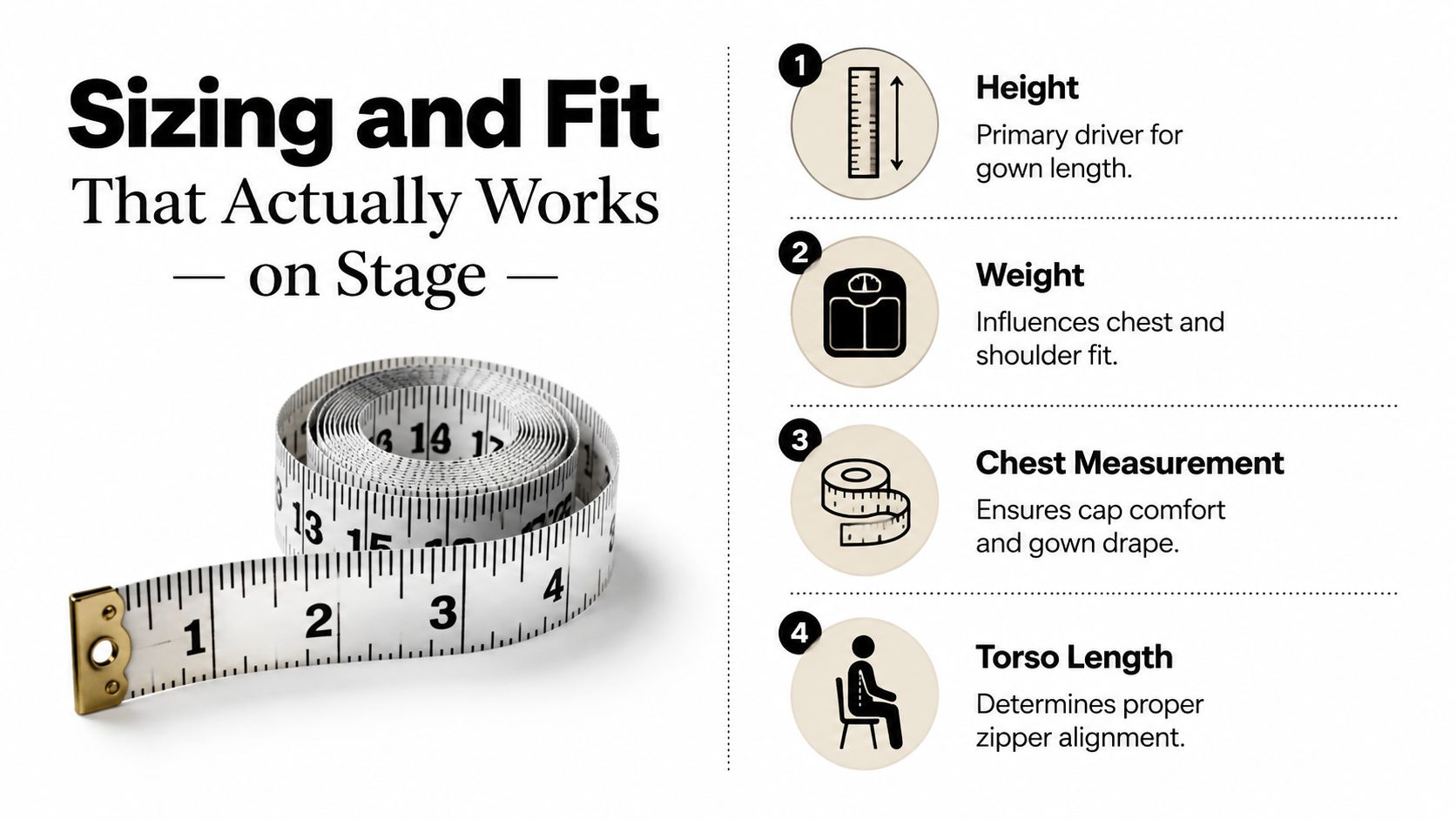
A graduate may look polished in the fitting room and still struggle during the ceremony. The gown must allow comfortable movement while walking, sitting, shaking hands, and climbing stairs. Start with the school or vendor's size chart, not a familiar streetwear size. Academic gowns are designed to drape over clothing, so height and weight ranges guide the choice more reliably than a close-fitting everyday garment.
Measure in the right order
Begin with height while wearing the ceremony shoes, especially if they add noticeable lift. Height largely determines gown length. Record weight next, followed by chest measurement if the vendor requests it. Some charts also ask for torso length to check where the zipper and shoulder seams will rest.
Use this home routine:
- Height: Stand against a wall with heels down and eyes facing forward. Record the measurement accurately instead of rounding toward a preferred size.
- Weight: Use the current figure requested by the vendor. It helps the supplier allow room through the chest and shoulders.
- Chest: Measure around the fullest part of the chest with the tape level and comfortably loose.
- Torso: Measure from the shoulder area toward the natural waist, or check the seated distance if the chart asks for it. This helps confirm zipper clearance and front drape.
- Cap circumference: Measure around the head where the cap will sit, with hair arranged as it will be on graduation day.
A graduation cap and gown size chart may list height ranges from about 4'9" through 6'5", often in three-inch jumps, with extra-tall options available from some vendors. A tall student should check the listed gown length rather than assume a standard size will work, particularly when the stage includes stairs.
Judge the hem by movement
A hem that ends roughly two inches above the floor usually looks tidy on camera while leaving room to walk. A gown that drags can catch on chair legs, bunch under shoes, or become a tripping risk on stairs. A gown that sits too high can expose too much of the clothing underneath and look uneven in group photographs.
Try the gown with the planned shoes and a similar base layer. Walk, sit, turn, and climb a household step. The zipper should close comfortably without pressing beneath the chin. Sleeves should leave enough hand visible for holding a program or diploma cover.
Get the mortarboard settled
The cap should stay level during the processional and sit securely through the ceremony. It generally rests about a finger's width above the eyebrows. Hair volume affects the fit. A high bun can push the mortarboard upward, while a low bun or flatter style often gives it a steadier base. Students with longer hair should test the planned hairstyle before ordering a cap accessory or elastic.
Do not alter the gown to correct a measurement mistake unless the school and vendor approve the change. Many schools treat regalia as a required uniform, and an unauthorized alteration can cause trouble at check-in.
Quick fitting check: If the graduate can climb stairs, sit without the zipper pulling, and keep the cap level while turning the head, the outfit is ready for a full rehearsal.
Customization That Tells Your Story
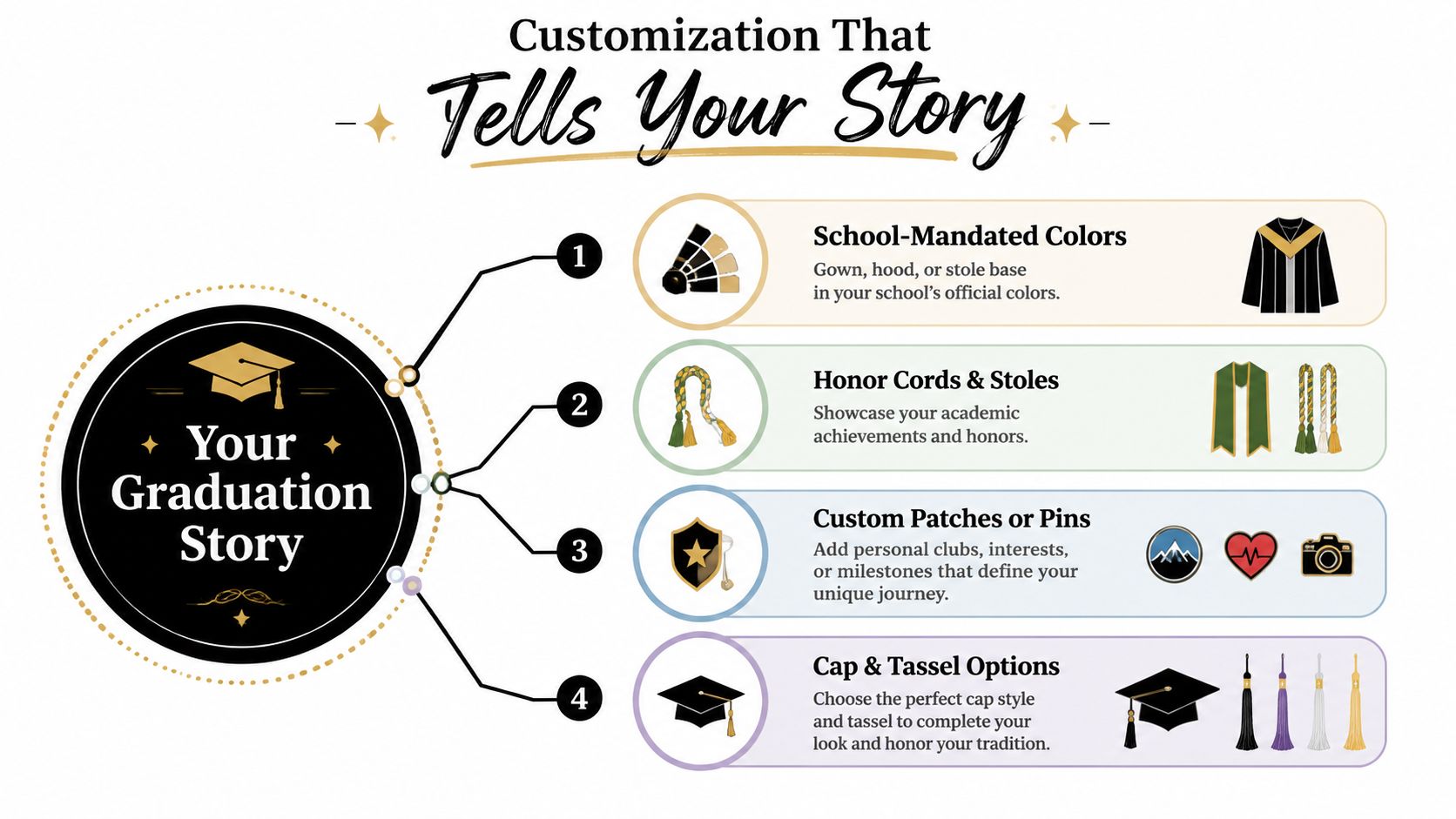
Customization works best when families treat regalia as visual language, not a pile of unrelated decorations. The gown shows school identity, while stoles, cords, and approved details show recognition or belonging. Each item should fit the school's rules and the ceremony's expected order.
Begin with the required pieces. The school may assign the gown color, stole color, sash design, or approved vendor. Some schools have replaced gendered gown colors with one shared color for every graduate. Examples include blue gowns with white sashes, maroon gowns for all students, and a mandated red gown for every senior, as reported in coverage of changing graduation color policies.
Read the ceremony signals
As noted earlier, begin with the tassel on the right side and move it to the left after diplomas are conferred. Review the tassel-side tradition if the ceremony instructions leave that step unclear.
Students select a custom stole, an approved honor cord, or an upgraded satin accent. A stole can identify heritage, identity, a program, or a community. An honor cord may represent academic distinction, a recognized organization, a career and technical education pathway, or another school-approved achievement. Meanings differ by school, so ask the counseling office what each color represents instead of relying on an internet chart from another district.
Layer accessories carefully
Cords and stoles can overlap when a student has more than one recognition. Some schools place cords over the stole, while others specify the reverse. Follow the school's direction and pin items only where permitted. Students considering a monogrammed stole, photo charm, or Class of 2026 pin should order several weeks ahead and check the decoration policy first.
Use this reference map when reviewing approved options:
- National Honor Society: Wear the cord or stole only if the chapter or school authorizes it.
- Cum laude recognition: Confirm the tier and color your school uses, since terminology and presentation can vary.
- Bilingual graduation cords: Ask whether the cord represents language achievement, a bilingual seal, or a specific program.
- Heritage or identity stoles: Select a design that reflects the student's experience and follows the school's accessory rules.
Students seeking visual ideas can explore AI-designed custom caps, then confirm whether cap decoration is allowed before ordering or applying anything. Treat the school's policy like a dress-code checklist: an attractive idea still needs approval before it reaches the stage.
Before personalizing: Photograph the school's regalia notice, save the counselor's email, and keep every approved accessory in the same labeled bag.
Deadlines, Bulk Orders, and Last-Minute Backup Plans
The safest ordering calendar starts with the school, not a search engine. Activities offices and counseling departments often coordinate measurements and bulk purchasing so the graduating class receives a consistent design. Ask for the measurement date, vendor name, color specification, payment process, and final correction date as soon as senior information is released.
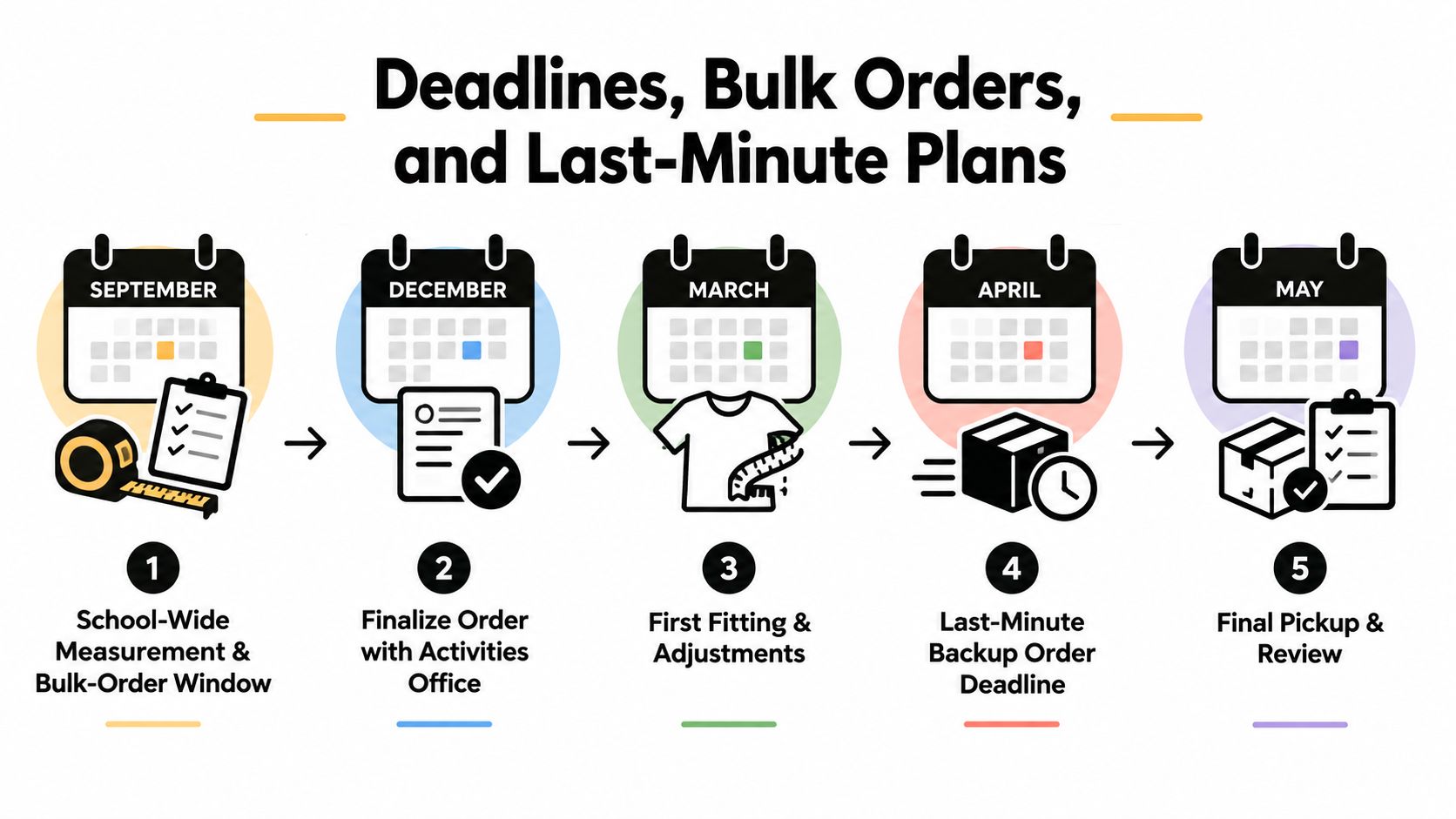
A workable senior-year sequence
- September and October: Attend the school-wide measurement and bulk-order window. Verify height, weight, name spelling, diploma information, and any approved honor items.
- November and December: Complete the late bulk order or correction process through the activities office. Ask whether late orders carry added charges, and don't assume the school can add a student after the vendor closes production.
- January through March: Students who missed the first process should contact the approved vendor and the counselor immediately. Individual online ordering may remain available, but inventory, color, and delivery timing need confirmation.
- April: Treat this as the final planning checkpoint. Confirm pickup, inspect the package, and report missing or damaged pieces while there's still time to seek a replacement.
- May and commencement week: Keep the gown, cap, tassel, cords, and stole together. Try everything on before the ceremony rather than discovering a sizing or accessory problem at lineup.
The exact calendar belongs to each school. One district's 2025 notice required a specific vendor and prescribed how the gown should be worn, demonstrating why a generic marketplace purchase can create compliance trouble. Families with transfers, mid-year graduates, or students who missed the bulk window should contact both the registrar and counseling office. Ask about direct-to-door rush delivery, an approved rental, a loaner garment, or emergency assistance.
Counselors can make the process easier by consolidating student orders, offering a clear payment schedule, and asking the vendor about tax-exempt treatment for an eligible school purchase. Families should receive one written deadline rather than several informal reminders.
For organizations planning related spirit items, practical guidance on bulk hat styles and decoration tips can help separate approved graduation regalia from optional celebration merchandise. For tassel planning, review the graduation tassels bulk collection and compare it with the school's required color and distribution process.
A missed deadline isn't automatically the end of the conversation. The counselor may know about a spare gown, a corrected bulk order, or a school-supported option that families won't find through ordinary retail searches. Call early, explain the situation plainly, and document the answer.
Common Mistakes Schools Want You to Avoid
Graduation policies can feel strict because the ceremony depends on a coordinated appearance and a fast-moving lineup. Schools also need a clear way to handle items that could distract from the event, damage the garment, or make it difficult to identify graduates. One 2025 school notice states that caps and gowns couldn't be decorated, regalia changes required prior administrative approval, unapproved items could be bagged and collected, and students wearing unapproved regalia could be barred from walking. Read the school regalia enforcement notice before adding anything to the outfit.
| Common Mistake | Why Schools Flag It | Approved Fix | Sample District Policy |
|---|---|---|---|
| Cutting or hemming the gown | The altered length may no longer match the approved uniform or safety expectations | Order from the correct height range and ask the vendor about an authorized correction | Some school rules require the gown to be worn as designed |
| Starting with the tassel on the left | The position may conflict with the ceremony's symbolic sequence | Begin on the right and move it after diplomas are conferred | Tassel placement is commonly announced during rehearsal |
| Adding an unapproved stole or color | The accessory may conflict with school identity or recognition rules | Submit the item for approval before wearing it | District policies may mandate one gown color or approved accents |
| Arriving with a crushed gown | Heavy wrinkles distract in photos and may be difficult to remove at the venue | Hang, steam carefully, and transport in a garment bag | Schools expect students to arrive ceremony-ready |
| Wearing unsuitable shoes | Casual footwear can conflict with dress expectations or create a stage hazard | Choose clean, secure shoes that support walking and stairs | Follow the school's commencement dress guidance |
| Leaving tags or sensors attached | Retail tags look unfinished, and security devices can catch on fabric | Inspect every seam and pocket before packing | Complete a final garment check at home |
The common thread is simple. Students sometimes treat the cap and gown as a blank canvas, while the school treats it as regulated ceremonial clothing. That difference explains why a decoration that seems harmless can still be removed at check-in.
Check the outfit the night before
Lay out the gown, cap, tassel, stole, cords, shoes, and clothing underneath. Confirm the zipper, snaps, seams, and elastic. Remove packaging, tags, and sensors, then photograph the full outfit so a parent or counselor can quickly see whether anything is missing.
Read the school notice for rules about cap decoration, cultural stoles, honor cords, shoes, and clothing length. If the policy isn't clear, ask the counseling office before the ceremony rather than asking a volunteer at the entrance.
School-friendly fix: When in doubt, keep the base regalia plain and carry approved accessories separately until the staff member gives the signal to put them on.
Packing, Steaming, and Morning-Of Care
Polyester is practical, but it still arrives folded. A little preparation makes the difference between a gown that photographs smoothly and one that looks as though it stayed in a shipping box overnight. The routine below is designed for families who want a calm, repeatable process.
Pack the garment bag the night before
Remove the gown from its shipping packaging and inspect it under good light. Hang it on a broad hanger, close the zipper, and place the cap, tassel, cords, and stole in separate labeled pouches. If you need to fold the gown for transport, fold it in thirds rather than crushing it into a small bundle.
Protect the mortarboard from pressure. Place clean tissue inside the cap so it keeps its shape, then lay it flat in a firm tote or on top of the gown. Keep pins and charms in a small container so they can't snag the polyester.
Morning quick win: Put the full outfit beside the door, with the garment bag visible, before anyone goes to sleep.
Steam instead of pressing
A garment steamer is usually gentler than an iron for polyester. Hang the gown, keep the steamer moving, and work from the inside or from a short distance so heat and moisture relax the folds without concentrating on one spot. Follow the care label and the vendor's directions.
Don't place a hot iron directly on the fabric unless the care instructions specifically allow it. Synthetic fibers can melt under high heat, and academic-apparel safety guidance warns that polyester is less fire-protective than wool or aramids. Keep gowns away from candles, open flames, pyrotechnics, and hot stage lights, as advised in this academic fabric and safety information.
If a steamer isn't available, hang the gown in a bathroom during a warm shower. Keep it away from direct water and allow enough time for it to dry completely.
Morning quick win: Steam the sleeves and front zipper area first, because those surfaces show most clearly in photographs.
Transport without creating new wrinkles
Hang the gown in a garment bag when the venue is nearby and the car allows it. If you need to lay it flat, place it across the back seat rather than compressing it beneath bags. Never leave the cap at the bottom of a crowded trunk.
A lint roller removes dust and loose fibers. For small pills, a clean fabric razor can help, but use a light touch and test an inconspicuous area first. Don't scrape across printed details, satin trim, embroidery, or cords.
Keep food, drinks, makeup, and permanent markers away from the regalia. A small emergency kit can include a lint roller, safety pins, stain-removal wipes, tissues, and a spare clear pouch for accessories.
Morning quick win: Put the garment bag in the car only after every other item has been loaded.
Follow a calm dressing sequence
Give yourself enough time to dress without rushing. Put on the base outfit and shoes first, then the gown. Check that the sleeves fall evenly and the zipper closes comfortably. Add the stole and cords according to the school's layering rule, securing them only where permitted.
Place the cap level and about a finger's width above the eyebrows. Attach the tassel on the right side before the ceremony, then move it to the left after diplomas are conferred, following the traditional sequence described in the earlier tassel guidance. Keep the cap flat while walking and avoid adjusting it repeatedly in line.
A ten-minute final check should cover:
- Gown: Clean, steamed, zipped, and the correct length.
- Cap: Level, secure, and free from unapproved decoration.
- Tassel: On the required starting side.
- Stole and cords: Correct items, correct order, and approved placement.
- Shoes: Comfortable enough for walking and stairs.
- Personal items: Phone and keys stored where they won't distort the gown or fall during the processional.
Morning quick win: Take one full-length photo before leaving. It catches a crooked stole, missing cord, exposed tag, or uneven hem faster than a mirror check.
Store the regalia as a keepsake
After the ceremony, let the gown air out before storing it. Remove pins and accessories, check for stains, and follow the care label before cleaning. Fold it gently with archival tissue, then place it in an acid-free box if you want long-term protection.
Avoid storing polyester in a hot attic, damp basement, or tightly packed plastic bag. Long-term hanging can place unnecessary strain on seams and shoulders, especially if the hanger is narrow. Keep the cap flat and store the tassel separately so it doesn't permanently bend or pull against the mortarboard.
Morning quick win: Save the name card, program, tassel, and one favorite photograph in the same keepsake box before the celebration becomes a blur.
Graduation Cap and Gown offers high school cap and gown packages as well as individual caps, gowns, tassels, stoles, cords, garment bags, and diploma accessories for families comparing school requirements and personal options. Visit Graduation Cap and Gown to check sizing, colors, complete packages, and individual pieces early, then place your order before your school's deadline.